










An ancient Roman treasure discovered in North America could rewrite our understanding of the New World.
A terracotta sculpture found in a Mexican burial chamber has reignited discussions over whether ancient Europeans voyaged to the Americas long before Christopher Columbus.
The small figurine, depicting a bearded man with unmistakably European characteristics, was recovered in 1933 from a sealed pre-Hispanic grave site.
Known as the Tecaxic-Calixtlahuaca Head, the object lay beneath several undisturbed layers of floor, suggesting the tomb had remained untouched since the artefact was originally deposited.
Experts have noted that the piece's facial structure, beard styling and workmanship closely mirror Mediterranean artistic traditions rather than those of indigenous cultures.
Bernard Andreae, a German archaeologist, examined the sculpture during the 1960s and determined it was unquestionably of Roman origin.
Mr Andreae said in his research: "The stylistic examination tells us more precisely that it is a Roman work from around the second century AD, and the hairstyle and the shape of the beard present the typical traits of the Severian emperors' period [193-235 AD], exactly in the 'fashion' of the epoch."
Thermoluminescence testing, which gauges the age of ceramic materials by analysing the light released when they are heated, has corroborated the object's ancient origins.
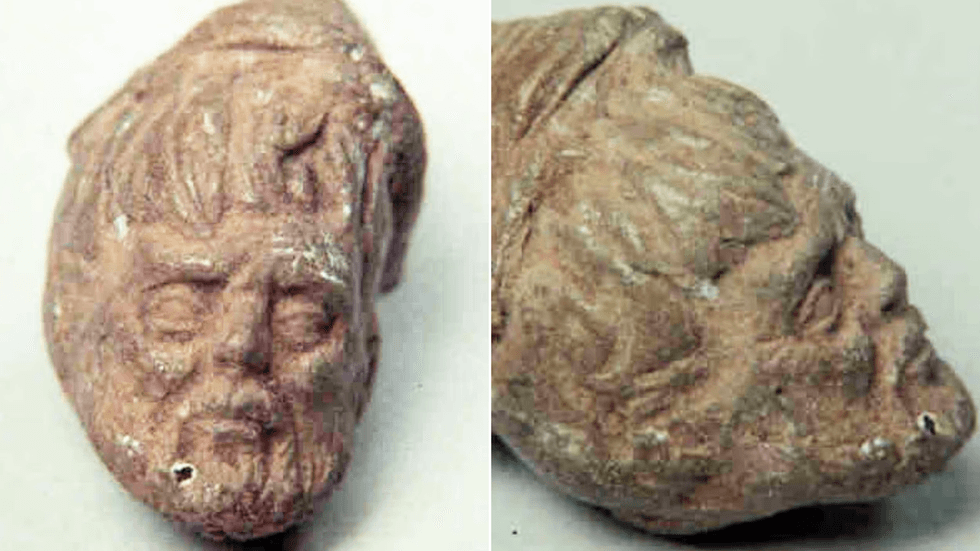
The small figurine was recovered in 1933 from a sealed pre-Hispanic grave site
|ROMEO HRISTOV / UNIVERSITY OF NEW MEXICO
The scientific analysis indicates the figurine was crafted well before Europeans made contact with the New World.
The tomb containing the head has been dated to the late 1400s, a few years prior to Hernan Cortes's arrival in Mexico.
A recent Arkeonews report has brought renewed attention to the discovery, though the most recent scholarly examination of the artefact occurred in 2001.
ARCHAEOLOGY - READ THE LATEST:
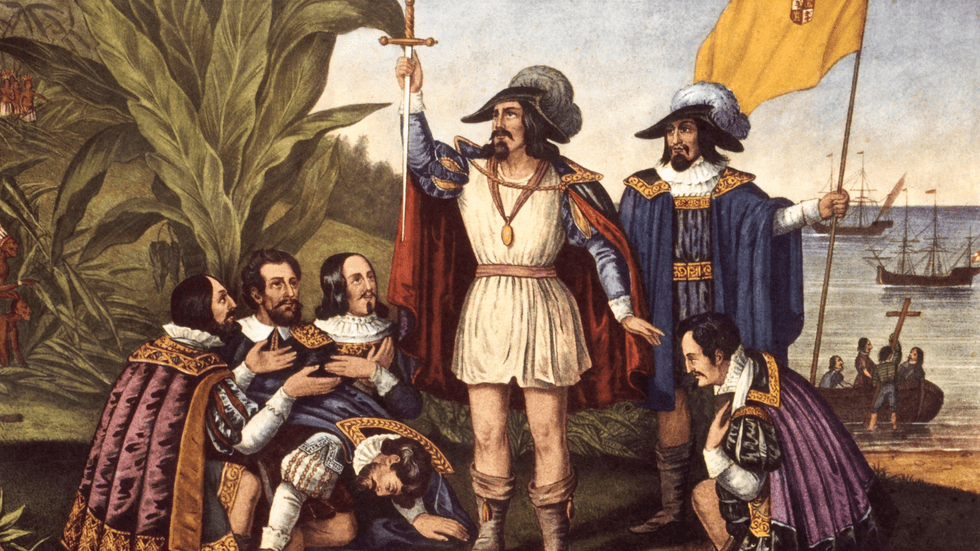
It has reignited discussions over whether Europeans voyaged to the Americas long before Christopher Columbus
|GETTY
Numerous archaeologists urge caution, however, emphasising that remarkable claims demand just as remarkable proof.
They highlight the complete absence of Roman vessels, colonies or additional artefacts anywhere in the Americas that might prove such a transatlantic expedition happened.
One common explanation suggests the head was placed in the burial long after its manufacture.
Some scholars theorise it may have arrived during the initial phase of European exploration, when goods were frequently exchanged, moved or misplaced far from their points of origin.
The possibility of deliberate fabrication has also been raised, with researchers noting incomplete documentation from Jose Garcia Payon's 1933 excavation.
Subsequent accounts reveal Mr Payon was not consistently present at the dig site, creating an opportunity for the object to have been secretly put there.
But researchers again point to the undisturbed layers of floor - which dramatically reduce the likelihood of later interference.
It would also confirm the object was interred before 16th-century European arrival.
Researchers have previously proposed that Mediterranean vessels, whether Roman, Phoenician or Berber, might have been swept across the Atlantic by strong currents.
Our Standards: The GB News Editorial Charter