






Archaeologists have discovered the remains of a medieval town hidden within a remote Polish forest.
The settlement, known as Stolzenberg, appears to have collapsed during the 14th or 15th century.
Researchers from the Relicta Foundation located the site near the modern village of Slawoborze, close to the historically disputed border region between Germany and Poland.
Their first searches in the present-day village yielded no evidence of the medieval settlement.
However, huge medieval defensive structures then emerged from the woods, including enormous earthen ramparts and a moat measuring 18 feet in depth.
"This site is a true time capsule, harboring many mysteries," said archaeologist Marcin Krzepkowski of the Relicta Foundation.
A geophysical survey has now confirmed the site's location beyond doubt.
"The results of these surveys dispelled any remaining doubts," Mr Krzepkowski told Fox News.
Magnetic readings detected regular anomalies in the central area, indicating building foundations surrounding a rectangular market square.
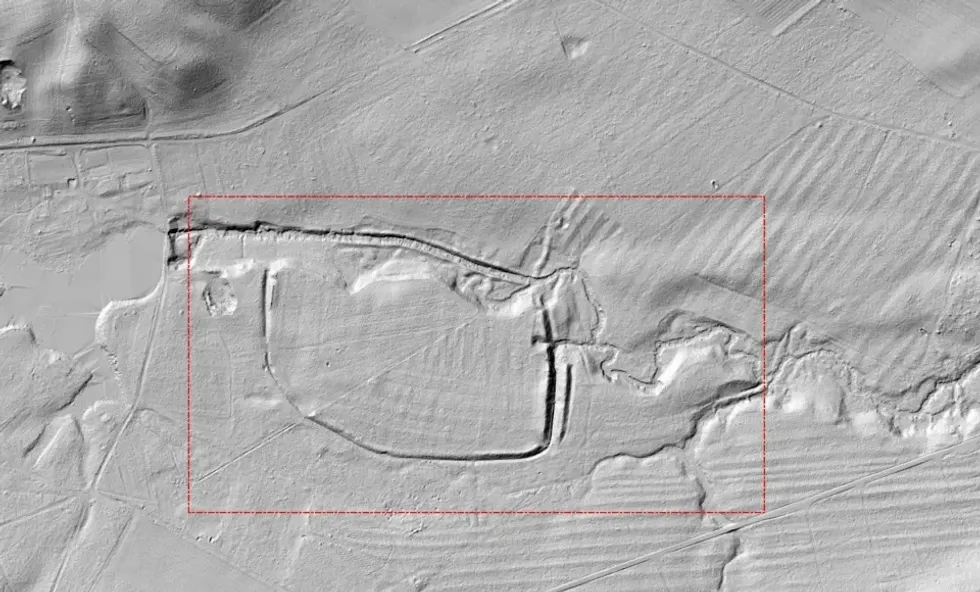
PICTURED: 3D scans of the long-lost medieval village
|MINISTRY OF CULTURE AND NATIONAL HERITAGE
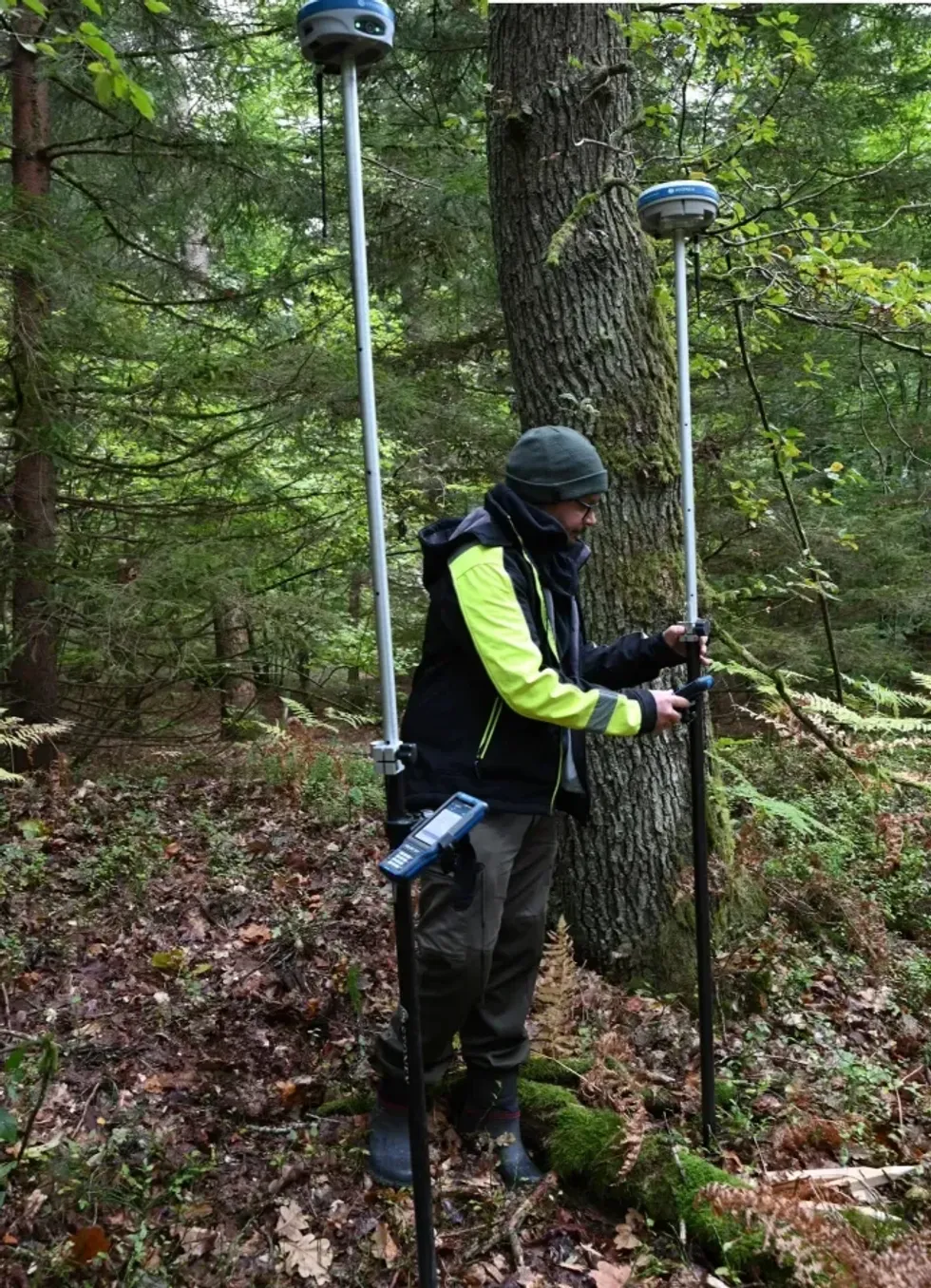
Archaeologists discovered treasures dating as far back as the Bronze Age below the site
|MINISTRY OF CULTURE AND NATIONAL HERITAGE
This layout is characteristic of towns established under medieval German law.
Evidence of structures along a street leading to what was likely the main gate has also emerged, while metal detectorists working at the site have recovered more than 400 artefacts.
Some items date back to the Bronze Age, whilst others are as recent as the Second World War.
The hidden treasures proved most valuable to researchers, confirming the site's historical significance.
"These included silver coins, metal belt elements and coat clasps typical of medieval bourgeois costume," Mr Krzepkowski explained.
ARCHAEOLOGY BREAKTHROUGHS - READ MORE:
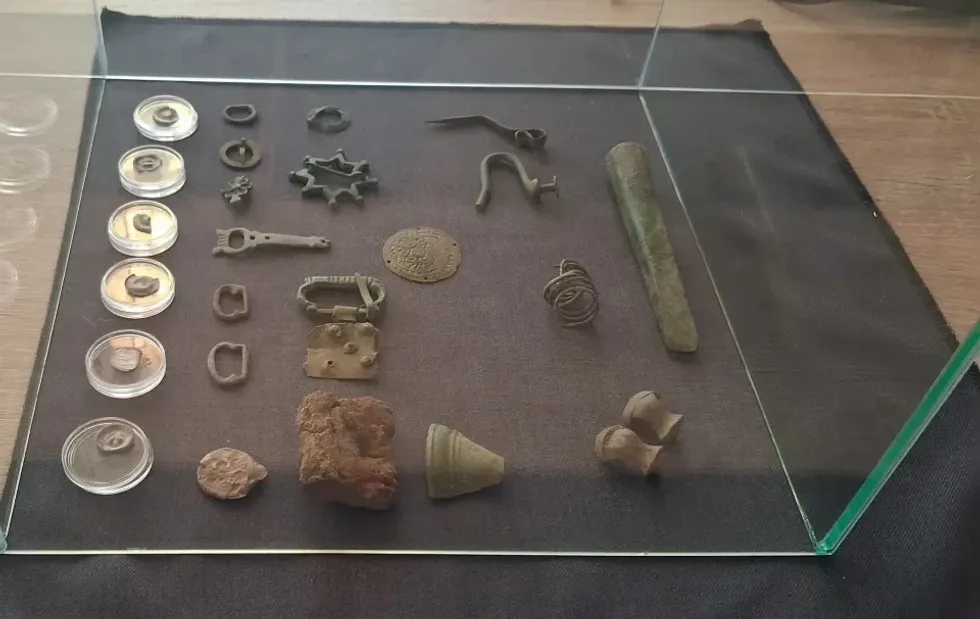
Metal detectorists working at the site have recovered more than 400 artefacts
|MINISTRY OF CULTURE AND NATIONAL HERITAGE
Tools such as knives and iron padlocks were also unearthed.
Perhaps the most significant discovery, however, was fragments of cannon grenades and lead rifle bullets.
"We linked [these artifacts] to a battle that took place in this area in 1761 between Russian and Prussian forces, [during] the Seven Years' War," Krzepkowski explained.
"All these artifacts testify to the rich and complex past of this site, which is not limited to the late Middle Ages, when the town of Stolzenberg existed."
Though the precise reason for Stolzenberg's abandonment remains unclear.
Mr Krzepkowski suggested multiple factors likely contributed to its decline.
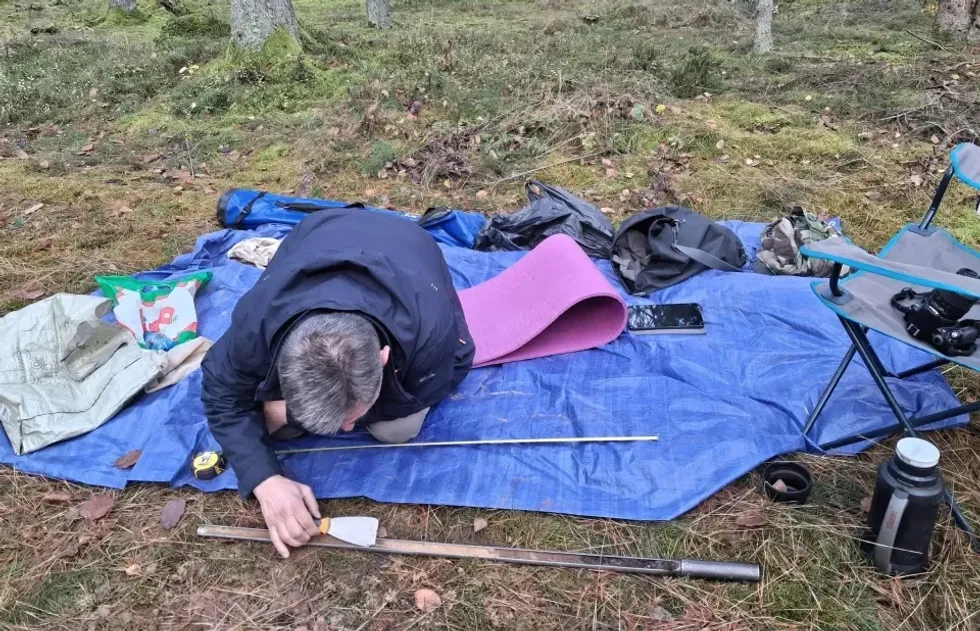
Researchers now plan to locate town's town hall and church while their analyses continue
|MINISTRY OF CULTURE AND NATIONAL HERITAGE
"Strange as it may seem, cities were sometimes relocated to new, more convenient locations, even as far as a dozen or so kilometers," he remarked.
Flood risk, shifting trade routes, or competition from neighbouring towns may have played a role.
Evidence suggests some urban plots were never developed, indicating the settlement collapsed at an early stage.
Researchers now plan to locate the town hall and church while their analyses continue.
These studies could reveal details about residents' health and diets.
"Unravelling them will help us better understand the settlement and city-forming processes in this part of Europe," Krzepkowski said.