










A recently discovered fossil dating back 2.6 million years could fundamentally change our understanding of human evolution and put a long-standing mystery to rest, a new study has found.
The fossil, belonging to the early hominin Paranthropus genus, was discovered in Ethiopia's Afar region.
However, notably, the fragment - a piece of the lower jaw - was found approximately 1,000 kilometres further north than any previously known specimen of these ancient relatives, according to the research published in the journal Nature.
The findings suggest Paranthropus populations occupied a far more extensive range across the African continent than researchers had previously thought.
TRENDING
Stories
Videos
Your Say
It represents not only the genus's most northerly occurrence but also ranks amongst its earliest known examples.
Scientists had long assumed Paranthropus never ventured into the Afar territory, possibly due to unsuitable environmental conditions or competitive pressures from other species.
The jaw fragment was examined by Dr Fred Spoor, a human palaeontologist, working alongside Zeresenay Alemseged from the University of Chicago, whose Ethiopian fieldwork team made the initial discovery.
The researchers used digital imaging techniques to examine the fossil's internal structure, including visualisation of tooth roots, and conducted comparative analyses against other hominin specimens recovered throughout Africa.
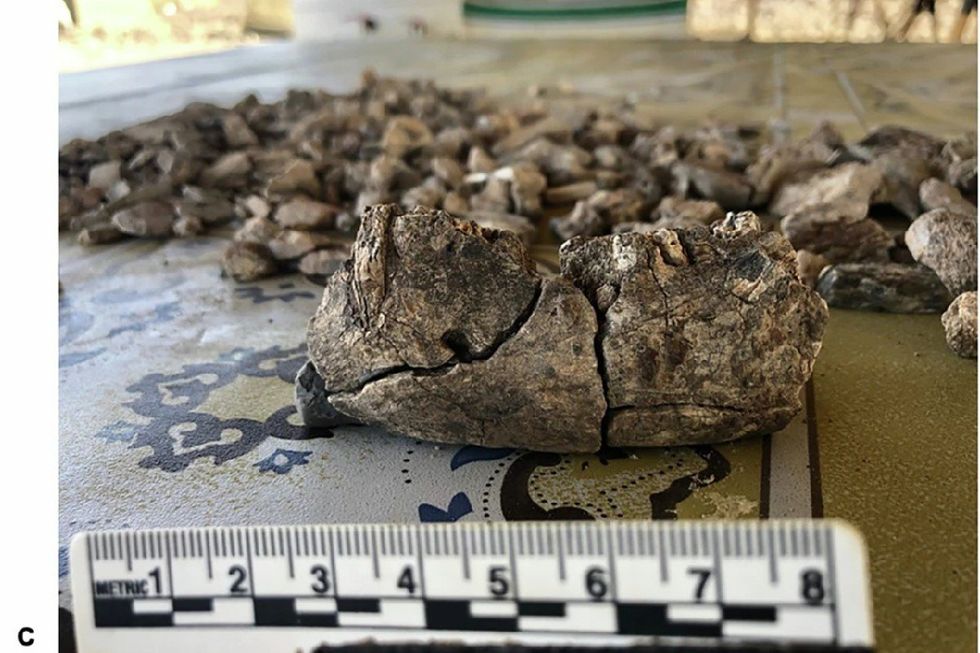
The jaw fragment was examined by Dr Fred Spoor, a human palaeontologist, and Zeresenay Alemseged from the University of Chicago, whose Ethiopian fieldwork team made the initial discovery
|NATURE/ZERESENAY ALEMSEGED
"The fossil shows a mixture of characteristics," Dr Spoor explained, adding it had substantial teeth such as those found in later Paranthropus species but also appeared to have other less specialised features.
"Given this ambiguous combination of characteristics, we decided not to attribute the new fossil to a particular species of Paranthropus at this stage," Dr Spoor said.
The jawbone was recovered from the Mille-Logya research area within the Afar region, a location renowned for yielding an exceptional diversity of hominin remains.
Fossils unearthed from this territory span an extraordinary temporal range, stretching from ancient hominins existing six million years in the past to some of humanity's earliest known Homo sapiens remains, which date to 160,000 years ago.
The region gained particular fame for producing the first complete Australopithecus afarensis skeleton, commonly referred to by its nickname "Lucy".
Despite this remarkable record of ancient human discoveries, Paranthropus remains had never been identified in the Afar, presenting a persistent puzzle for researchers.
But the new discovery has finally ended the long-standing anomaly.
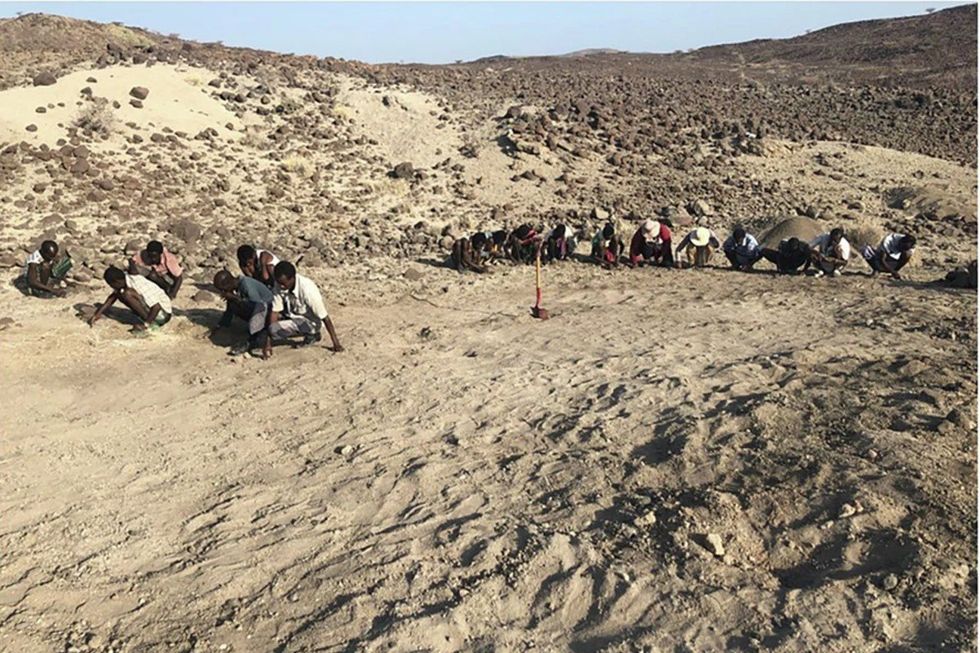
The discovery was made in Ethiopia's Afar region
|NATURE/ZERESENAY ALEMSEGED
"Surprisingly, Paranthropus remained unknown from the Afar region despite decades of fieldwork uncovering large numbers of fossils that document human evolution," Dr Spoor noted.
"Hence, it was thought that Paranthropus never dispersed this far north, perhaps because the environment was not suitable, or it could not compete with species that were present locally."
The Paranthropus genus earned the moniker "Nutcracker Man" owing to their distinctive cranial features, which included considerably enlarged jaws and molar teeth compared to modern humans.
Prominent cheekbones and skull ridges pointed to the species being able to produce powerful chewing power.
These anatomical characteristics led scientists to conclude the species subsisted on a specialised regime of tough plant matter.
The dietary restrictions were thought to have constrained their habitat range, confining them to areas where appropriate food sources could be found.
However, the research fundamentally undermines this interpretation.
Evidence now indicates that Paranthropus possessed considerably more adaptable feeding habits than previously recognised and could thrive across diverse environmental settings.
Intriguingly, the Afar region also hosted Australopithecus garhi during the same period, another hominin species characterised by substantially large molars, marking the first known instance of two "heavy chewers" coexisting.
"The discovery of Paranthropus in the Afar highlights how little is known about human evolution in eastern Africa during the crucial period between 2.5 and 3 million years ago, when the oldest fossils of this genus and the Homo lineage are found," Dr Spoor stated.