






Researchers from the University of Haifa have unearthed a lead sling bullet dating back approximately 2,200 years to the Hellenistic period.
The revealing archaeological find emerged from excavations at the ancient city of Hippos, situated close to the Sea of Galilee in Israel's Sussita Nature Reserve.
The particular projectile has been hailed as extraordinary due to its Greek inscription bearing the word "Learn" - a message never before documented on any sling bullet anywhere in the world.
The discovery was detailed in a study published in PEQ, a journal based in England, authored by Dr Michael Eisenberg and Dr Arleta Kowalewska, who lead the Hippos excavations through the Zinman Institute of Archaeology, alongside Professor Gregor Staab from the University of Cologne.
TRENDING
Stories
Videos
Your Say
Dr Eisenberg, from the Department of Archaeology at the University of Haifa's School of Archaeology and Maritime Cultures, explained the significance of the find.
"Sling lead bullets of this type are well known in archaeological research from many sites dating to the Hellenistic period, particularly from the second century BCE.
"At Hippos alone, 69 such projectiles have been identified so far, but this is the first in the world to bear the inscription 'Learn'.
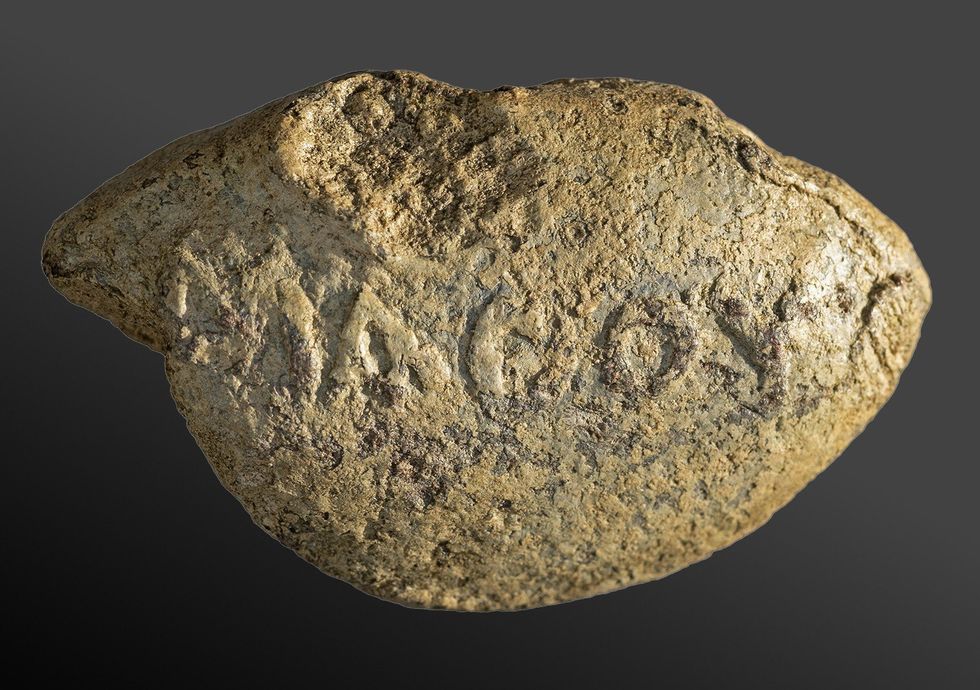
Archaeologists uncovered the sling bullet bearing the Greek inscription 'learn'
|Dr. Michael Eisenberg, University of Haifa
"This represents local sarcastic humor on the part of the city's defenders, who wished to teach their enemies a lesson with a wink 'Learn your lesson!'" he said.
The inscription points to the dark wit of ancient soldiers defending their city against attackers.
The oval-shaped projectile measures 3.2 by 1.95 centimetres and currently weighs 38 grammes.
However, one side displays clear evidence of a forceful collision that broke away a portion of the bullet, suggesting its original weight was closer to 45 grammes when whole.
RECENT ARCHAEOLOGICAL DISCOVERIES
Such ammunition was manufactured through a straightforward process involving the casting of molten lead into stone moulds.
This simple production method meant soldiers could create fresh supplies of projectiles even whilst engaged in active military operations.
This made sling bullets a practical choice for extended campaigns and siege warfare throughout the Hellenistic world.
The projectile came to light in the necropolis area south of Hippos, near an ancient road that once served the city.

An aerial view of Hippos with the Sea of Galilee visible in the background, where the discovery was made
|Dr. Michael Eisenberg, University of Haifa
Archaeologists believe it was likely fired by defenders positioned on the city walls towards enemy forces approaching to lay siege, travelling a distance of roughly 260 metres before landing.
Lead sling bullets ranked among the most affordable yet devastatingly effective weapons available to ancient armies, and a proficient slinger could hit targets from more than 300 metres away.
Beyond the newly discovered "Learn" inscription, such projectiles are known to have featured military commanders' names and city identifications.
Others bore symbols believed to grant them additional power, including tridents, lightning bolts, and scorpions.