










Construction workers preparing to build a residential block in Italy have unearthed a pair of 1,800-year-old Roman pools found beneath scrapyard.
The two structures, reaching depths of up to four metres and stretching as long as 28 metres, date back to 200 BC and were discovered in an eastern suburb of Rome.
Built with sturdy stonework and concrete, the basins were supplied with water through channels connected to a nearby stream during an era when affluent Romans constructed country estates in the surrounding area.
"We really have no clear idea what they were for," archaeologist Fabrizio Santi said on Wednesday.
The one-hectare excavation site now sits surrounded by unkempt parkland, vehicle breakers' yards and unremarkable apartment blocks.
Specialists examining the discovery have dismissed several potential explanations for the structures, including their use as swimming facilities, sheep dipping tanks or basins for constructing vessels.
While the pools might have served as water reservoirs, the presence of wide ramps descending into the water points towards an alternative function.
The longer basin, measuring 29 metres, contains particularly baffling architectural elements - two substantial recesses carved into each side wall and a circular opening at one end.
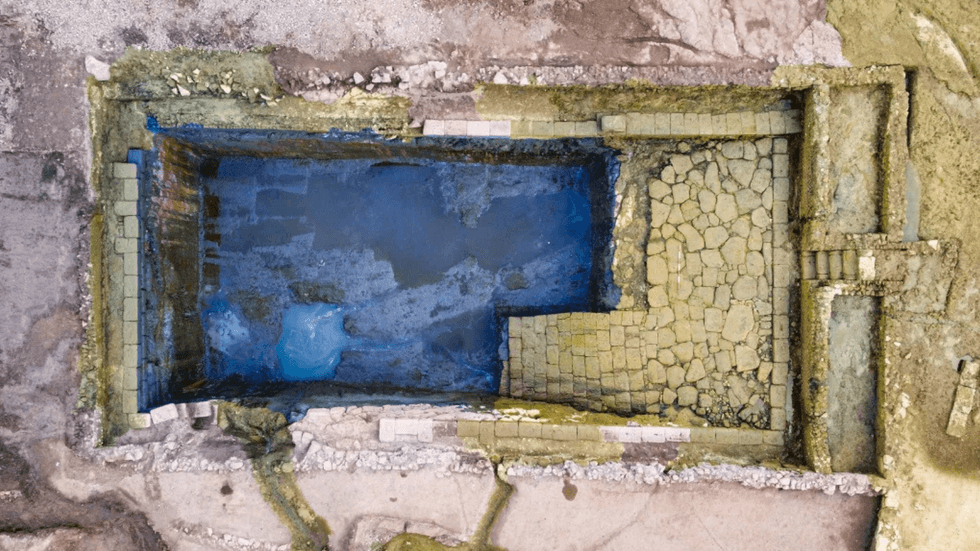
The structures date back to 200 BC and were discovered in an eastern suburb of Rome
|ITALIAN MINISTRY OF CULTURE
This aperture was formed by setting a large ceramic dolium - a type of vessel typically employed for storing wine or olive oil - into the wall with its mouth facing outward.
"The dolium is intact, creating an internal space of over a metre for water to flow into," one member of the excavation team explained.
Adjacent to the pools, archaeologists uncovered a tomb housing a substantial sarcophagus that remains sealed, alongside three funeral urns.
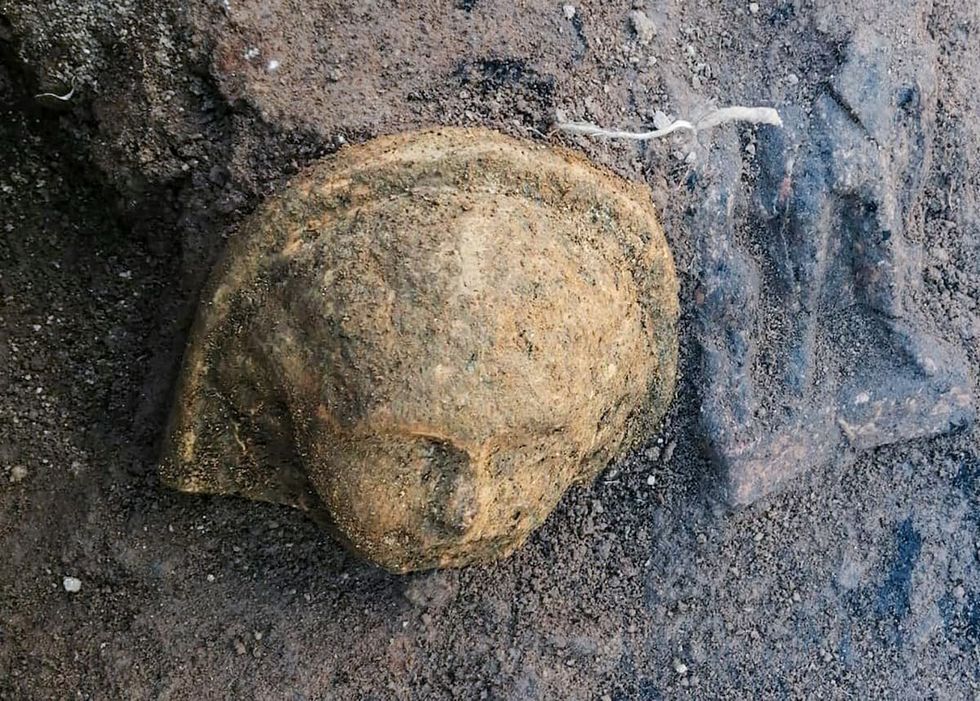
One of these urns contained a partial human skull bearing evidence of ancient medical intervention - a hole drilled through the bone as part of a surgical procedure.
ARCHAEOLOGICAL - READ THE LATEST:
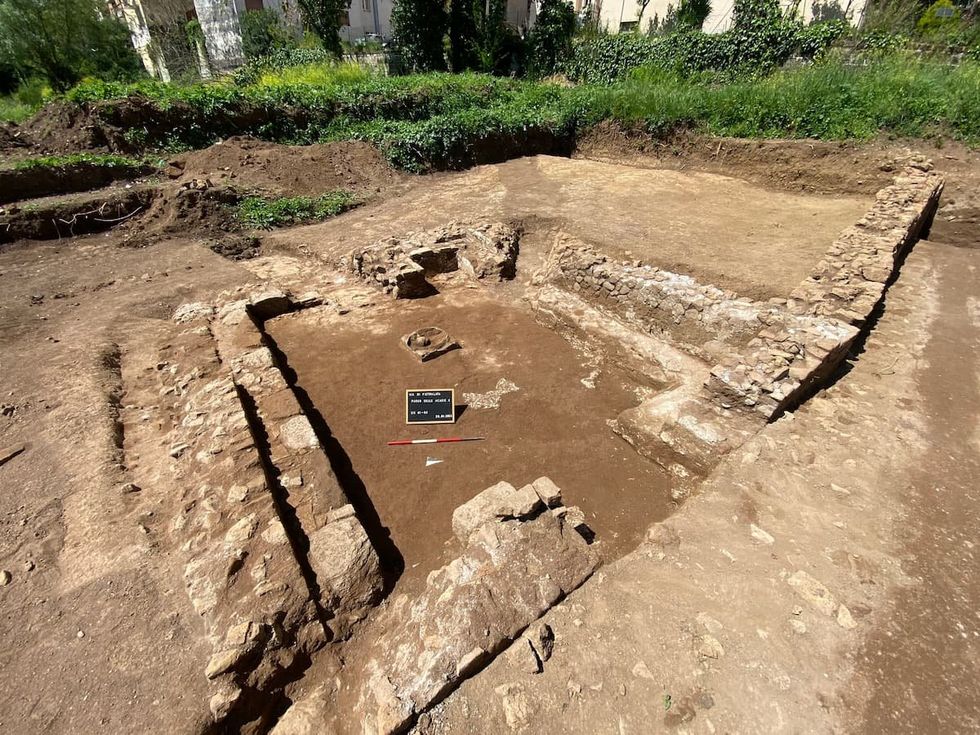
Archaeologists found the remnants of a shrine just metres away from the structures
|ITALIAN MINISTRY OF CULTURE
Mr Santi noted: "It is very rare to find such a monumental tomb from the Republican era.
"This could have been the edge of the property of the person in the sarcophagus."
The discovery of such a significant burial site from Rome's pre-imperial period adds another layer of intrigue to the excavation, potentially linking the pools to a wealthy landowner.
A crucial clue to the basins' purpose emerged just metres away, where archaeologists found the remnants of a shrine, including offerings such as ceramic foot models.
Six bronze figurines were recovered from the shrine site, with three depicting Hercules
|ITALIAN MINISTRY OF CULTURE
Six bronze figurines, each around nine centimetres in length, were recovered from the shrine site, with three depicting Hercules - one showing the mythological figure wielding a club whilst clutching a lion's pelt.
"We think this was a shrine to Hercules, and the worship of Hercules was linked to water," Mr Santi explained, noting that a similar pool had been discovered at a Hercules shrine in Cerveteri, north of the capital.
This parallel has convinced researchers the basins likely served a sacred function, though their precise ritual use remains unknown
The tomb and shrine will be preserved, whilst the pools will be reburied following study, with construction prohibited above them.
Our Standards: The GB News Editorial Charter