










A form of prehistoric "walkie talkies" have sprung into life for the first time in thousands of years in a new test.
Ancient shell trumpets from the Stone Age have sounded their distinctive notes once more after they were last used as far back as 4690 BC
A team of archaeologists examined a dozen instruments from the Neolithic period, unearthed across the Catalonia region of Spain.
Remarkably, two-thirds of these prehistoric horns remained in working condition, capable of producing sounds that rival modern instruments in power.
The most impressive specimen generated blasts measuring 111.5 decibels, comparable to the volume of a trombone or an car horn at full strength.
The findings were detailed in research published in the journal Antiquity.
Scientists believe these ancient instruments served as a sophisticated communication network, enabling Stone Age communities to exchange simple coded messages across considerable distances.
The powerful blasts could be heard from as far as six miles away, connecting villages scattered along the Llobregat River that were positioned beyond visual range of one another.
Such signals may have warned settlements of approaching threats or helped coordinate farming during planting and harvest seasons.
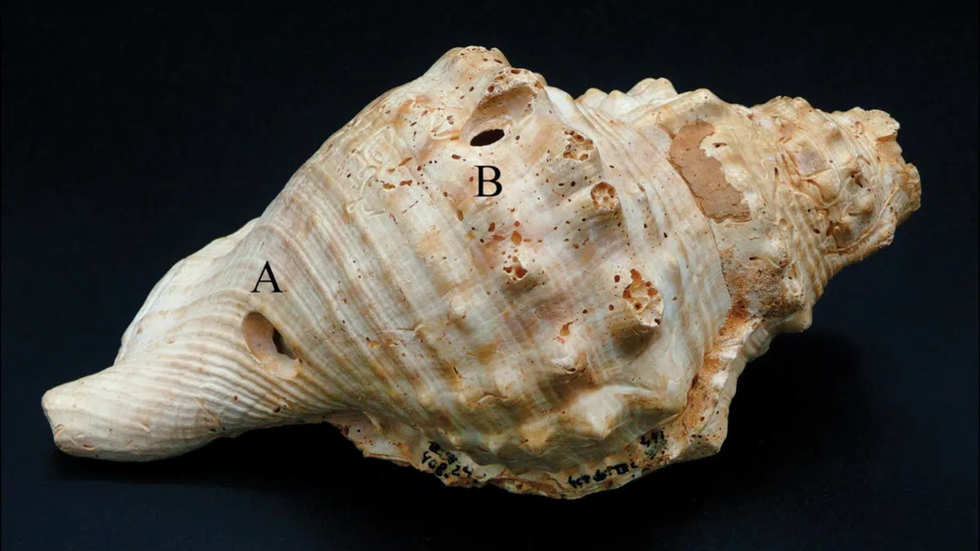
A team of archaeologists examined a dozen instruments from the Neolithic period
|MIQUEL LOPEZ-GARCIA/MARGARITA DIAZ-ANDREU
Seven of the trumpets emerged from the Neolithic mines at Espalter and Can Tintorer, where ancient workers extracted variscite, a green mineral prized for jewellery.
Dr Margarita Díaz-Andreu, from the University of Barcelona, suggested these might have been used for "signalling for dangers in the mine or a form of communication in a dark and very sonorous place".
Each trumpet was fashioned from the shell of the Charonia sea snail, commonly known as Triton's Trumpet, with craftsmen carefully removing the tip to create a functional mouthpiece.
Evidence of wormholes and sea sponge damage on the shells indicates that ancient Catalonians collected dead specimens from the seabed specifically for musical purposes rather than consumption.
SCIENCE - READ THE LATEST:
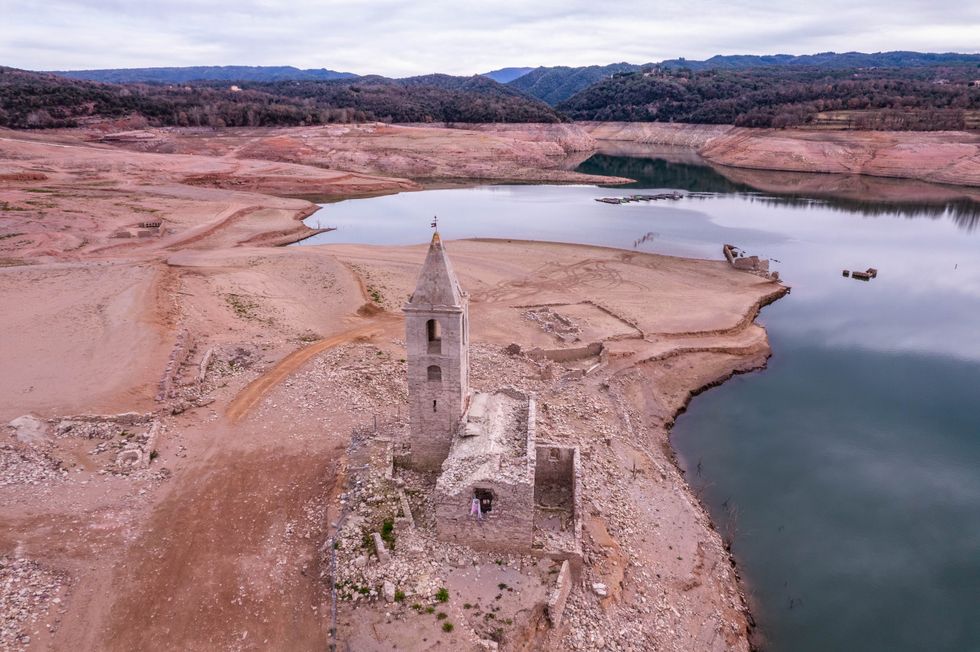
The ancient instruments were unearthed in rural Catalonia, on Spain's east coast
|GETTY
Dr Miquel Lopez-Garcia, the study's lead author, combined his expertise as both an archaeologist and professional trumpet player for the study.
After playing a conch, he discovered that instruments with precise, regular cuts and 20-millimetre mouthpieces produced the most stable tones.
Dr Lopez-Garcia could generate three separate notes with remarkable consistency, and could even eke out tunes, which could have been used to send more complex messages many miles away.
Archaeological records reveal that the shell horns served Catalonia for approximately 1,500 years before mysteriously vanishing from use around 3600 BC.

PICTURED: Miquel Lopez-Garcia plays the conch
|MIQUEL LOPEZ-GARCIA / MARGARITA DIAZ-ANDREU
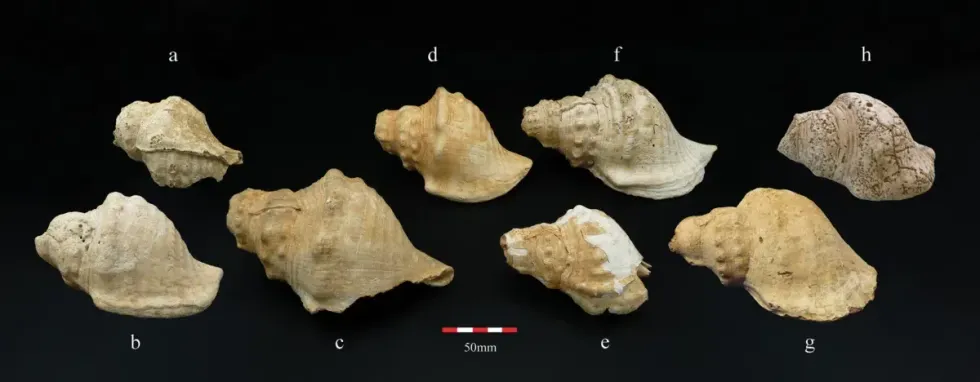
Two-thirds of these prehistoric horns remained in working condition
|MIQUEL LOPEZ-GARCIA / MARGARITA DIAZ-ANDREU
After this, the instruments disappeared from the region for roughly three millennia before eventually reappearing during the Ice Age.
What makes the disappearance particularly puzzling is that neighbouring Mediterranean cultures continued employing Charonia shells as communication devices throughout this period.
Something unique to Catalonia prompted the abandonment of this effective technology, yet researchers remain entirely baffled as to what caused this shift.
The study authors say they have no explanation for why these communities suddenly ceased using such a practical tool.
Our Standards: The GB News Editorial Charter