









Archaeologists have found what has been dubbed the largest prehistoric settlement ever discovered in the British Isles.
The site at Brusselstown Ring hillfort in County Wicklow, Ireland contains evidence of more than 600 homes.
This ancient community is estimated to have thrived between roughly 1200 and 400 BCE, spanning the Late Bronze Age into the Early Iron Age.
The discovery, published in the journal Antiquity is already reshaping how experts think about how people lived thousands of years ago in these islands.
TRENDING
Stories
Videos
Your Say
Dr Dirk Brandherm, of Queen's University Belfast, identified the suspected house platforms through airborne surveys, with subsequent excavations confirming the settlement's scale.
Its size and layout are what make this site so unique: two widely spaced embankments surround the settlement, with the outer boundary stretching to include not just the main hillfort but also a nearby Neolithic enclosure at the so-called "Spinas Hill 1".
Finding settlements that span more than one hill is incredibly rare in Britain and Ireland.
The site sits within the Baltinglass hillfort cluster, a landscape featuring up to 13 large hilltop enclosures showing nearly continuous activity from the Early Neolithic through the Bronze Age.
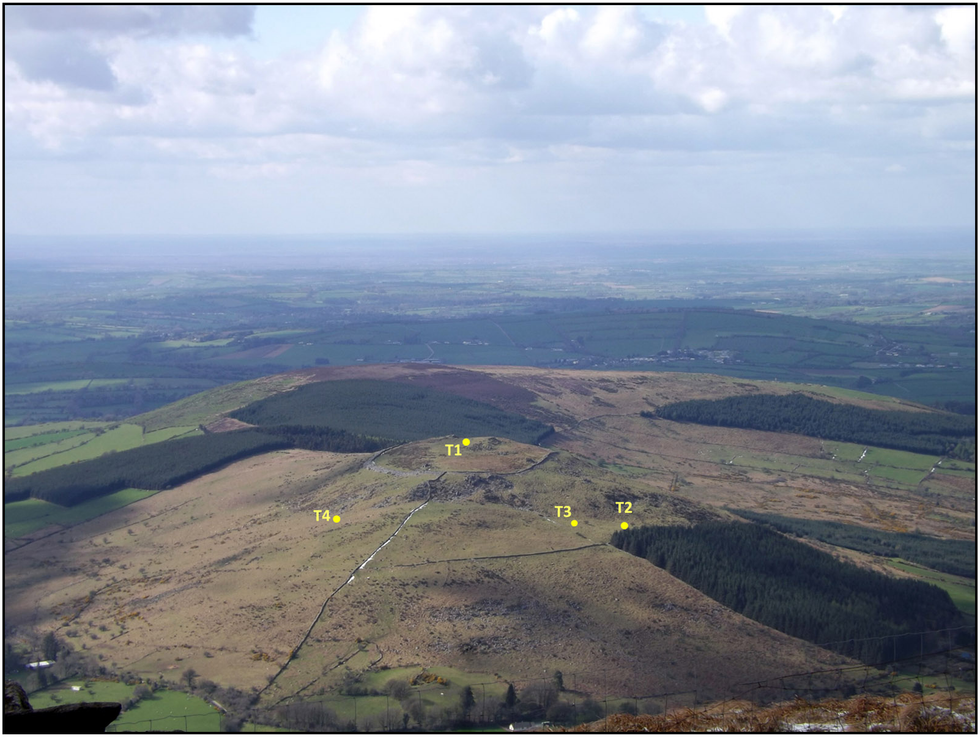
Archaeologists have found what's being called the largest prehistoric settlement ever discovered in Britain or Ireland
|ANTIQUITY 2025
This stands in stark contrast to typical prehistoric Irish settlements, which usually consisted of just one to five scattered dwellings rather than densely packed communities, as seems to have been found in County Wicklow.
The team dug trenches over house platforms of varying sizes, ranging from 6 to 12 metres in diameter.
Radiocarbon data showed houses of all sizes were occupied at the same time. And the artefacts found inside them showed no real differences in wealth or status.
Dr Cherie Edwards, who worked on the project, emphasised the significance, saying: "Brusselstown Ring presents an intriguing case for understanding settlement dynamics in Ireland during the Bronze Age.
LATEST DEVELOPMENTS
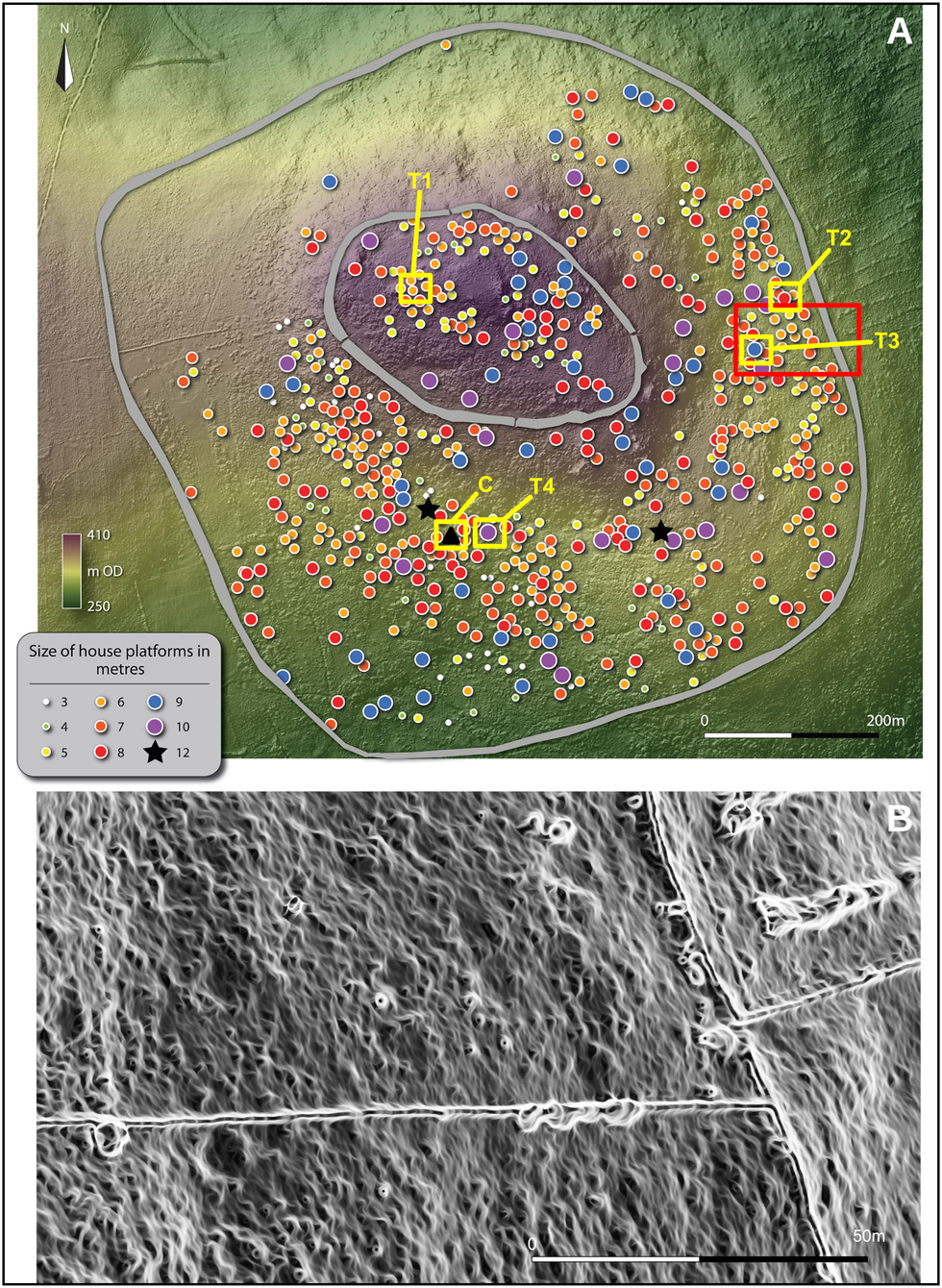
The site at Brusselstown Ring hillfort in County Wicklow contains evidence of more than 600 homes
|ANTIQUITY 2025
"This site — along with a small number of other nucleated settlements situated on hilltops—appears to have emerged around 1200 BC. This pattern contrasts sharply with the more typical form of prehistoric Irish settlements, which generally consist of one to five dwellings.
"Such evidence suggests that proto-urban development in Northern Europe may have occurred nearly 500 years earlier than traditionally recognised."
The excavations also turned up something potentially groundbreaking: a stone-lined structure with a flat interior that does not look anything like the typical roundhouses at the site.
A stream appears to have flowed into it from a rocky hillside, leading researchers to suspect it might be a water cistern.
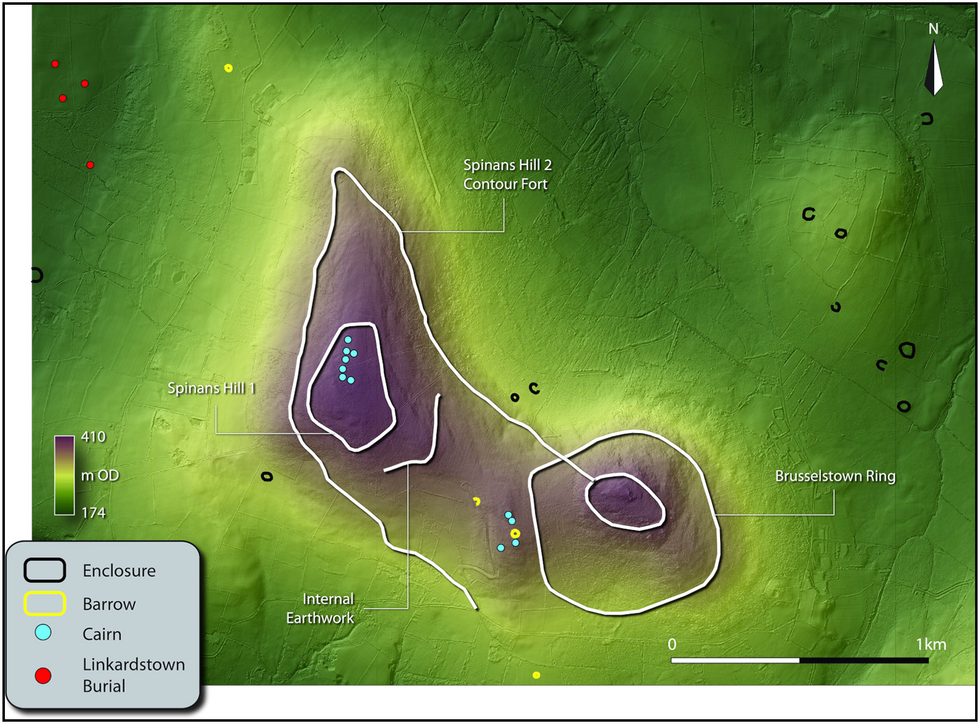
Two widely spaced ramparts surround the settlement
|ANTIQUITY 2025
If confirmed, it would be the first of its kind ever found in an Irish hillfort, and would show remarkable planning to support such a large hilltop population.
As for why the thriving community eventually emptied, the settlement was gradually abandoned around the third century BCE, although nothing suggests this was due to climate shifts, but rather social and economic factors.
Future work will focus on confirming the cistern's function and understanding why this remarkable community ultimately faded away.
Our Standards: The GB News Editorial Charter