









A morning stroll in Norway led to an extraordinary discovery when a walker stumbled upon a glittering object beneath an uprooted tree.
The find turned out to be a gold sword scabbard ornament dating back as far as 1,500 years.
"I saw a mound in the ground under a tree and poked at it with a stick," the hiker said in a statement from the University of Stavanger.
"Suddenly, I saw something that glittered. I didn't quite understand what I had found."
The sixth-century artefact measures roughly six centimetres long and weighs 33 grams.
It once decorated the scabbard of a high-status warrior's weapon.
Researchers believe the ornament belonged to a regional leader who commanded a loyal band of warriors during the early sixth century.
"Whoever wore the sword it was on was probably the leader in this area in the first half of the sixth century and had a warrior retinue of loyal men attached to him," said Hakon Reiersen, an archaeologist at the University of Stavanger Archaeological Museum.
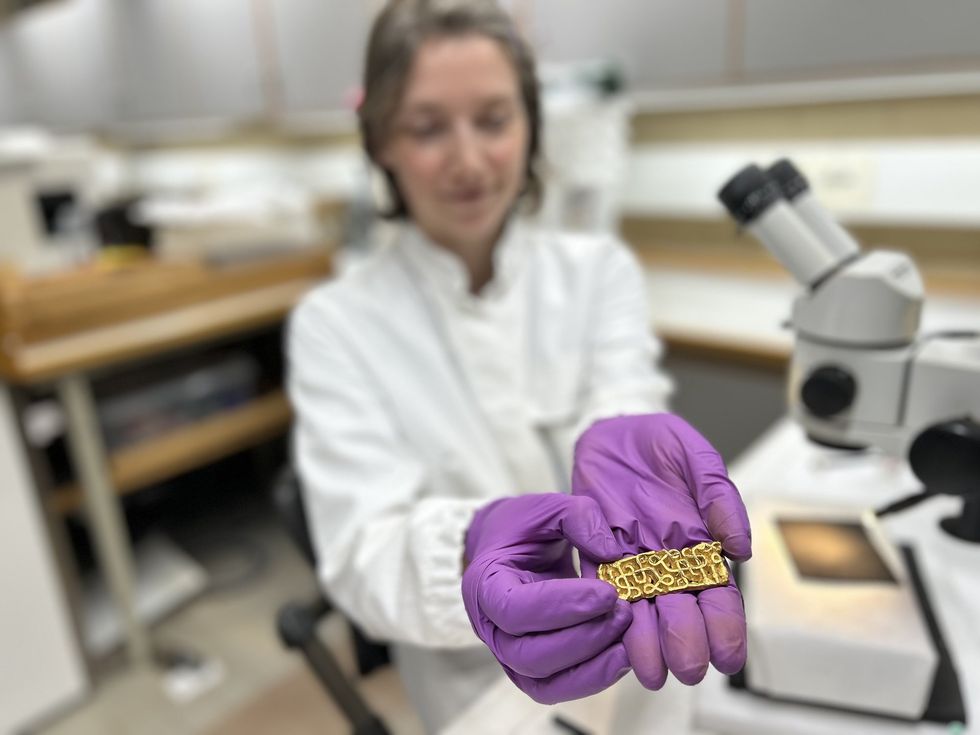
Researchers believe the ornament belonged to a regional leader who commanded a loyal band of warriors
|UNIVERSITY OF STAVANGER ARCHAEOLOGICAL MUSEUM
The item shows signs of considerable wear and tear, suggesting its owner used it extensively before burying it.
Southern Norway suffered severe population decline during this period due to volcanic eruptions, prolonged cold weather and plague outbreaks.
Experts believe the scabbard was deliberately deposited as an offering to the gods during these troubled times.
"The filigree ornamentation places the object among the finest works from the period," said Siv Kristoffersen, a professor emerita at the University of Stavanger Archaeological Museum.
ARCHAEOLOGY BREAKTHROUGHS - READ MORE:
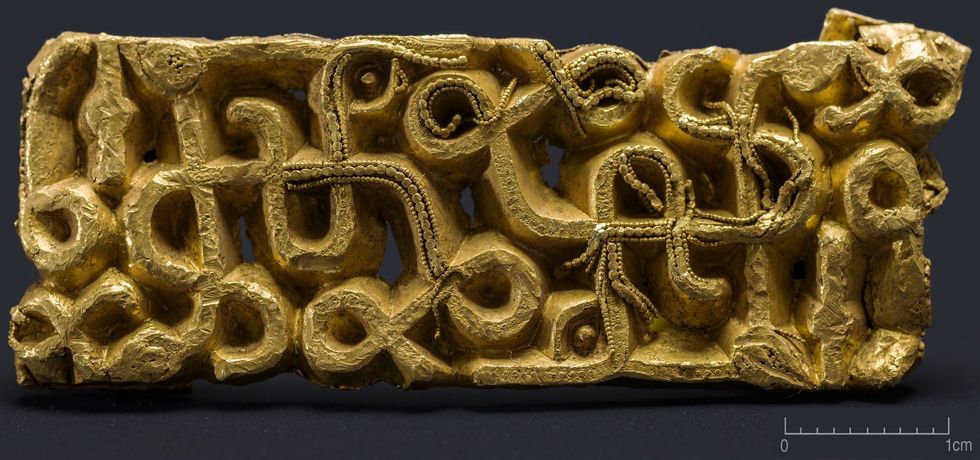
At first glance, the scabbard's decorative features just look like curved lines
|UNIVERSITY OF STAVANGER ARCHAEOLOGICAL MUSEUM
"This must have been a magnificent sword."
Its decorative features include serpentine creatures which, at first glance, appear as curving lines - but reveal two animal figures facing one another in profile upon closer inspection.
Kristoffersen noted the design may represent a human head combined with an animal's body, a common motif from this era.
Only 17 comparable scabbard fittings have been unearthed across Northern Europe.
The discovery site lies northeast of Hove, an established power centre where archaeologists have previously found numerous gold objects and evidence of high society.
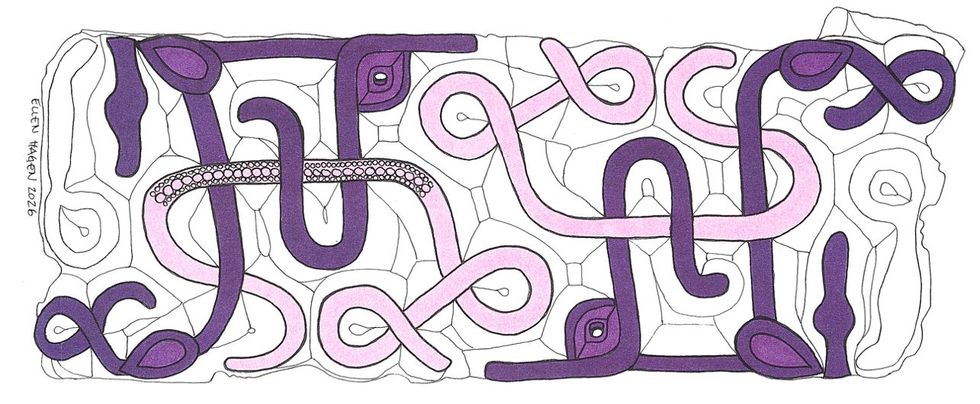
Upon closer inspection, the ancient artefact can be seen bearing a host of serpentine creatures
|UNIVERSITY OF STAVANGER ARCHAEOLOGICAL MUSEUM
"By sacrificing such magnificent objects to the gods, the leaders at Hove confirmed their status and power," Reiersen said.
The find adds to evidence of a significant power centre operating at Hove between 200 and 550 AD.
Similar ritual deposits across Scandinavia include spiral rings and disc-shaped gold pendants, which scholars believe were "sacrificed" or "killed" objects offered for divine protection against natural disasters.
The scabbard ornament will be exhibited at the University of Stavanger Archaeological Museum once specialists complete their examination.
"This allows us to further research the find itself and the ornamentation and find new answers about the power elite that ruled here at this time," said museum director Kristin Armstrong-Oma.