









A nature photographer searching for bearded vultures and red deer in the Italian Alps has stumbled upon one of Europe's most significant palaeontological finds: more than 2,000 dinosaur footprints dating back 210 million years.
Elio Della Ferrera made the discovery in September whilst working in Stelvio National Park, located between the towns of Bormio and Livigno, which will host events at the 2026 Winter Olympics in February.
The fossilised tracks, announced on Tuesday by Italian authorities, stretch across hundreds of metres of vertical mountain wall.
Attilio Fontana, head of the Lombardy region, declared at a press conference: "This set of dinosaur footprints is one of the largest collections in all of Europe, in the whole world."
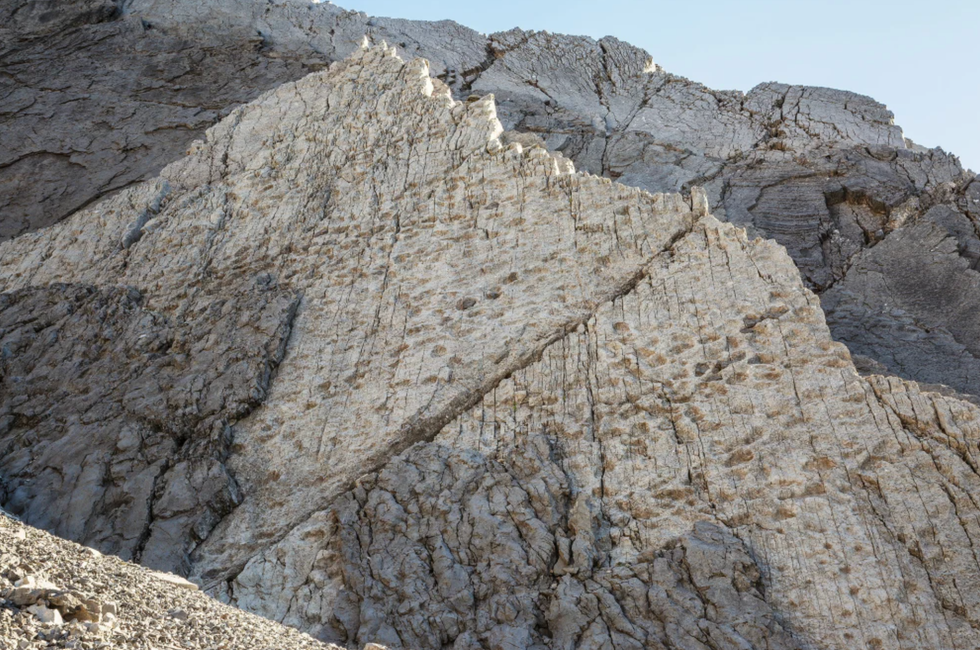
The prints measured up to 40 centimetres in diameter
|Museo di Storia Naturale di Milano
The prints, some measuring up to 40 centimetres in diameter, are so remarkably preserved that individual toes and claws remain visible in the rock face.
Della Ferrera initially spotted something unusual through his telephoto lens whilst photographing wildlife. Reaching the site required a gruelling two-hour hike through dense woodland and up precipitous slopes with no established paths.
"The last few hundred meters are really difficult to cover because they are vertical, and there is this crumbly layer on top of a hard bottom layer," he explained. "But I arrived right there, in front of these footprints."
The tracks are preserved in Upper Triassic dolomitic rocks and run in parallel rows across the mountainside, with many displaying clear anatomical details of the creatures that made them.
LATEST DEVELOPMENTS
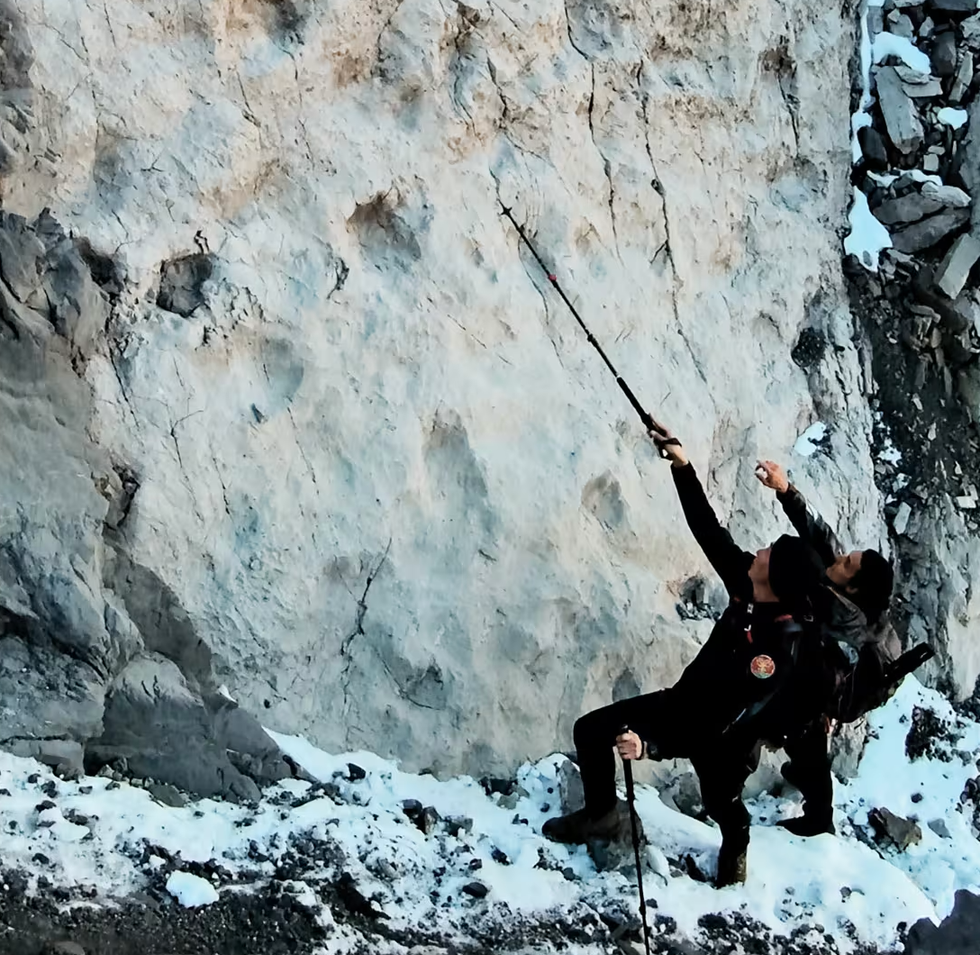
The discovery was branded a 'scientific treasure'
|Museo di Storia Naturale di Milano
Cristiano Dal Sasso, a palaeontologist at Milan's Natural History Museum who assembled a team of Italian experts to examine the site, described the find as "an immense scientific treasure" and "reality that surpasses fantasy."
He noted that in 35 years of work, he had never encountered anything comparable.
The parallel arrangement of the tracks provides compelling evidence of group behaviour. "The parallel walks are clear evidence of herds moving in synchrony, and there are also traces of more complex behaviours, such as groups of animals gathered in a circle, perhaps for defence," Dal Sasso said.
Scientists believe the prints were made by prosauropods, herbivorous dinosaurs characterised by elongated necks, small heads and sharp claws. These bipedal creatures, which could grow up to 10 metres in length, are considered ancestors of the giant sauropods like the Brontosaurus.
During the Triassic Period, when these creatures roamed the area, the landscape bore no resemblance to today's Alpine terrain. The region consisted of tropical tidal flats extending for hundreds of kilometres along the shores of the prehistoric Tethys Ocean.
Ichnologist Fabio Massimo Petti explained that the tracks were created when sediments were soft and waterlogged, with the fine calcareous muds preserving remarkable anatomical details before hardening into rock.
The subsequent formation of the Alpine mountain chain pushed these ancient surfaces into their current near-vertical position.
With snow now covering the site, the research team had only a brief window to conduct preliminary investigations this autumn. Dal Sasso confirmed that comprehensive study would commence next year, likely employing drones and remote sensing technology given the location's inaccessibility.