











English Heritage has acknowledged promoting a "nonsense" theory regarding the origins of Christmas Day celebrations.
The heritage organisation published a post on X suggesting that Christians only mark Christ's birth on December 25 because the Roman Empire converted a pagan sun god festival into a Christian celebration.
The charity wrote: "Why do we celebrate Christmas on 25 December? It was celebrated by the Romans as the birth of the sun god, Sol Invictus.
"After the Roman Empire converted to Christianity, it was changed into a Christian holy day, and parts of the winter festivals were brought together."
The post has since been removed following widespread criticism from historians who argue the claim lacks credible historical foundation.
Historical researcher Chris Bride challenged the organisation directly, stating: "You are one of the highest, most important historical bodies in the country. Guardians of historical knowledge.
"How can you still not know this is utter nonsense? This has nothing to do with why Christmas is on December 25th."
Dr Bijan Omrani, historian and author of God is an Englishman, told The Telegraph: "It is extremely unlikely that early Christians placed Christ's birthday on December 25 because it was also the date of the birth of the pagan Sol Invictus."

A debunked theory claims Christmas is celebrated on December 25 in order to replace a pagan holiday
|GETTY
He noted the charity had previously relied on outdated scholarship when making similar claims about Easter's origins.
The Rev Canon Andrew Davison, regius professor of divinity at Oxford University, questioned whether English Heritage was "interested in historical accuracy", adding: "The evidence is against" their assertion.
The historical record suggests early Christians arrived at December 25 through theological calculation rather than pagan appropriation.
During the early third century, both Hippolytus of Rome and Sextus Julius Africanus determined Christ's birth date by adding nine months to March 25, believed to be the date of the annunciation when the Archangel Gabriel informed the Virgin Mary of her forthcoming pregnancy.
LATEST DEVELOPMENTS
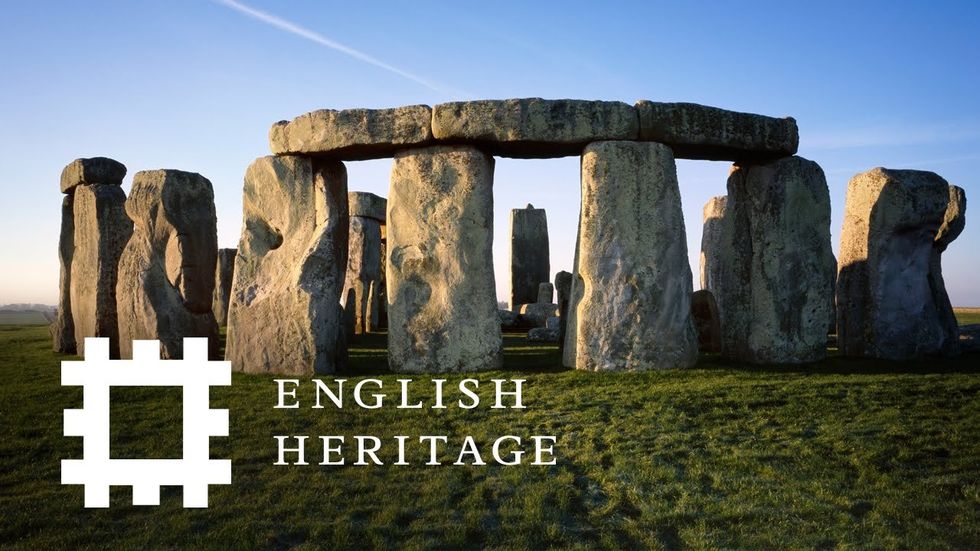
English Heritage took down the post
|ENGLISH HERITAGE
Crucially, these Christian calculations predate the earliest known evidence of Sol Invictus being marked on December 25, which only appears in records from the late third and mid-fourth centuries.
Dr Omrani observed that more prominent Roman sun festivals existed on other dates, including August 28 and October 22, making it improbable that Christians would have selected a relatively obscure pagan celebration to repurpose.
The charity compounded its difficulties with a subsequent post, also now deleted, which incorrectly stated that Christianity "became the official religion of the Roman Empire in 325 CE".
This designation actually occurred in 380 AD through the Edict of Thessalonica.
Popular historian Tom Holland, co-host of The Rest is History podcast, responded to the original post with the plea: "Please make it stop."
This marks the second time this year that English Heritage has faced criticism over religious history, following controversy in April when one of its sites suggested Easter did not have Christian origins.
A spokesman for the organisation acknowledged the error, stating: "We quickly realised we got this wrong and deleted the posts."
More From GB News