











If Brexit was largely driven by the public’s desire to have a more restrictive and selective immigration system, then many voters would have been left bitterly disappointed by the results of liberalising the UK’s visa rules after the United Kingdom’s departure from the European Union.
In the three years leading up to June 2024, the UK witnessed the arrival of 3.9 million migrants – a number which comfortably exceeds the entire population of Wales, along with European countries such as Croatia.
When adding the estimated figure of 898,000 migrants entering the UK for the year ending June 2025, the total pushes towards five million people in the space of just four years.
These islands, historically known for their stable demography and ability to integrate newcomers in sensible numbers, have witnessed an explosion in immigration-fuelled population growth, which has led to quite extraordinary demographic changes since the last census in March 2021.
Based on the traditional decennial cycle, the next edition is scheduled to be held in 2031. This would be after the next UK general election, meaning that ordinary citizens would be deprived of up-to-date population data, which would highlight the scale and pace of immigration-fuelled social change in recent years; insightful knowledge that could help voters make a more informed choice at the ballot box.
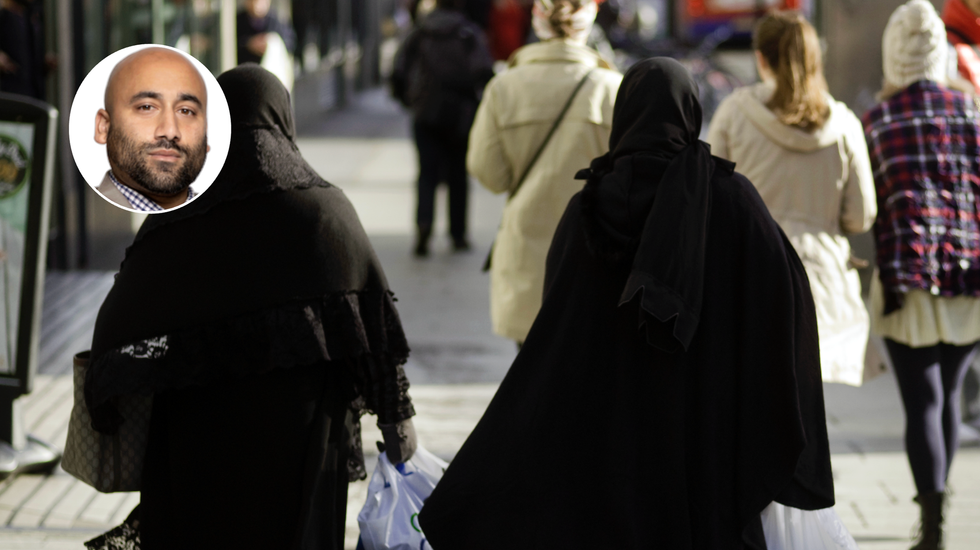
Britain needs an emergency census now to bust the most dangerous myth of multiculturalism - Rakib Ehsan
|Getty Images
When taking all this into consideration, in a new report I authored on behalf of the think-tank Policy Exchange, I flesh out the case for an emergency census to be held next year in England.
The reason for focusing on England is simple – out of the four nations, it has experienced the highest rate of population growth. In the three years leading to June 2024, England’s population grew by 3.7 per cent.
For Wales, Scotland, and Northern Ireland, the corresponding figures are 2.6 per cent, 2.5 per cent, and 1.2 per cent, respectively.
Modelled on the 1966 mid-decade Census, we recommend that this proposed emergency census in England uses a 10 per cent national sample (which would both be time-efficient and cost-effective) along with full local censuses in five ‘special study areas’ which possess ‘exceptional characteristics’ and collectively provide a meaningful geographical spread. Our proposed list includes Preston, Middlesbrough, Leicester, Bournemouth, and Luton.
Preston, a city in central Lancashire, has experienced a remarkable level of population growth in recent times – over 10 per cent in the three years up to June 2024.
This is the highest rate for all UK local authorities (bar the exceptionally small City of London). Middlesbrough, where half of the neighbourhoods are categorised as ‘highly deprived’ – the highest proportion among 296 local authorities included in a recent study by the Ministry for Housing, Communities, and Local Government (MHCLG) – has seen its population increase by 8.5 per cent during the same period (the largest growth in the North East region).
Leicester, meanwhile, is a high-risk area in terms of religious segregation, with the 2022 riots (primarily between Hindu and Muslim male youths from new and emerging communities) being a watershed moment in British community relations.
Bournemouth, traditionally known as a pleasant Dorset seaside town with fine Victorian architecture, is a much-changed place with considerable community tensions over the use of multiple hotels as part of the Home Office’s controversial asylum accommodation system.
My majority-nonwhite hometown of Luton – having historical links with Islamist extremism and being the birthplace of the English Defence League (EDL) – is a national hotspot for overcrowded housing, being the most densely populated local authority outside of London.
An emergency census for England based on a 10 per cent national sample, along with a batch of full local censuses for special study areas with exceptional characteristics, represents an innovative, dynamic, and cost-effective approach to population data collection in the modern age.
Importantly, it would produce fresh, up-to-date demographic data that would ultimately allow us to have a more informed national conversation on matters of immigration, integration, and identity in a rapidly changing society.
You can read the full report here
Our Standards: The GB News Editorial Charter
More From GB News