









Researchers have made a grim discovery inside a unique Dead Sea Scroll connected to a violent chapter in ancient history.
The Copper Scroll stands apart from other scrolls in the famous collection, which were inscribed on parchment or papyrus and contained religious writings.
This artefact was engraved onto metal sheets, and appears to have been made to remain sealed forever.
Dr Shimon Gibson, an archaeologist at the University of North Carolina at Charlotte, has proposed a fresh interpretation of the mysterious scroll.
He suggests it was not a treasure map, but rather a secret record tied to the Bar Kokhba revolt.
This bloody Jewish uprising against Roman rule took place between 132 and 136 AD.
The scroll was unearthed in 1952 within Cave 3Q near Qumran, an ancient settlement overlooking the Dead Sea.
Researchers recognised immediately that this find was unlike anything else in the collection.
Other Dead Sea Scrolls contained biblical manuscripts, religious commentaries and apocalyptic texts.
The Copper Scroll, by contrast, appeared to be simply a peculiar inventory of valuables concealed in unidentified locations.
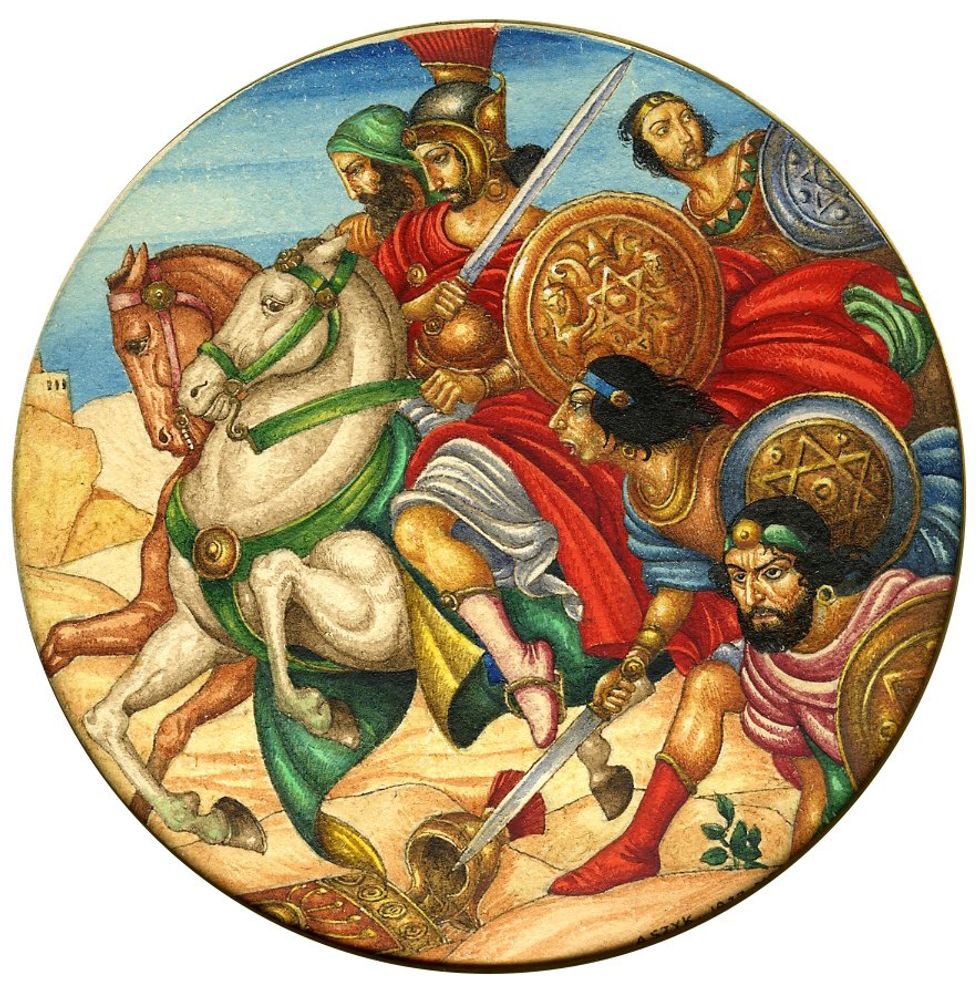
Dr Gibson claims the scroll was a secret record tied to the Bar Kokhba revolt, a Jewish uprising against the Romans
|WIKIMEDIA COMMONS
It contains 64 entries describing hidden riches through vague directions.
One entry proposed by translator Jozef Tadeusz Milik reads: "At Khorrebeh, situated in the valley of Achor below the steps leading to the east, [dig] forty cubits: a coffer [full] of money, the sum of which is the weight of 17 talents.
Another states: "In the funerary monument of Ben Rabbah, of Beit Shalisha: 100 ingots of gold."
Despite decades of searching, none of these treasures have been found - yet.
Dr Gibson has challenged the prevailing theory that the scroll is a record of Temple treasure hidden before Rome's destruction of Jerusalem in 70 AD.
BIBLICAL BREAKTHROUGHS - READ MORE:
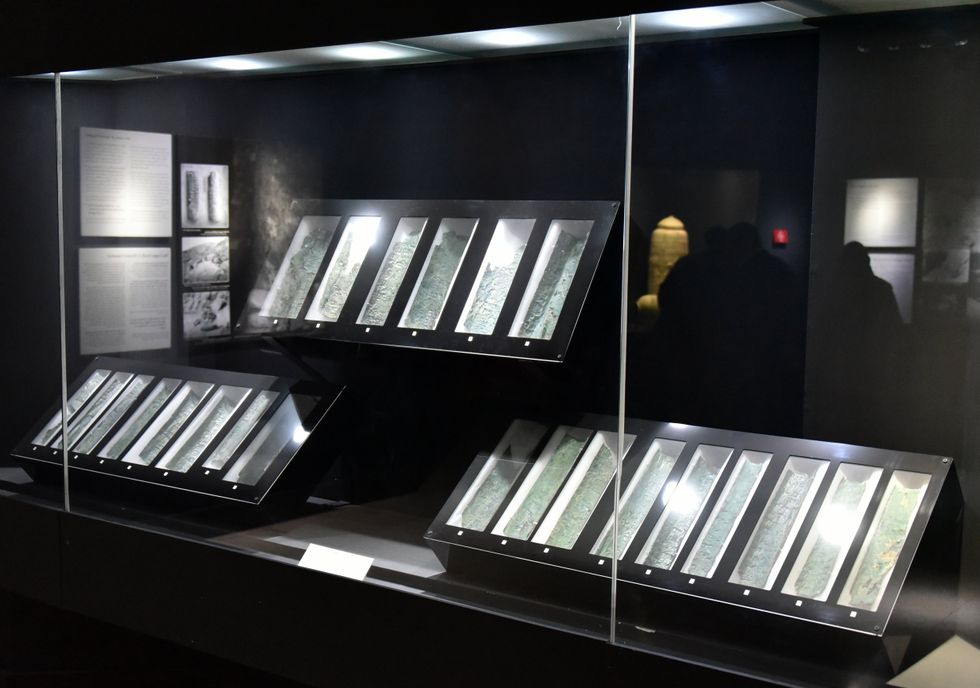
The Copper Scroll, seen on display here, stands apart from the other parchment scrolls in the famous collection
|WIKIMEDIA COMMONS
He argues this explanation does not quite fit the evidence.
His reasoning centres on a key inconsistency: if Jews had successfully concealed the Temple's riches before the Roman invasion, the famous menorah would not have ended up in Roman hands.
The Romans seized sacred objects from the Temple, including the menorah, which was later depicted on the Arch of Titus in Rome.
Gibson instead proposes the valuables listed were funds secretly collected to finance the Bar Kokhba rebellion.
Simon bar Kokhba led this third major revolt against Rome, which some Jews believed could bring about a messianic restoration of Jewish rule in Jerusalem.
Yonatan Adler, an ancient Judaism expert at Ariel University, told Israeli outlet Haaretz that Dr Gibson's hypothesis is "intriguing", saying enigmatic finds like the Copper Scroll invite scholars to think "outside of the box".
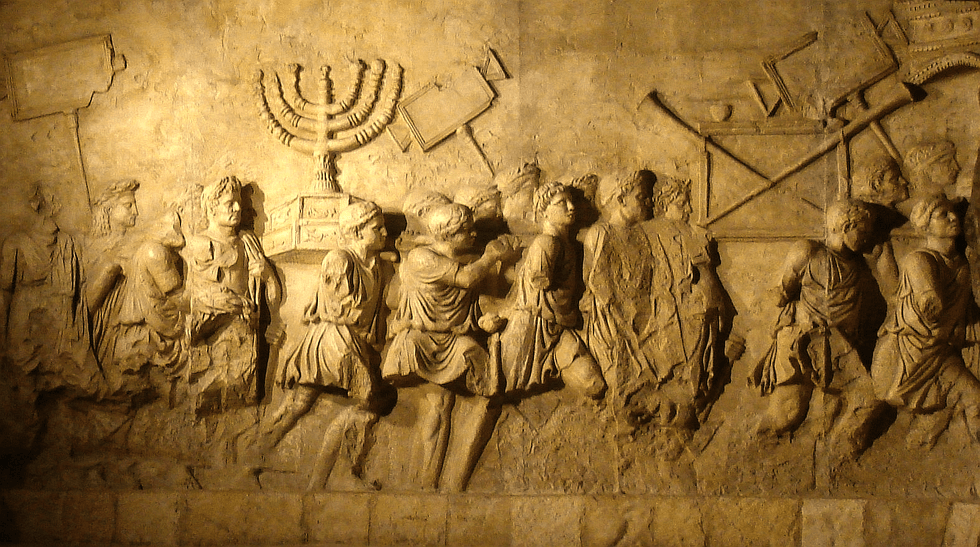
The stolen menorah can still be seen on the Arch of Titus in Rome
|WIKIMEDIA COMMONS
"Even if we still lack a 'smoking gun', novel and well-argued hypotheses of this kind are what move the inquiry forward," Mr Adler said.
Dr Gibson and fellow researcher Joan Taylor recently returned to Cave 3Q and examined archival records from the original 1952 excavation.
The team identified the precise spot within the cave where the scroll had originally been concealed.
Despite their extensive research, archaeologists are still confused as to why the document was engraved onto copper at all.
Dr Gibson believes the metal would crack if repeatedly unrolled, suggesting the scroll was never meant to be regularly read.
It may have been designed as a permanent hidden record intended only for select individuals, he believes.