










Danish maritime archaeologists have uncovered what experts are calling the largest medieval cog ever discovered: a 600-year-old trading vessel lying beneath the waters of the Øresund Strait near Copenhagen.
The remarkable find was made by a team from the Viking Ship Museum while conducting seabed surveys for Lynetteholm, the controversial artificial island project under construction off the Danish capital.
Named Svaelget 2 after the channel where it was located, the wreck represents the biggest European cargo ship from the medieval period ever identified.
The vessel had remained hidden on the seabed between Denmark and Sweden for six centuries before researchers stumbled upon it during routine investigations.
TRENDING
Stories
Videos
Your Say
"The find is a milestone for maritime archaeology," said Otto Uldum, who led the excavation.
The vessel measures roughly 100 feet in length and 30 feet across, with dendrochronological analysis of its timber dating construction to approximately 1410.
Researchers estimate the ship could carry around 300 tonnes of cargo, making it a formidable presence on medieval trading routes.
"A ship with such a large cargo capacity is part of a structured system where merchants knew there was a market for the goods they carried," Mr Uldum explained. "Svælget 2 is a tangible example of how trade developed during the Middle Ages."
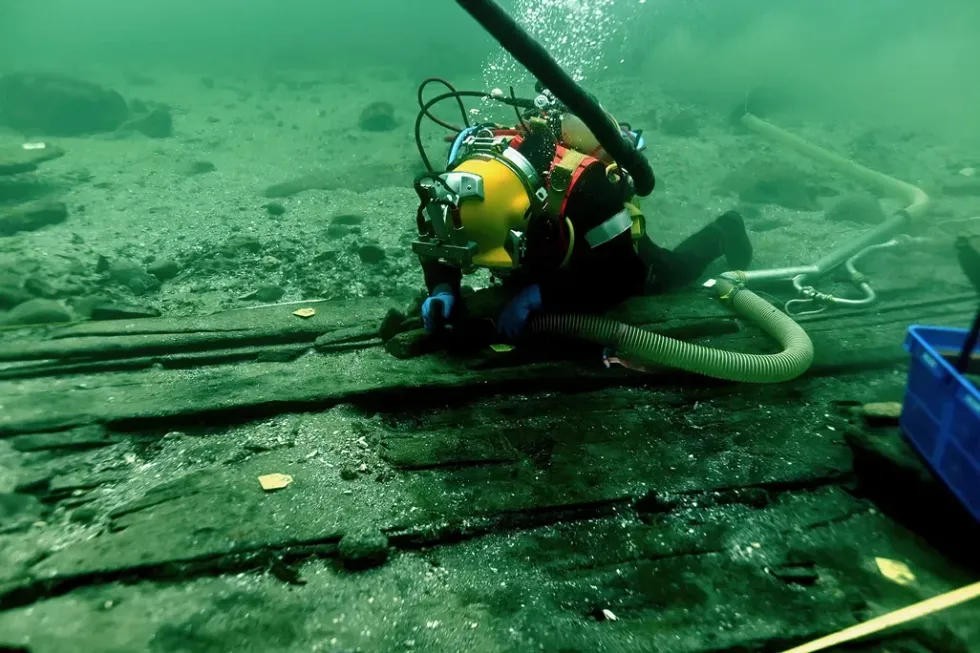
The remarkable find was made by a team from the Viking Ship Museum
|VSM
The excavation leader noted shipwrights pushed the cog design to its absolute limits when transporting bulk goods such as salt, timber, bricks and basic foodstuffs.
"We now know, undeniably, that cogs could be this large... that the ship type could be pushed to this extreme," he added.
Beyond its sheer size, Svaelget 2 stands out for its remarkable state of preservation.
The ship's starboard side, buried in protective sand, yielded extensive rigging components that have never before been observed at such a site.
LATEST DEVELOPMENTS
- Prehistoric 'walkie talkies' spring to life for first time in 6,000 years in extraordinary new test
- Archaeologists uncover 'princely burial' site of 'national importance' comparable to Sutton Hoo discovery
- American history could be rewritten after 'ancient civilisation older than the pyramids' emerges from lake
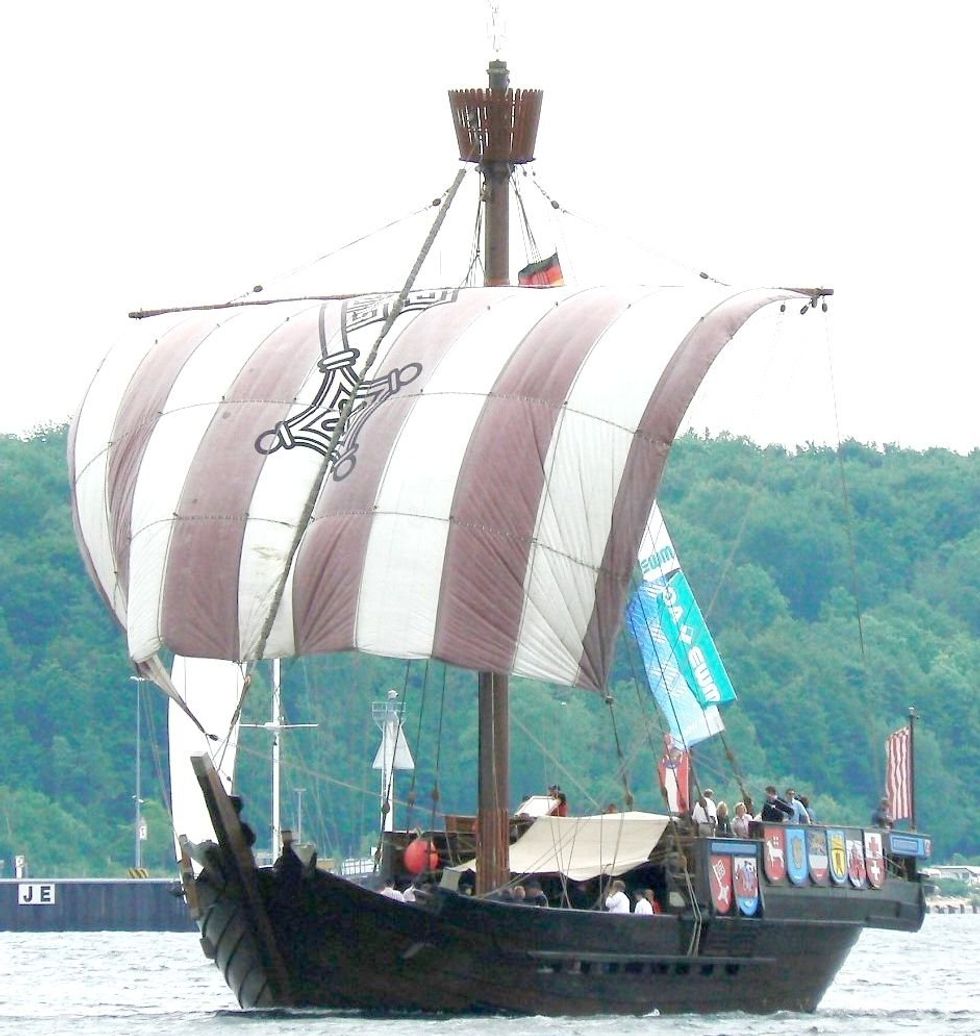
A replica of the 'Bremen cog'
|WIKIMEDIA COMMONS
"It is extraordinary to have so many parts of the rigging. We have never seen this before, and it gives us a real opportunity to say something entirely new about how cogs were equipped for sailing," Mr Uldum stated.
Archaeologists also discovered the first physical evidence of a castle structure on a cog wreck, a raised deckhouse at the stern where crew members sheltered from the elements.
A brick galley constructed from 200 bricks and 15 tiles was found alongside bronze cooking pots, ceramic bowls and food remnants.
Personal belongings, including shoes, combs and rosary beads, offered glimpses into daily life aboard the vessel.
The ship's construction reveals the international nature of medieval commerce, with planks fashioned from Pomeranian oak sourced from present-day Poland and framing timber originating in the Netherlands.
Dutch shipwrights possessed particular expertise in cog construction, suggesting Polish materials were likely transported to a yard in the Low Countries for assembly.
Cogs emerged around the tenth century as vessels capable of moving vast quantities of goods efficiently, their substantial cargo holds surpassing earlier Viking ships, while their tall sides provided defence against boarding during attacks.
Despite their enormous size, these ships required only small crews to operate.
"The cog revolutionized trade in northern Europe," Mr Uldum said. "It made it possible to transport goods on a scale never seen before."
Our Standards: The GB News Editorial Charter