










A 3,300-year-old Egyptian manuscript housed at the British Museum has sparked a fierce debate over biblical accounts of giants.
The document, called Anastasi I, entered the museum's collection in 1839 after being acquired from antiquities dealer Giovanni d'Anastasi.
Interest in the papyrus has recently intensified following its appearance on the Associates for Biblical Research website, where researchers have drawn connections between its contents and Old Testament narratives.
The ancient text describes encounters with a people known as the Shosu, reportedly measuring between four and five cubits in height - potentially reaching eight feet tall.
Backers claim the text serves as evidence behind biblical references to giants - extending well beyond the familiar tale of David and Goliath.
The papyrus takes the form of correspondence composed during wartime, outlining treacherous landscapes and military obstacles faced by Egyptian forces.
Written by a scribe named Hori to a fellow scribe called Amenemope, the text warns of perils awaiting travellers through a narrow mountain passage.
"The narrow defile is infested with Shosu concealed beneath the bushes; some of them are of four cubits or of five cubits, from head to foot, fierce of face, their heart is not mild, and they hearken not to coaxing," the ancient letter reads.
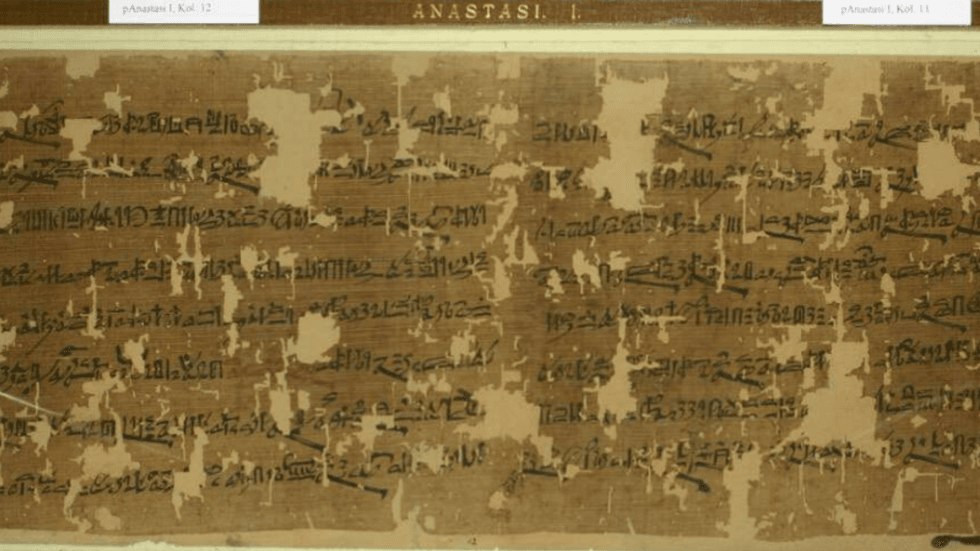
The ancient text describes encounters with a people known as the Shosu
|BRITISH MUSEUM
Given that an Egyptian cubit measured approximately 20 inches, these figures would have stood between six feet, eight inches and eight feet, six inches.
The Associates for Biblical Research said the passage proved the Shosu, who may have been Canaanites, were of exceptional size..
"This is particularly interesting when you consider that a main point in the letter regards the need for accuracy," researchers observed.
The biblical tradition contains numerous references to peoples of extraordinary size who terrified the Israelites during their journeys.
ARCHAEOLOGY - READ THE LATEST:
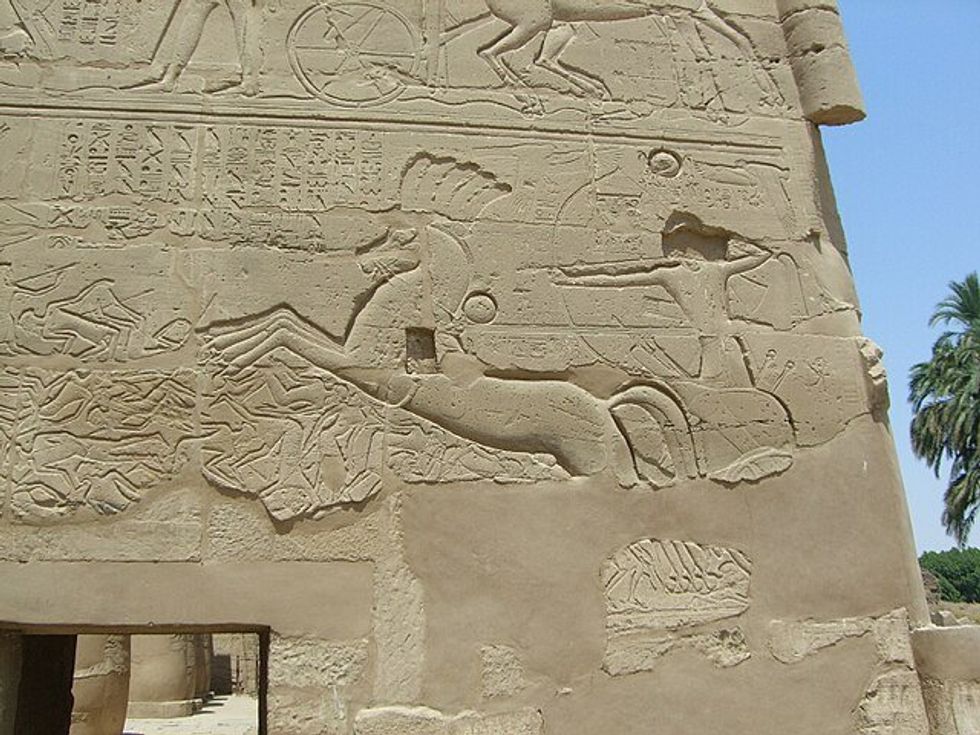
Associates for Biblical Research noted that the Shosu may have been Canaanites of remarkable stature
|WIKIMEDIA COMMONS
Genesis chapter six speaks of the Nephilim, a Hebrew term translated as either "giants" or "fallen ones," describing them as "mighty men which were of old, men of renown."
Numbers 13:33 recounts the Israelites seeing "the giants, the sons of Anak," declaring "we were in our own sight as grasshoppers, and so we were in their sight."
Additional Egyptian sources have been invoked to bolster these claims, including the Execration Texts, which mention "ly anaq" or "people of Anak" - a name associated with biblical giants.
Wall reliefs depicting the Battle of Kadesh, dated to approximately 1274 BC, show captured Shasu spies portrayed as unusually large figures.
However, numerous scholars remain sceptical of claims linking the papyrus to supernatural beings.
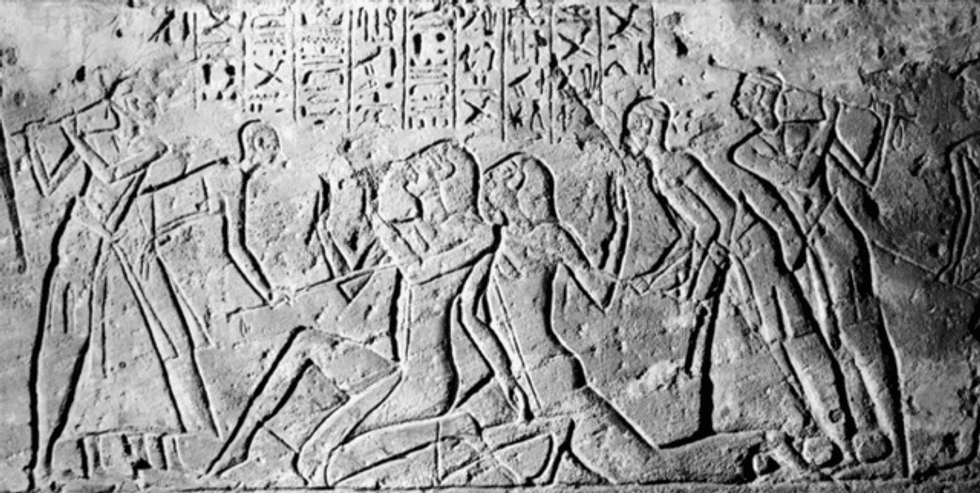
Historians widely recognise the Shosu as a nomadic group from the Levant
|WIKIMEDIA COMMONS
Critics contend the document is actually a satirical instructional letter, with Hori mocking Amenemope's ignorance of geography, military strategy and logistics.
The late Bible scholar Dr Michael Heiser argued that heights of six feet, eight inches or more would simply be comparable to tall individuals living today, rather than proof of otherworldly creatures.
Historians widely recognise the Shosu as a nomadic group from the Levant, suggesting the papyrus reflects military observations rather than literal accounts of giants.
Sceptics point to the complete absence of archaeological evidence, including skeletal remains or oversized dwellings.
The British Museum maintains the papyrus is a historical document illustrating military life and geography - and draws no conclusions about supernatural beings.
Our Standards: The GB News Editorial Charter