










Archaeologists have uncovered the biggest Roman villa ever found in Wales just one metre below the surface of a park.
"My eyes nearly popped out of my skull," project lead Dr Alex Langlands said after ground-penetrating radar revealed the structure.
The find has been already dubbed "Port Talbot's Pompeii" by the Swansea University academic.
It sits inside Margam Country Park, a historic deer park which has never been ploughed or developed.
As a result, means the remains appear to be well-preserved.
Researchers from Swansea University, Neath Port Talbot Council and Margam Abbey Church say the discovery offers unique insight into Welsh history.
The villa spans 572 square metres and is surrounded by fortifications.
Dr Langlands described it as a "really impressive and prestigious" building, probably decorated with statues and mosaic floors.
"We've got what looks to be a corridor villa with two wings and a veranda running along the front," he explained.
"It's around 43 metres long and looks to have six main rooms [to the front] with two corridors leading to eight rooms at the rear."
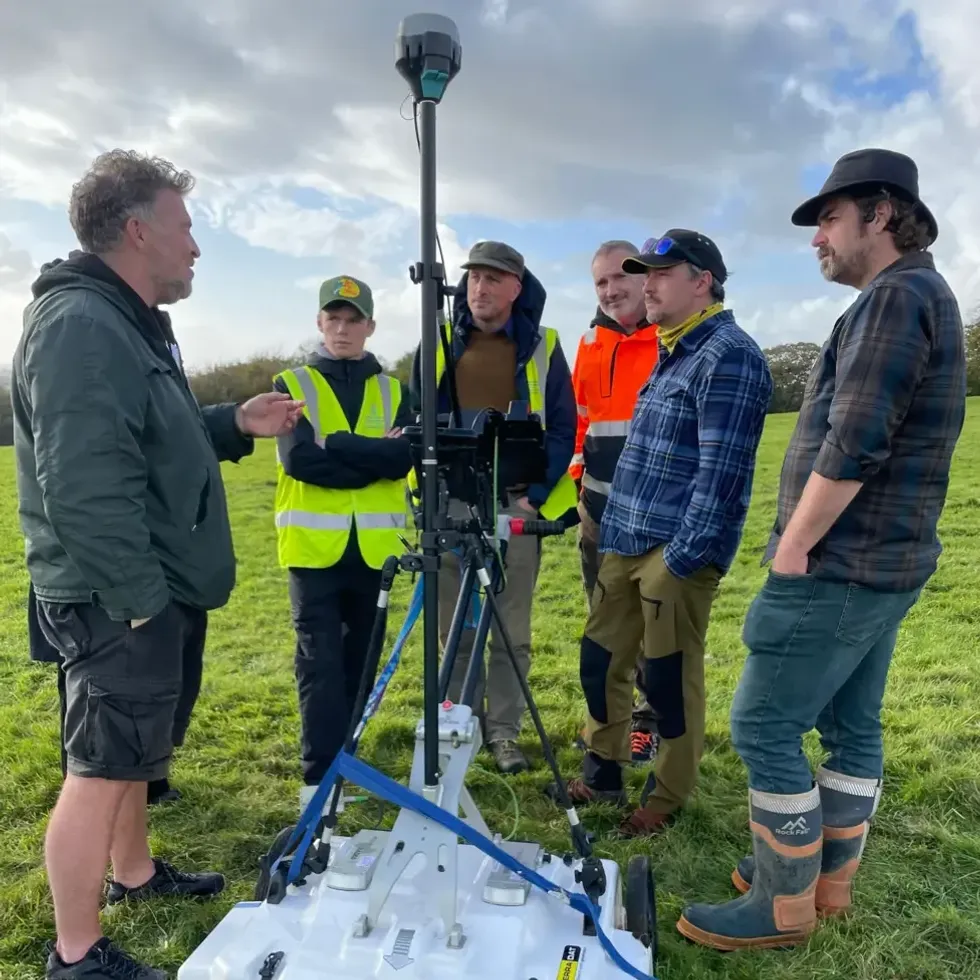
Swansea University researchers used ground-penetrating radar to find the Roman villa below the soil
|SWANSEA UNIVERSITY
"Almost certainly you've got a major local dignitary making themselves at home here," he added.
"This would have been quite a busy place - the centre of a big agricultural estate and lots of people coming and going."
A 354 square metre aisled building sits to the southeast, thought to be a barn or meeting hall.
Most known Roman remains in Wales come from military camps and forts, and grand estates like this are rare.
Dr Langlands said the discovery would force experts to "rewrite the way we think about south Wales in the Romano-British period".
BREAKTHROUGHS BELOW BRITAIN'S SOIL - READ MORE:
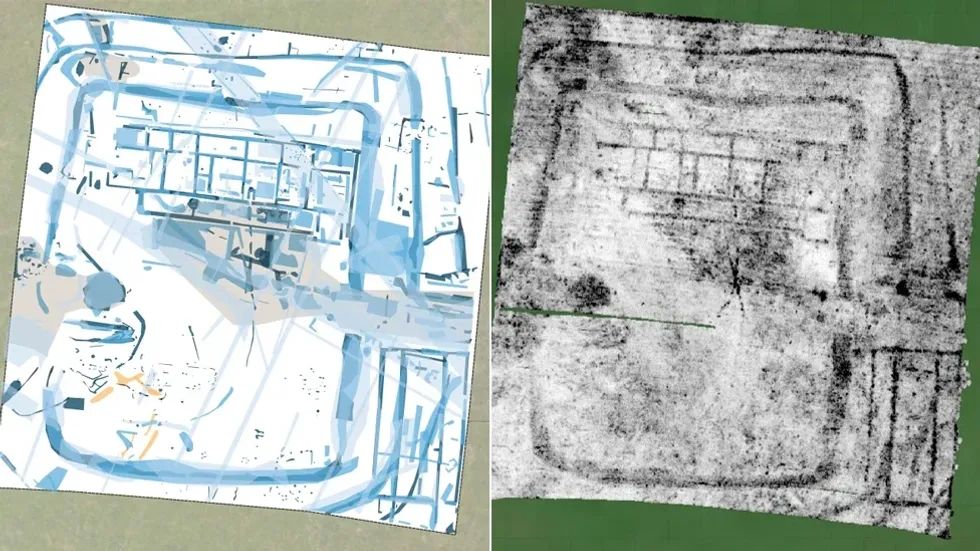
Side-by-side images show the villa inside a defensive enclosure and an aisled building (bottom right) which may have been a barn
|TERRADAT GEOPHYSICS
"This part of Wales isn't some sort of borderland, the edge of empire - in fact there were buildings here just as sophisticated and as high status as those we get in the agricultural heartlands of southern England".
The site has survived because the deer park protected it from ploughing that damaged other villa sites.
But for now, the team is keeping the exact location secret to prevent targeting by rogue metal detectorists.
Conservation will be their first priority before further surveys and excavation is carried out.

Port Talbot had faced 'so many disappointments' with job losses at the Tata steelworks (pictured) but 'this will put us on the map... and we'll be proud', retired teacher Margaret Jones said
| PAMargaret Jones, a retired teacher from Port Talbot, has booked a ticket for an open day where more details will be shared.
"I'm still a bit shellshocked at the thought that this place where I played, where my children and grandchildren have played - that under our feet was this incredible house," she said.
"It's out of this world".
She added that Port Talbot had faced "so many disappointments" with job losses at the Tata steelworks, but "this will put us on the map... and we'll be proud".
Harriet Eaton, heritage education officer for Neath Port Talbot Council, called the discovery "just incredible" and "something we couldn't dream of".
The open day takes place at Margam Abbey Church on January 17.