










An "incredibly rare" Iron Age coin could shed new light on the secrets of ancient Britain.
The coin, a "stater", dates from approximately 50-10BC and represents only the second example of its kind ever found.
It was turfed up by a metal detectorist in the East Yorkshire village of Lelley,
And the discovery may shed light on ancient trading relationships between two tribes that inhabited the region over two millennia ago.
What distinguishes this particular stater is an unusual fifth dot in its design, a feature that has baffled numismatists since a similar specimen emerged in Northamptonshire just last year.
Corieltauvi gold staters were previously believed to always bear four pellets, making this five-dot variant exceptionally significant to collectors.
The coin measures roughly the same as an old decimal halfpenny and tips the scales at 5.5 grams.
Its it made up of 54 per cent copper, 33 per cent gold and 9.5 per cent silver.

Bidding for the Celtic artefact is expected to reach between £2,000 and £4,000
|DAVID DUGGLEBY AUCTIONEERS
The design features the distinctive pellet arrangement above an abstract representation of a horse.
The Corieltauvi were a Celtic people whose territory encompassed the whole of Lincolnshire, extending northward to the Humber's southern bank.
Their mint operated from Sleaford, while Leicester later served as their tribal capital under Roman rule.
The coin's discovery location, however, falls within what was once Parisi tribal land in East Yorkshire, raising intriguing questions about how it came to be there.
REMARKABLE FINDS - READ THE LATEST:
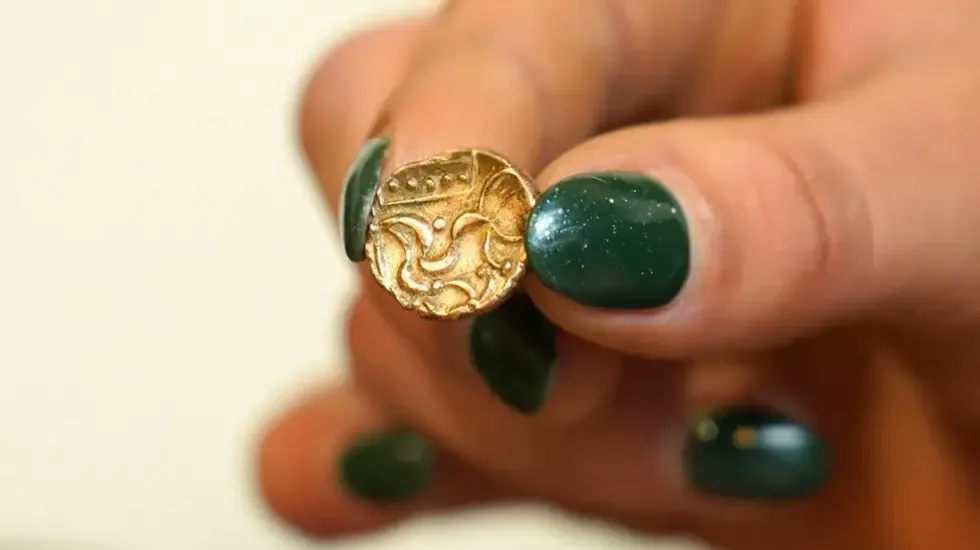
The coin measures roughly the same as an old decimal halfpenny
|DAVID DUGGLEBY AUCTIONEERS
The find could show evidence of commercial exchange between the neighbouring groups rather than conflict.
Now, the coin is set to go under the hammer at David Duggleby auctioneers in Scarborough.
Bidding for the Celtic artefact is expected to reach between £2,000 and £4,000 at the sale of coins, banknotes and stamps.
Coralie Thomson of David Duggleby said the two tribes were "apparently pretty civilised".
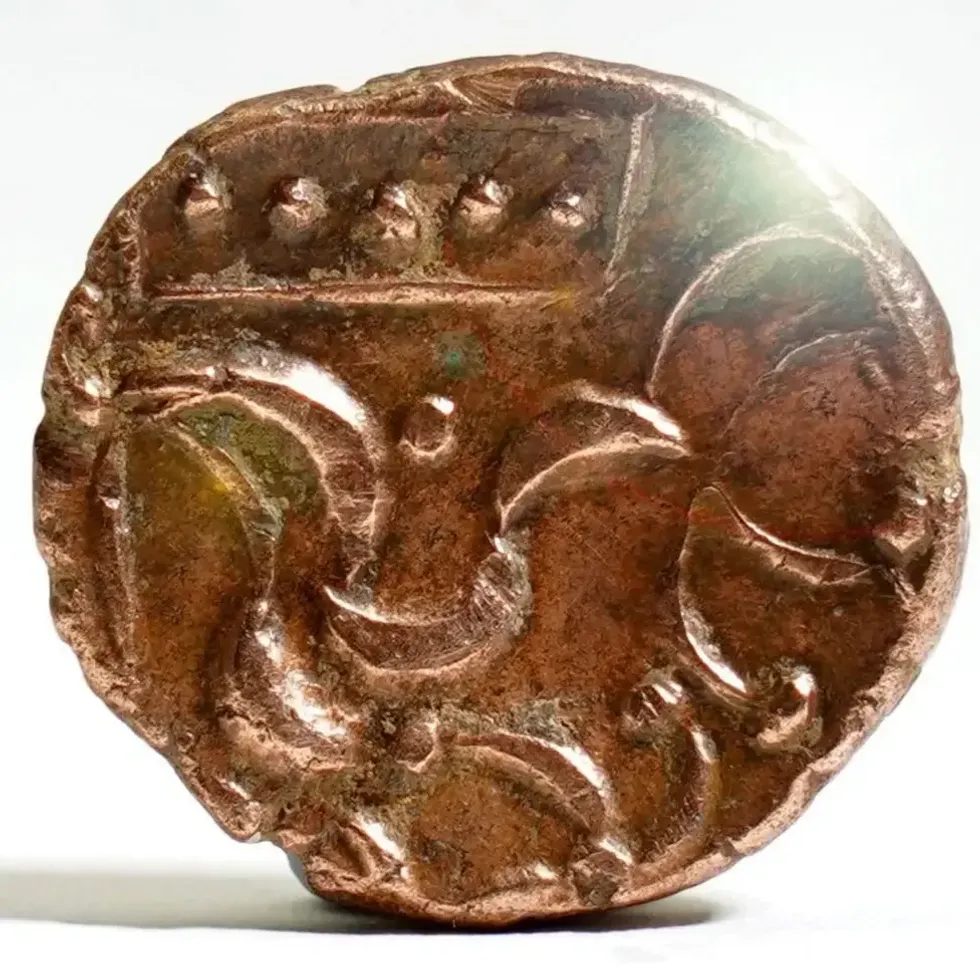
The reason behind the additional fifth pellet on certain coins remains unexplained
|DAVID DUGGLEBY AUCTIONEERS
She suggested that raiding, robbery or murder were unlikely explanations for the Corieltauvi gold ending up in Parisi territory.
"It is more than likely evidence of trading between the two," she said.
"One extra pellet might seem insignificant but in terms of collectable desirability it is an absolute game-changer.
"We're talking a doubling or trebling of auction value."
The fifth pellet, Ms Thomson explained, "makes it so incredibly rare," appearing to be "only the second ever found".
Our Standards: The GB News Editorial Charter