










Experts have told GB News that new regulations for electric car batteries could reduce mass EV recalls and improve vehicle safety for motorists across the globe.
BatteryIQ has called for the widespread adoption of "connected battery-health monitoring" across electric vehicles, which could help manufacturers avoid large-scale recalls.
The adoption of such policies could also help automakers identify safety risks long before batteries become dangerous in rare cases.
The calls follow recent recalls from major manufacturers who have been forced to issue notices amid concerns around batteries overheating.
Volvo recently issued a recall notice for around 10,440 of its EX30 models in the UK amid fears the battery could overheat and cause a vehicle fire.
It stated that the high-voltage battery cell could overheat after charging, prompting the manufacturer to warn that drivers should not leave their vehicles unattended when charging within buildings or covered areas.
Nicole Melillo Shaw, managing director of Volvo UK, acknowledged that the recall was "quite scary" for motorists being told that their vehicles could be unsafe, adding that drivers should avoid charging beyond 70 per cent to minimise overheating.
BatteryIQ stated that innovative battery management systems can detect abnormal behaviour in an electric vehicle battery on an individual level.
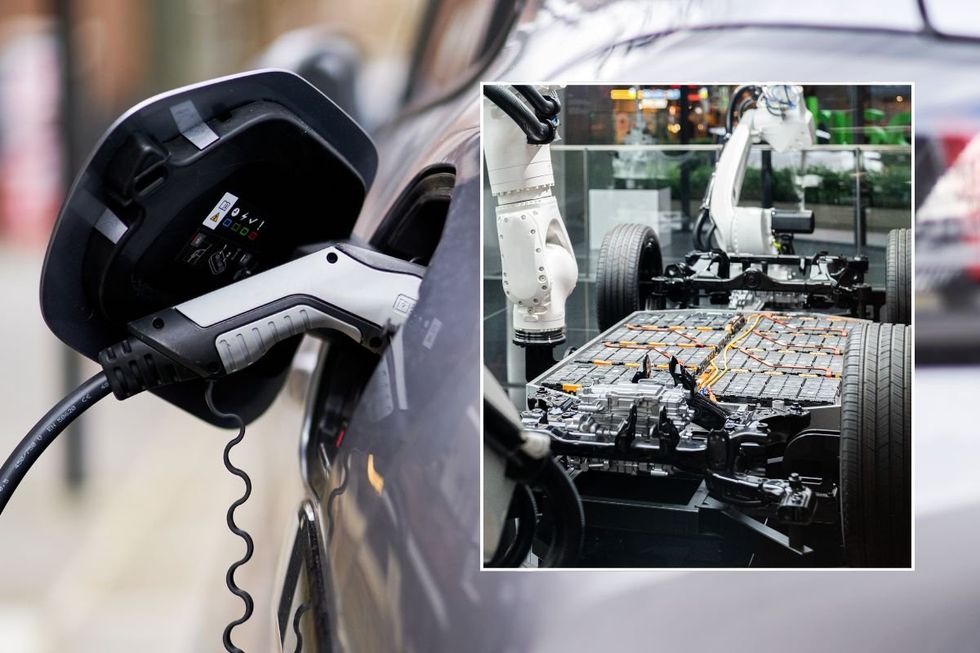
Experts have highlighted the benefits of battery health monitoring systems to set electric cars apart from internal combustion engine vehicles.
|GETTY
Nick Bailey, founder of BatteryIQ, said such a change could offer huge benefits to manufacturers, who would no longer need to conduct a mass recall.
He continued, saying: "Innovative battery management systems created by BatteryIQ can pinpoint abnormal behaviour in a specific vehicle or a small group of vehicles.
"In many cases, that means issues can be addressed early, sometimes even via software update, without the need to recall entire fleets."
The expert highlighted that the lithium-ion industry was moving from reactive safety to predictive monitoring to monitor the health of the battery in real-world conditions.
LATEST DEVELOPMENTS
 The Volvo EX30 has an issue that could lead to the battery overheating and causing a fire | VOLVO
Revolutionary technology can be embedded into the battery system and look at cell behaviour, degradation patterns and even operating conditions.
Mr Bailey continued, saying: "Battery-health monitoring is effectively the equivalent of having a smoke alarm inside a battery system.
"It provides early warning of stress, degradation or abnormal cell behaviour long before a dangerous condition develops."
The technology would help manufacturers identify issues with the batteries to minimise the risks posed by overheating cells, as seen with the Volvo EX30.

Experts have called on manufacturers to introduce battery health monitoring systems to reduce the risk of mass recalls
| THE CAR EXPERTMr Bailey said the industry would benefit massively from the "universal adoption" of connected battery health monitoring, which would alert all key players to critical issues.
Tanya Sinclair, CEO, Electric Vehicles UK, highlighted the benefits of such technology, noting that it would provide another benefit for electric vehicles over combustion engine cars.
She said: "Electrification isn't just about selling vehicles; it's about creating a mature, resilient ecosystem around them.
"Connected battery-health monitoring is exactly the kind of smart, preventative technology that builds confidence across the system: for drivers, manufacturers, insurers and regulators alike."