

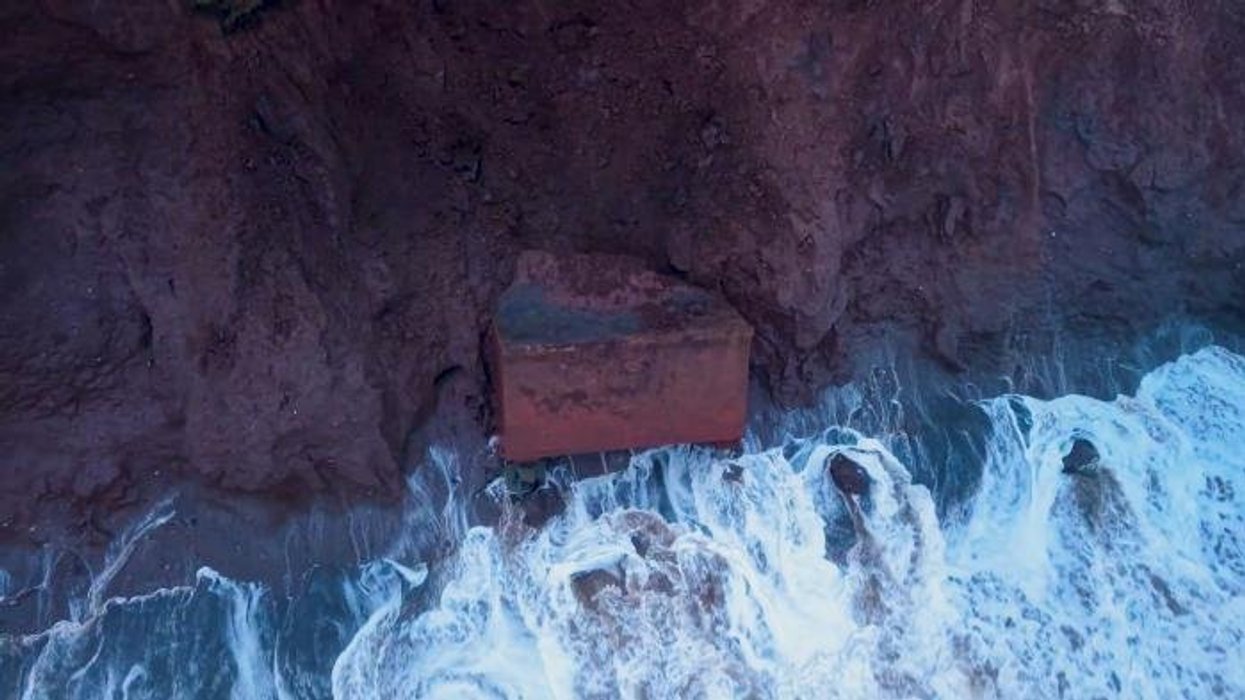








A Cold War relic has succumbed to the sea after precariously hanging off rapidly crumbling clay cliffs on the Holderness coastline.
The nuclear lookout post in Tunstall, East Yorkshire, was once hidden below ground and set 100 yards away from the shoreline, but has now fallen upside down onto the beach below.
Seven decades old, the Tunstall Royal Observer Corps Post once served as one of several nuclear monitoring stations along the British coastline and was decommissioned in the 1990s.
When the bunker became exposed to the elements last year, YouTubers, known as investigative dronologists, Davey Robinson and Tracey Charlton, began to make regular trips to the site in Tunstall to document its descent on their Timothy's Travels page.
TRENDING
Stories
Videos
Your Say
Over the last fortnight, the couple visited daily as waves steadily ate away at more and more of the ground supporting the building, with its collapse inevitable.
This morning, they discovered the brick building had finally fallen and emotionally hugged after flying their drone over the beach.
Reacting to the collapse of the bunker known as 'Yorkie', Mr Robinson said to their thousands of viewers on the Timothy's Travels YouTube page: "What a sorry sight - wow, she's landed on her head and she's completely upside down. What was strange was that she seemed so vulnerable and small - she seemed so much bigger before.
"This day has finally come and it seems the right day for it, it suits the situation, it had to conclude at some point.
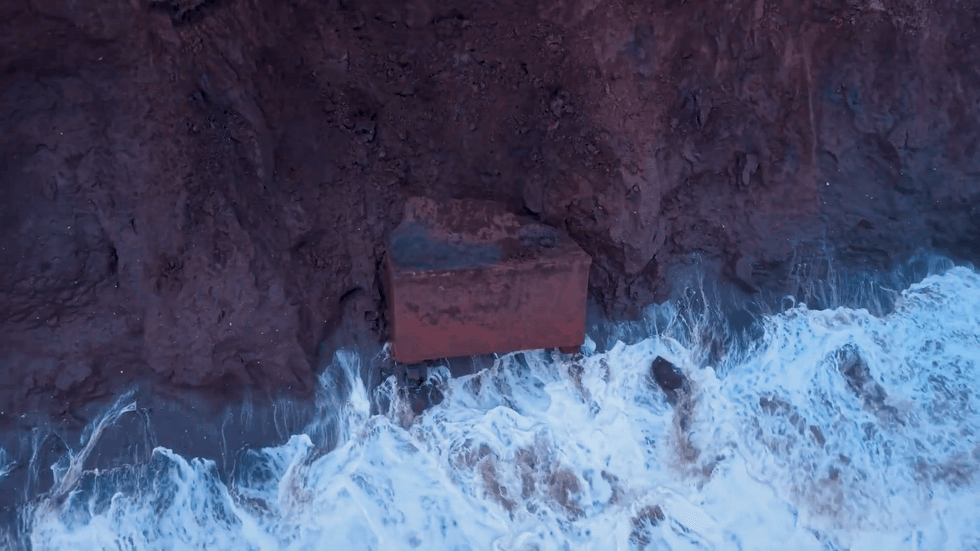
The nuclear lookout post in Tunstall, East Yorkshire, was once hidden below ground and set 100 yards away from the shoreline
|TIMOTHY'S TRAVELS
"When it's a nicer day we will go meet her in person on the beach and I'm so delighted that everybody has come on this journey and I'm really proud that we've brought so much attention to it."
Mr Robinson previously told GB News that the structure created a safe space for people to wait out a nuclear explosion, and communicate with others, but he said that it had very limited facilities inside.
"It's called an ROC post. The name of her is York 55, so we named her Yorkie," he said.
"It was built in 1959 and it was built as a Cold War bunker. It's basically an early warning system. People would sit in it, and if there was a nuclear explosion, they'd get the readings and they'd let other people know - it was an early warning system for a nuclear attack.
LATEST DEVELOPMENTS:
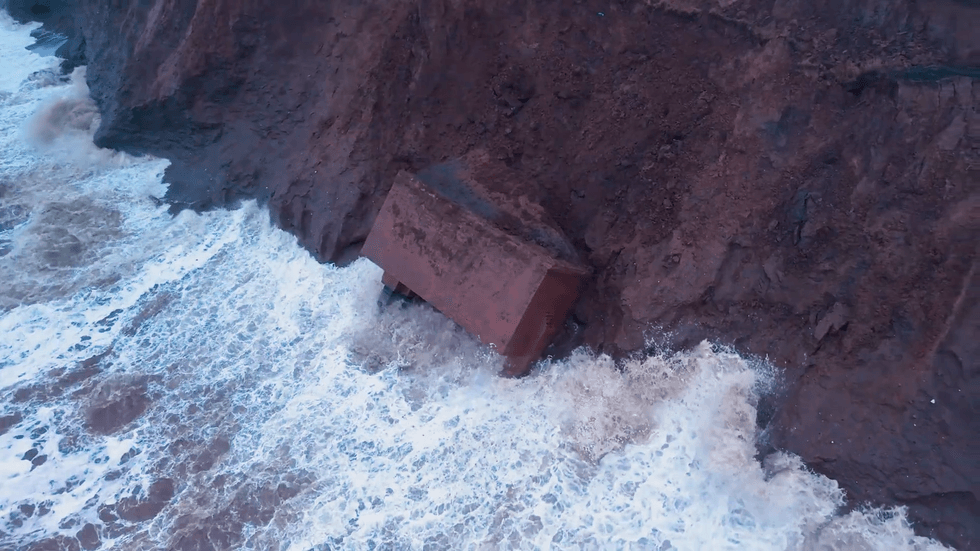
The bunker fell in the early hours of the morning
|TIMOTHY'S TRAVELS
"There's not a lot in it. You know, there's a little toilet and some bunk beds and, and sort of a little table for them to sit at, and they'd just sit there with the, you know, just listening out."
The East Yorkshire coastline is one of the fastest eroding in Europe in Holderness. Around 4.5m of land is claimed by the sea every year, according to East Riding of Yorkshire Council, and it's Mother Nature that's unearthed this time capsule.
Tracy Charleston, Timothy's Travels Investigative Droanalyst, previously told GB News that the collapse of the nuclear bunker in Tunstall is a symbol of coastal erosion in the area.
"It's showing how fast it's [coastal erosion] is happening, so much faster than we ever thought it was going to happen," she said.
"We can see it - I mean, we live right on the edge of the coast, and seeing it disappear in front of our eyes, I think is the really it's really scary."
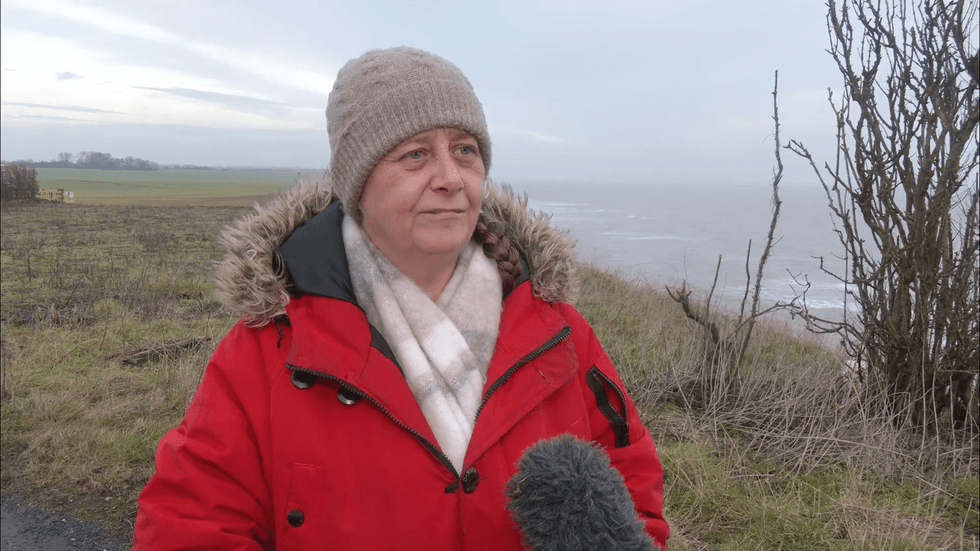 Tracy Charleston told GB News the collapse of the nuclear bunker in Tunstall is a symbol of coastal erosion | GB NEWS
East Riding of Yorkshire have advised people to steer clear of the site and before the bunker collapsed, coastal walker Frank Coombs made a special trip to see it from a safe distance and travelled nearly 100 miles.
"I've come all the way from Rotherham to have a look at this, and I've walked up from Withernsea - it's further than I thought, to be honest," he told GB News.
"I thought it was going to be right down to the bottom, and bigger than it is, but it is good. It'll go at nighttime when no one's here and it'll only slide in. I wouldn't stand under it.
"It's amazing how much this coastline changes every time I visit, the cliffs are crumbling and set further back."Over thousands of years, the Holderness Coast has lost three miles of land and more than 20 villages have been swallowed by the North Sea, with solid structures no match for natural coastal processes.
Along much of the Holderness Coast, the approach to coastal defences is managed retreat, where the sea is allowed to erode the land naturally.
Building sea defences there would be expensive, and protecting one stretch of coast could make erosion worse further down the shoreline by stopping the natural movement of sediment.
Analysis carried out by the green charity, One Home, listed 21 coastal communities at risk of coastal erosion and seaside villages in East Yorkshire, Norfolk, Sussex, Cornwall, Kent and Cumbria appear on the list.
One Home calculated that by the end of the century, 2,218 properties could be swept away, at a loss of £584million.
More From GB News