

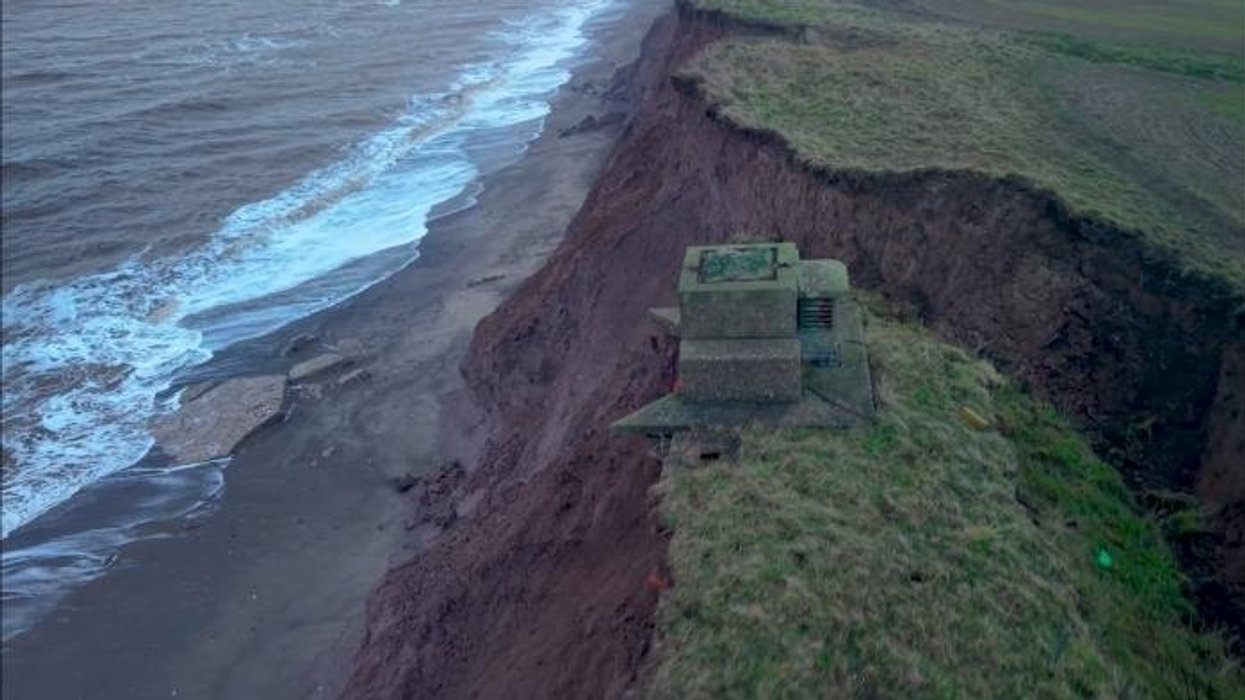









A Cold War nuclear bunker teetering on a cliff edge is now just weeks, if not days, away from falling into the sea.
Once hidden below ground, the decommissioned lookout post is now exposed to the elements and is precariously hanging off the rapidly crumbling clay cliffs on the Holderness coastline in Tunstall, East Yorkshire.
The brick building is around 70 years old and was once roughly one hundred yards inland from the shoreline, but now, due to coastal erosion, it's soon set to collapse.
It once served as one of 870 bunkers or observation posts across Britain, including eight in West Yorkshire that were decommissioned in the 1990s.
TRENDING
Stories
Videos
Your Say
As the Cold War relic gets closer to collapse, YouTubers, known as investigative dronologists, Davey Robinson and Tracey Charlton are visiting the bunker site every day to document its descent on their Timothy's Travels page.
Mr Robinson told GB News that the building, known as the Tunstall ROC (Royal Observer Corps) Post, created a safe space for people to wait out a nuclear explosion, and communicate with others, but said that it had very limited facilities inside.
"It's called an ROC post. The name of her is York 55, so we named her Yorkie," he said.
"It was built in 1959 and it was built as a Cold War. It's basically an early warning system. People would sit in it, and if there was a nuclear explosion, they'd get the readings and they'd let other people know - it was an early warning system for a nuclear attack.
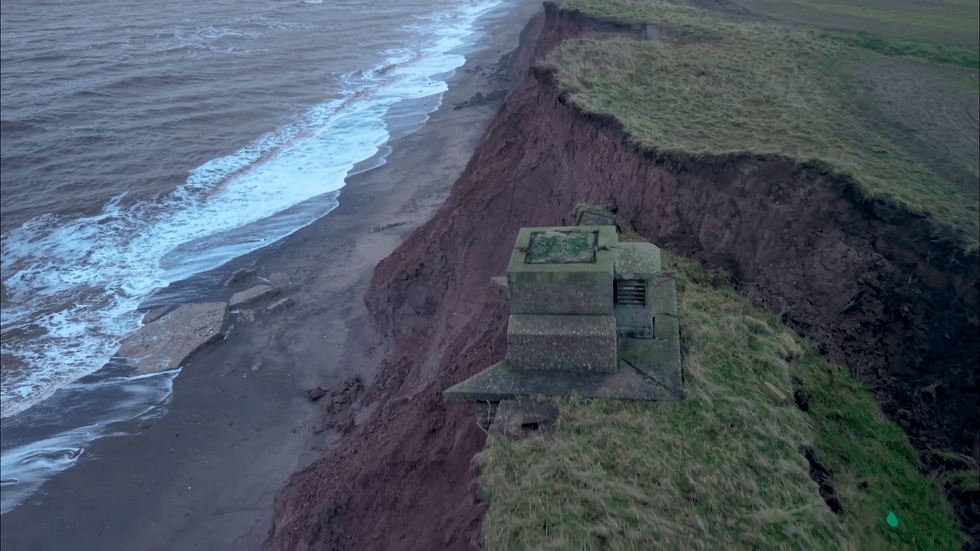
The Cold War bunker is teetering on the cliff edge
|GB NEWS
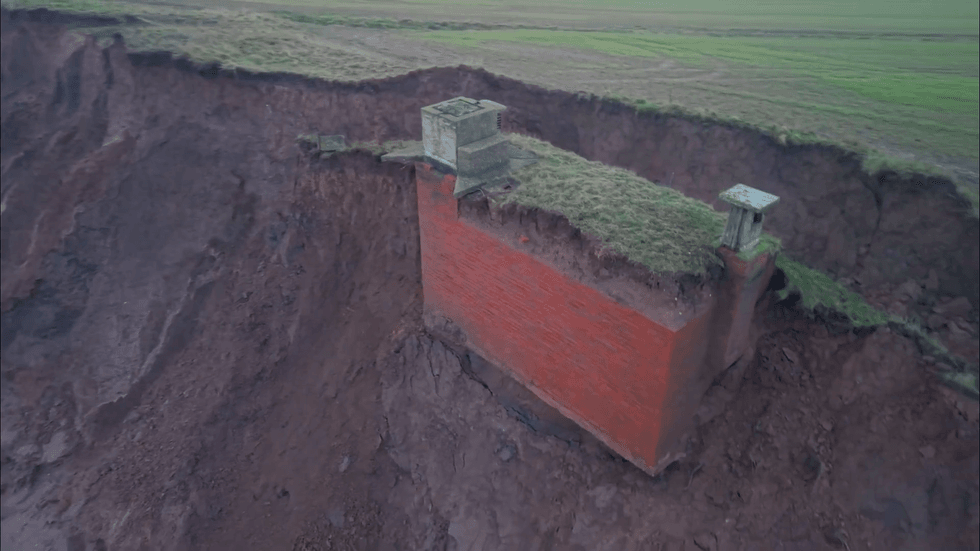
The structure is likely to fall into the sea in just days
|GB NEWS
"There's not a lot in it. You know, there's a little toilet and some bunk beds and, and sort of a little table for them to sit at, and they'd just sit there with the, you know, just listening out."
The East Yorkshire coastline is one of the fastest eroding in Europe in Holderness. Around 4.5m of land is claimed by the sea every year, according to East Riding of Yorkshire Council, and it's Mother Nature that's unearthed this time capsule.
Tracy Charleston, Timothy's Travels Investigative Dronalist, told GB News that the collapse of the nuclear bunker in Tunstall is a symbol of coastal erosion in the area.
"It's showing how fast it's [coastal erosion] is happening, so much faster than we ever thought it was going to happen," she said.
LATEST DEVELOPMENTS:
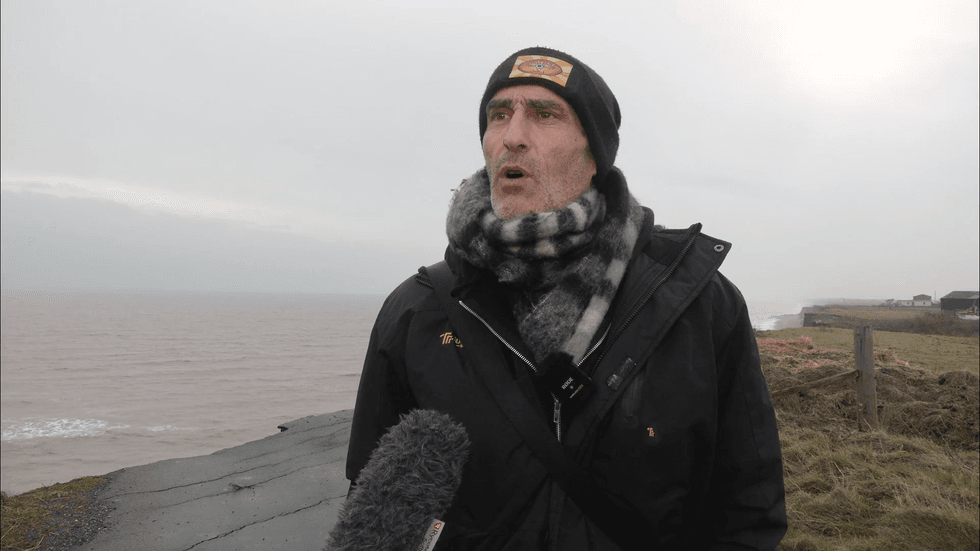
Mr Robinson told GB News the building, known as the Tunstall ROC (Royal Observer Corps) Post, created a safe space for people to wait out a nuclear explosion
|GB NEWS
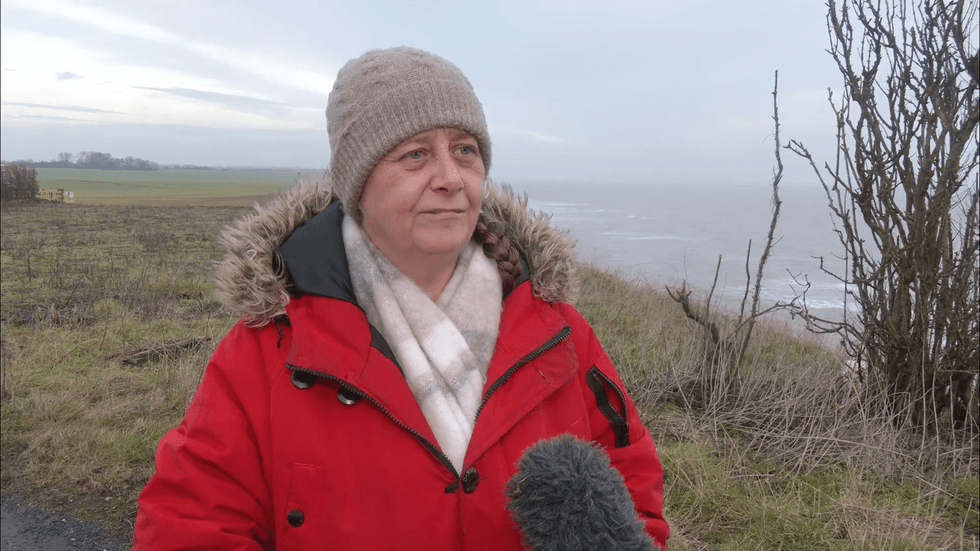
Tracy Charleston told GB News the collapse of the nuclear bunker in Tunstall is a symbol of coastal erosion
|GB NEWS
"We can see it - I mean, we live right on the edge of the coast, and seeing it disappear in front of our eyes, I think it's really scary."
The videos posted on the Timothy's Travels YouTube page attract thousands of views from people across the world, as couple Davey Robinson and Tracey Charlton chronicle the bunker's demise.
"It amazes us every single day, every single day that she's still there, and the little details you notice that you didn't notice the day before as she's as she's moving away from the cliff, like the brickwork," said Tracey.
"She's so beautiful. I mean, it excites us every day that she is still there."
East Riding of Yorkshire Council has advised people to avoid the area amid fears that it's only a matter of time before the cliff below the bunker gives way.
Coastal walker Frank Coombs made a special trip to see the bunker from a safe distance and travelled nearly 100 miles for the visit.
"I've come all the way from Rotherham to have a look at this, and I've walked up from Withernsea - it's further than I thought, to be honest," he said.
"I thought it was going to be right down to the bottom, and bigger than it is, but it is good. It'll go at nighttime when no one's here and it'll only slide in. I wouldn't stand under it.
"It's amazing how much this coastline changes every time I visit, the cliffs are crumbling and set further back."
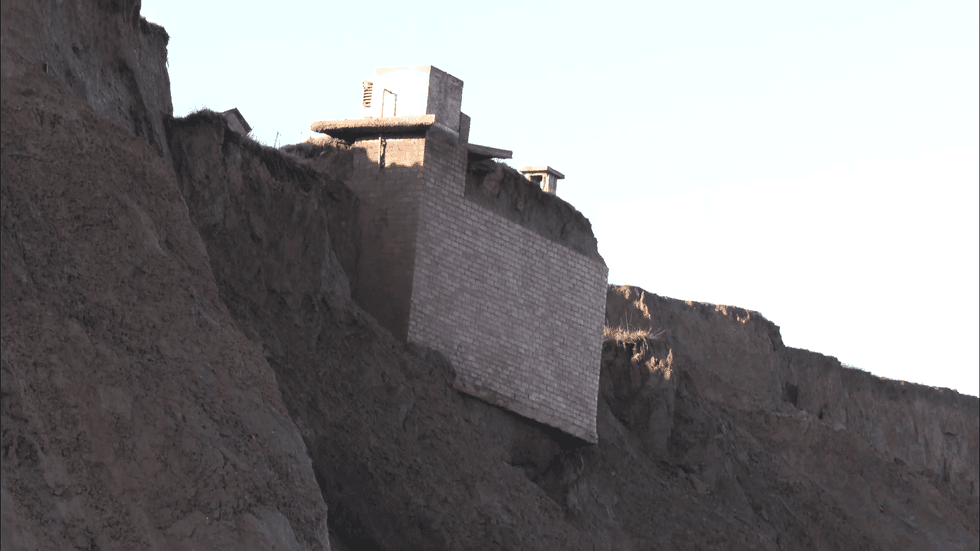
East Riding Council does not have any statutory responsibilities connected to the nuclear bunker in Tunstall
|GB NEWS
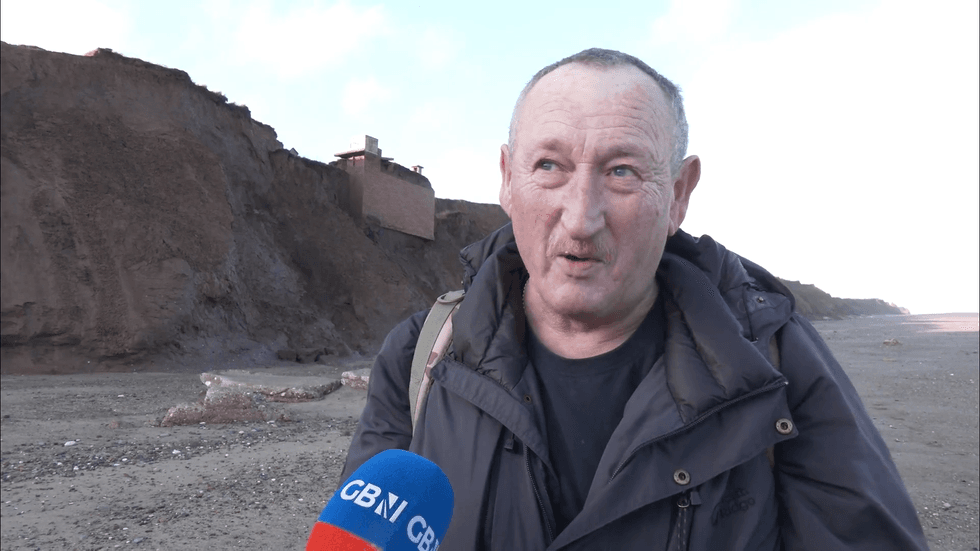
Coastal walker Frank Coombs travelled nearly 100 miles for the visit
|GB NEWS
Over thousands of years, the Holderness Coast has lost three miles of land and more than 20 villages have been swallowed by the North Sea, with solid structures no match for natural coastal processes.
Along much of the Holderness Coast, the approach to coastal defences is managed retreat, where the sea is allowed to erode the land naturally as building sea defences there would be expensive, and protecting one stretch of coast could make erosion worse further down the shoreline by stopping the natural movement of sediment.
East Riding Council does not have any statutory responsibilities connected to the nuclear bunker in Tunstall as the structure sits on an area of privately owned land.
"This location lies within Policy Unit E (Rolston to Waxholme) of the Shoreline Management Plan," said a council spokesman.
"The approach for this location remains at 'no active intervention'. Therefore, the coast is undefended in this area, which allows coastal processes to continue."
"The Ministry of Defence originally requisitioned the land to build the structure. But following its closure, the land was returned to the landowner. which included any military infrastructure upon it.
"The responsibility for this infrastructure therefore belongs to the landowner, and the management responsibility for the rural beach in this area sits with the Crown Estate."
More From GB News