





A Government Net Zero scheme must be investigated for fraud, MPs have warned after widespread failures left tens of thousands of homes damaged and some facing repair costs of more than £250,000.
The chairman of Parliament's Public Accounts Committee (PAC) told GB News the extent of the problems uncovered were "staggering", with action now needed to determine if criminality is behind the severe situation.
He spoke to the People's Channel to coincide with the publication of a PAC report which warns 30,000 houses are believed to have been detrimentally impacted by the Government scheme, which could lead to "serious" health risks for older Britons.
Committee chairman Sir Geoffrey Clifton-Brown said the scale of failure, which was initially uncovered by the National Audit Office (NAO), was unlike anything he had seen in more than a decade scrutinising public spending and described the scheme as "the most catastrophic fiasco" the Commons committee had dealt with.
A Net Zero Government scheme should be scrutinised as part of a fraud probe, MPS claim
|GETTTY
The Energy Company Obligation (ECO) scheme was designed as a means-tested programme to help disadvantaged households insulate their homes and reduce long-term energy costs.
Instead, Sir Geoffrey and other MPs found that work carried out under the Government programme had been defective on an extraordinary scale.
Speaking to GB News, the Conservative MP explained: "What we found was staggering, 98 per cent of all external wall insulation installations were defective. You really could not make it up. Around 30 per cent of internal installations were also wrong. In total around 30,000 homes have defects of one form or another."
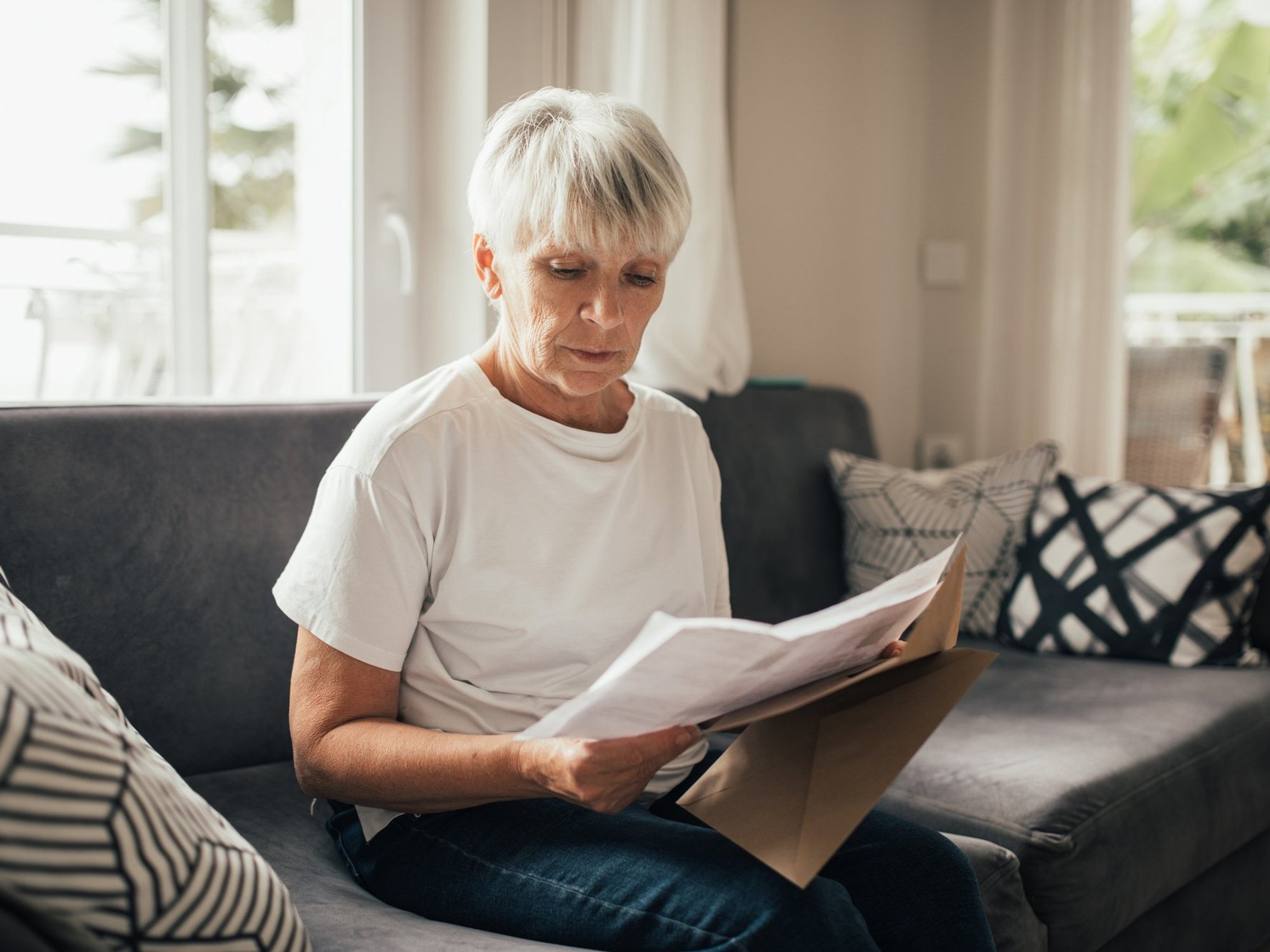
Sir Geoffrey warned many of the households affected were now living with serious damage to their properties and potentially unsafe conditions, while facing uncertainty over who would pay for repairs.
A Net Zero scheme has pushed up costs for households
| GETTYHe added: "The Government has told the Committee that no household should have to pay for remediation, and we expect it to live up to that pledge, We will judge it on whether that actually happens."
Under the scheme’s design, responsibility for fixing defective work rests with the original installer, with a guarantee covering costs up to £20,000 if the installer ceases trading or refuses to act. Sir Geoffrey said that the framework was plainly inadequate given the scale of damage uncovered.
Sir Geoffrey added: "Once a property is identified, the original installer, if they still exist, is meant to remediate the work. But some of these cases are extremely expensive. We are aware of cases where damage exceeds £250,000. We are sceptical that installers and guarantee providers will be able to withstand the scale of claims.
"We are very sceptical that Government will successfully identify every affected household. TrustMark [the Government-backed quality scheme] has an ambition to find them all within fifteen months, but progress so far has been far too slow."

PAC chair Sir Geoffrey Clifton Brown spoke to GB News about the committee's findings
|PARLIAMENT
LATEST DEVELOPMENTS
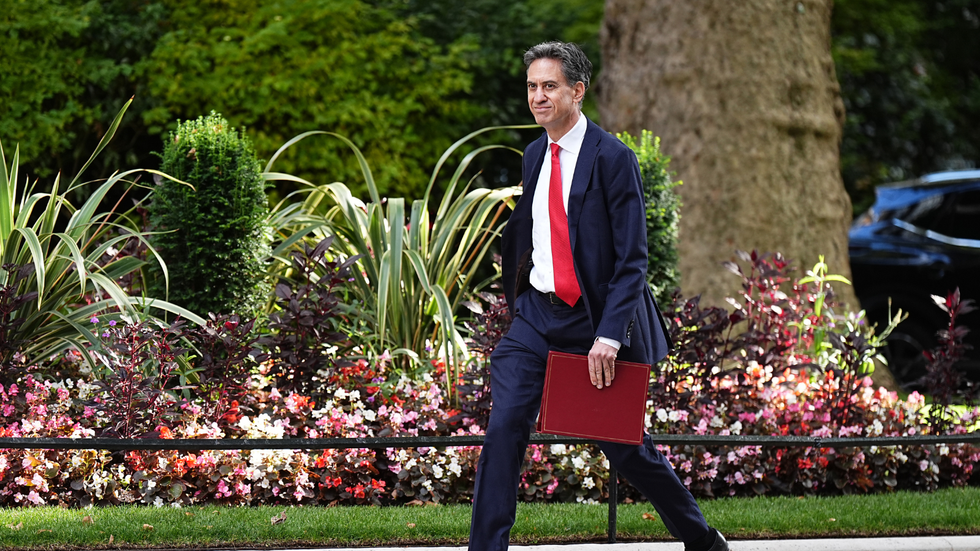
Ed Miliband's department is under fire
| PAAccording to the PAC chair, only around 1,300 homes had been remediated so far, out of an estimated thirty thousand with defects.
With the scheme now closed, he warned there was a serious risk that there would not be enough viable installers left in the market to carry out the necessary repairs.
"There is a really serious question over whether the number of installers are going to be there to do it," he shared.
"That is why the Government needs to step in, make sure these homes are found as soon as possible, and make sure competent installers are available to fix the problems. Otherwise, the people affected will continue to be disadvantaged."
The Committee’s concerns extend beyond poor workmanship to the possibility of widespread fraud, with Sir Geoffrey revealing the scale of non-compliance uncovered by MPs was so severe that it warranted referral to the Serious Fraud Office.
He said: "The threshold for referral in a Government scheme is around two per cent. We already know that identified fraud has reached one point seven five per cent of scheme value.
"Given the staggering scale of failure, we believe this should at least be investigated by the Serious Fraud Office. They have all the powers of investigation.
“They should be looking at whether criminality was involved.”
Sir Geoffrey placed ultimate responsibility for the failure squarely with the Department for Energy Security and Net Zero (DESNZ), saying the problems stemmed from how the scheme had been designed and overseen from the outset.
"Previous ECO schemes worked perfectly well,” he noted. "For reasons that are difficult to understand, the Department decided to completely redesign this scheme, and they designed it in the most complicated way possible.
"It was almost bound to fail from the start. There were too many bodies involved, each thinking someone else was responsible. As a result, installers were not properly supervised and work was not carried out correctly.”
Sir Geoffrey also criticised senior officials for taking too long to grasp the scale of the problem. The ECO scheme was introduced in 2022, yet the full extent of defects was not recognised until 2024.
The chairman shared: "I am not going to make excuses for the Department. They should have tested this scheme on a small number of houses first. They knew key bodies did not have the resources or IT systems to cope with this volume of work. I would be very surprised if complaints were not coming in much earlier."
He described the idea as "good", but added: “This scheme was botched from start to finish. It has left homes seriously damaged, with leaks, mould, and potential health risks. To get a Government scheme this wrong is extremely poor."
"We are aware of cases where defects are serious, including significant leaks and mould,” he said. “If elderly people are living in those conditions, the consequences could be very serious indeed."
Looking ahead, he said the lessons from ECO must be applied to future energy efficiency programmes, including the Government’s Warm Homes Plan.
Sir Geoffrey warned future schemes must be properly designed, trialled on a small scale, and supported by enough qualified installers before being rolled out nationally.
He said: "Public confidence has been shaken. Government now has a job on its hands to restore it. We will judge them on whether they protect households from paying for damage they did not cause."
A DESNZ spokesperson told GB News: "It is categorically untrue that there are widespread health and safety risks - for the vast majority, this means a home may not be as energy efficient as it should be."
Minister for Energy Consumers Martin McCluskey said: "We inherited a broken system from the previous Government. It was not fit for purpose and had multiple points of failure. We are cleaning up this mess.
"Every household with external wall insulation installed under these two schemes are being audited, at no cost to the consumer. And we have been clear that no household should be asked to pay any money to put things right.
"Of all non-compliant properties found to date, over 50 per cent have been remediated. We have also taken the decision to end the ECO scheme and instead put more investment through local authorities, which have a significantly better record of delivery.
"We are reforming the system of consumer protection to better protect people. We will establish a new Warm Homes Agency, bringing in a single system for retrofit work to provide stronger, formal government oversight and driving up quality."
More From GB News