





Railway workers across India will no longer wear their traditional uniforms in a push to erase traces of Britain's colonial rule.
Under Indian PM Narendra Modi's move, the traditional Bandhgala jacket will be lost forever - with his Railways Minister declaring the "prince suit" would cease to be official attire on Indian trains.
"We have to get rid of all colonial mindset," Minister Ashwini Vaishnaw declared.
"We need to find each of them and remove them, whether it's in our working style or dressing style."
The distinctive black jacket, featuring a high Chinese collar and buttons fastened to the neck, was brought to the subcontinent by the British Raj during the latter part of the 1800s, drawing inspiration from Western formal attire worn by railway personnel.
Over the decades, however, the garment transformed into a staple within Indian wardrobes, becoming a popular choice for men attending weddings and formal celebrations.
Despite this, Mr Modi's is pressing on with a purge on the remnants of British rule.
Railway authorities have been told to propose replacement uniforms that better embody Indian heritage, though no alternative design has yet been confirmed.
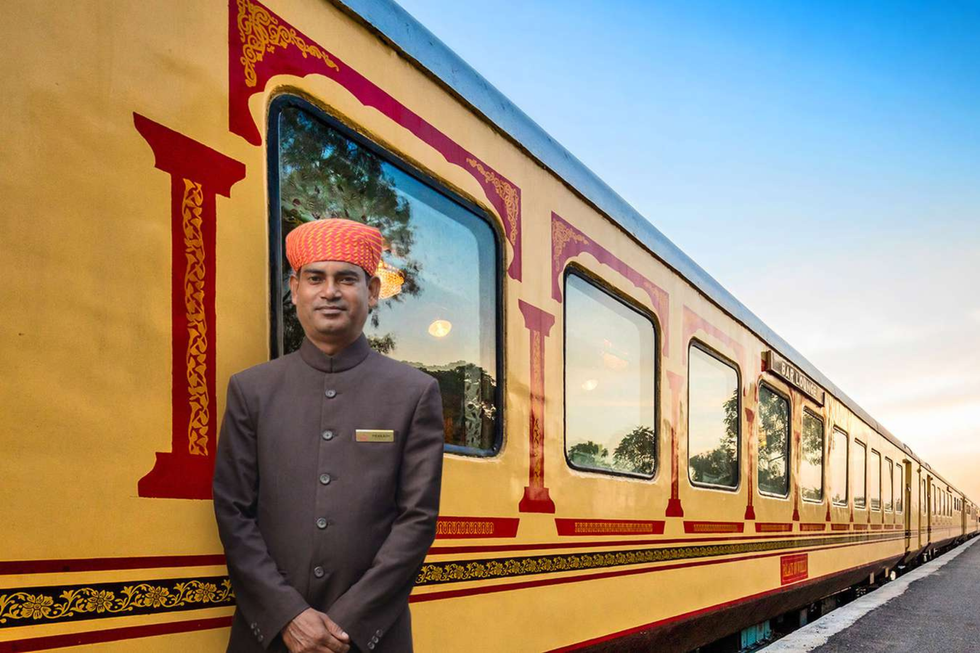
PICTURED: A staff member on the Palace on Wheels luxury train, wearing traditional railway attire
|PALACE ON WHEELS
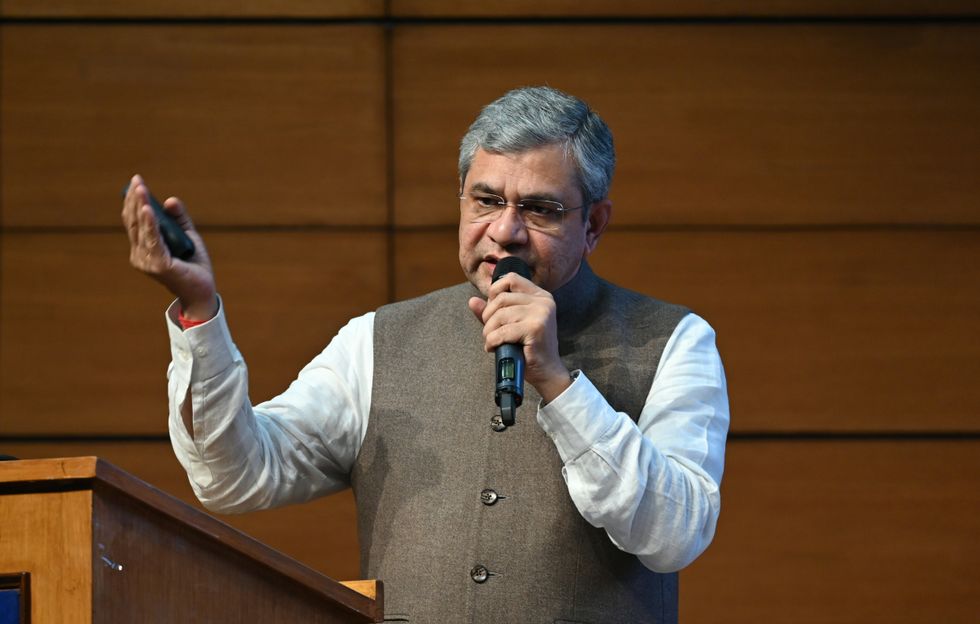
Ashwini Vaishnaw announced on Friday that the 'prince suit' would cease to be official attire on Indian trains
|GETTY
The uniform prohibition is part of a wider effort that has seen the Modi administration target street names, English language usage, and military traditions in pursuit of Hindu nationalism.
At the presidential palace last month, 96 portraits depicting British Aides-de-Camp officers from the colonial era were replaced with images celebrating Indian wartime heroes.
The Indian Navy received a redesigned ensign in September 2022, with Mr Modi declaring it had eliminated the St George's cross and thereby "removed the remaining traces of slavery and a colonial past" from the nation's warships.
Race Course Road, home to the PM's residence, was renamed Lok Kalyan Marg in 2016.
INDIA - READ THE LATEST:
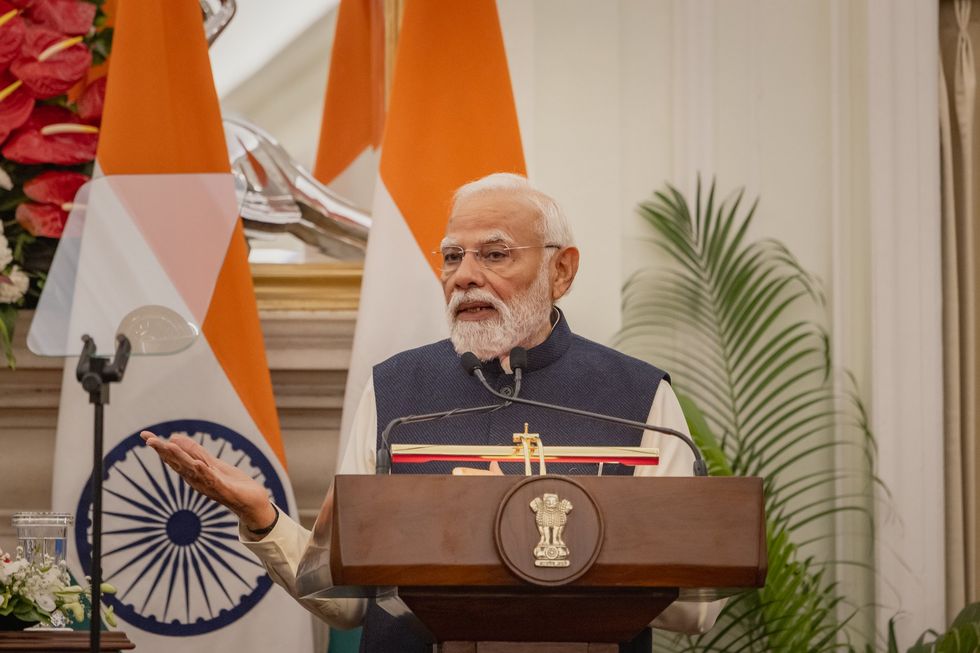
Mr Modi's administration has sought to purge such remnants of British rule from the country
|GETTY
A number of locations have also been rechristened since Mr Modi first took office in 2014.
In 2018, Ross Island, Neil Island and Havelock Island were given new names honouring Indian figures, while Port Blair, capital of the Union Territory, became Sri Vijaya Puram in 2024.
Home Secretary Amit Shah declared last June that Indians would eventually feel "ashamed" to speak English.
"The goal of a developed India is to remove any trace of the colonial mindset, taking pride in our roots, unity and sense of duty among citizens," Mr Modi said last summer.
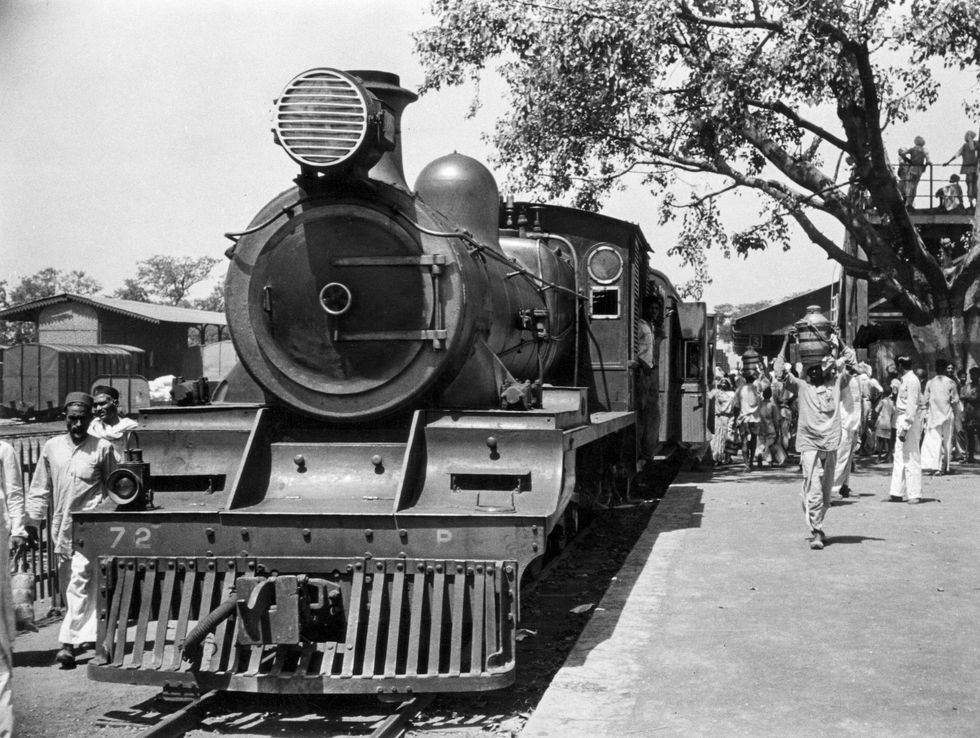
The British introduced India's first railways in the 1830s and 1840s
|GETTY
The British introduced India's first railways in the 1830s and 1840s, with the first passenger train running in 1853.
By 1930, the South Asian country's vast network reached over 67,000km, transforming cities such as Mumbai and Kolkata into vital travel hubs.
The system also connected India's large rural population to major towns and cities across the country.
Mr Modi has previously described the British-built railways as a symbol of India's past "slavish mentality".
Our Standards: The GB News Editorial Charter
More From GB News