





A group of British and Dutch marines rescued a stranded climber on Ben Nevis last week after discovering him curled up in the snow near the summit, entering early stages of hypothermia.
The dramatic rescue unfolded on January 24 when Royal Marine Reserves Scotland and their counterparts from the Dutch Korps Mariniers were conducting mountain training on Britain's highest peak.
The team stumbled upon the lone mountaineer during a fierce blizzard, with the man having abandoned his climb after becoming separated from two companions.
The timing was miraculous – the marines were in Scotland for Exercise Highland Warrior, a joint training programme on the 1,345-metre mountain, when they spotted the distressed climber.
TRENDING
Stories
Videos
Your Say
The conditions on the mountain were absolutely brutal. Sergeant McKenzie described winds that were "biting and relentless," with 40mph gusts.
"Combined with the summit temperature, this put the wind chill somewhere in the region of -15C to -20C, making any exposed skin sting almost instantly," he said.
Discussing the climber's condition when found, he added: "Solid blocks of ice clung to his eyebrows, hat, and gloves – evidence of long exposure to freezing conditions."
One of the man's walking poles was bent, while the other appeared broken or completely collapsed.
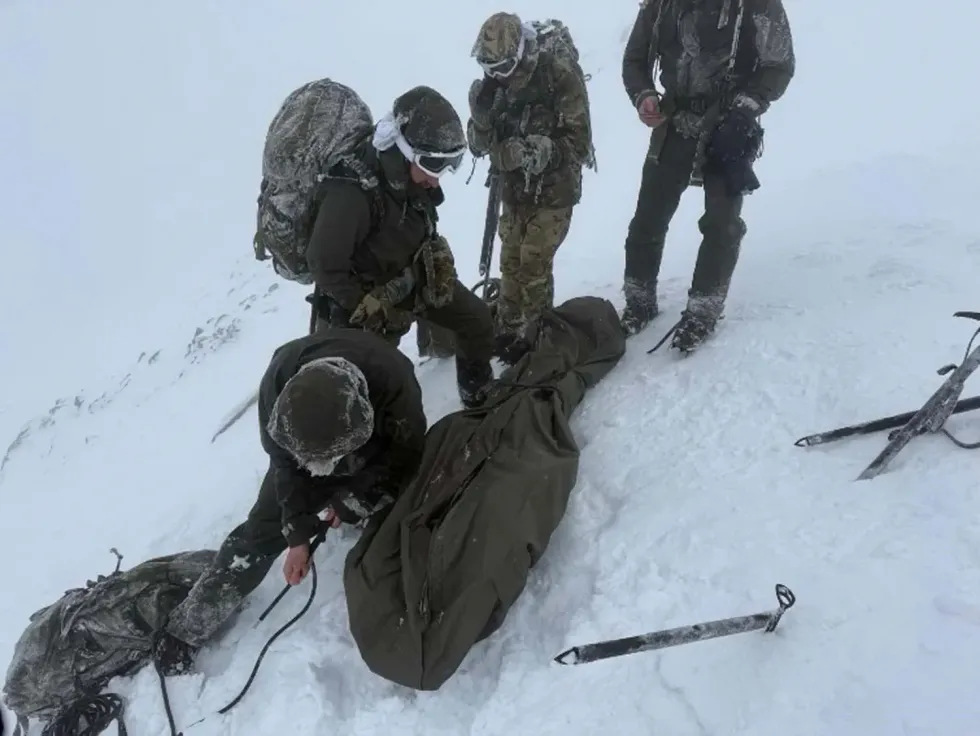
A group of British and Dutch marines rescued a stranded climber on Ben Nevis last week
|ROYAL NAVY
Making matters worse, the climber had no crampons, leaving him unable to find proper footing on the treacherous icy slopes.
Getting the climber off the mountain proved incredibly challenging. Two Dutch marines positioned themselves on either side of the man, gripping his arms to keep him steady as they descended.
But the close formation caused problems – their crampons kept getting knocked loose, forcing the group to stop repeatedly to secure them.
"To speed things up, one of the Dutch lads took his arm to steady him, but his condition continued to deteriorate," said Mr McKenzie.
"A second Dutch Marine moved to his other side so the pair could support him fully. This improved his stability, but the awkward spacing led to several crampons being knocked loose, forcing multiple short halts to resecure them.
"During the final stop to fix a crampon, his deterioration became unmistakable," Mr McKenzie continued. "His posture sagged, his coordination faltered, and his responses slowed.
LATEST DEVELOPMENTS
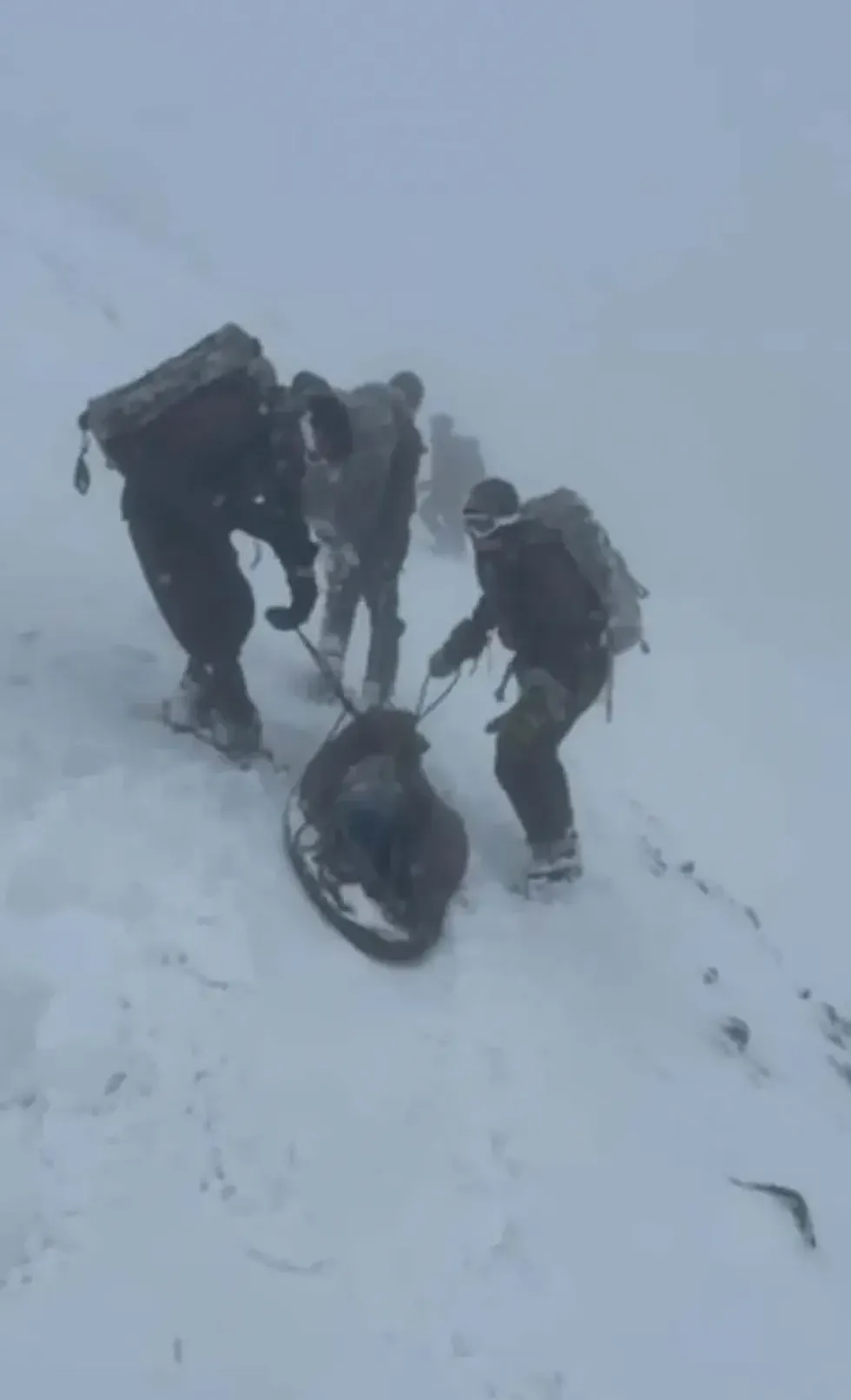
The Marines had to build a makeshift stretcher for the injured climber
|ROYAL NAVY
"He said he couldn't bend his leg, a clear sign that cold, exhaustion, and exposure were now affecting his physical functions.
"He was entering hypothermia, and it was obvious he would not be walking in the immediate future."
The Marines quickly improvised a solution using their standard emergency kit. They fashioned a makeshift stretcher from a waterproof bivvy sack, ropes, a mat and a thick jacket, then hauled the casualty down the mountainside.
Sergeant Onno Lankhaar, section commander for the Dutch Marines, was frank about what would have happened without their intervention.
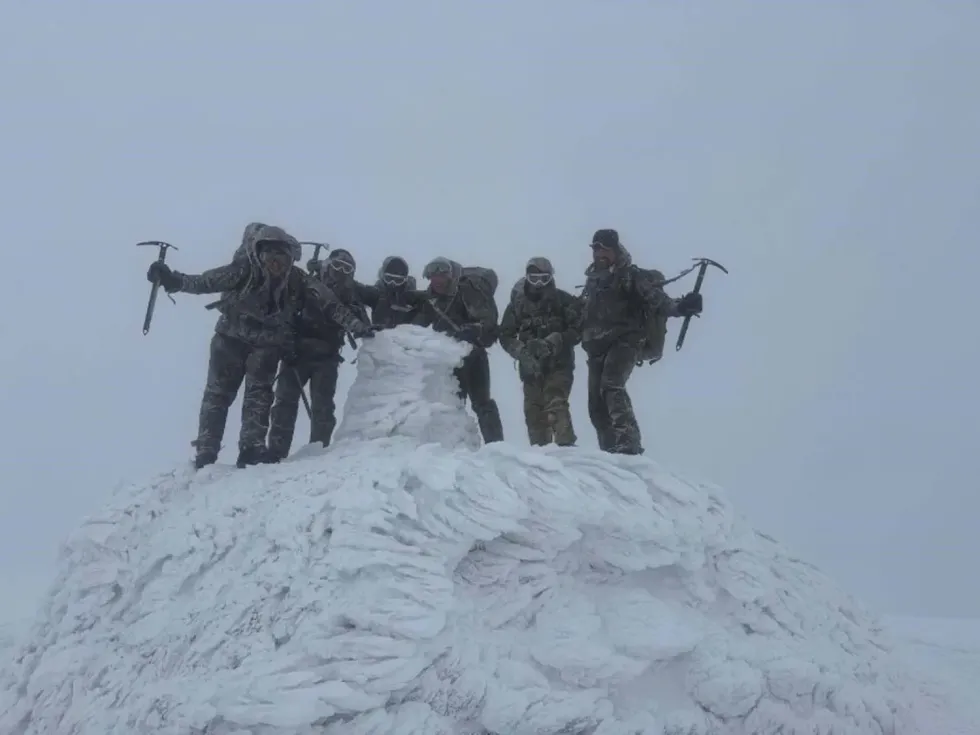
The Marines managed to rescue the climber, who was suffering from early stages of hypothermia
|ROYAL NAVY
"If we hadn't seen him, he certainly would not have survived," he said.
Once the group reached the snowline, the climber had recovered enough to walk on his own. He was handed over to emergency services as a precaution.
His two friends, meanwhile, had already made their way safely down the mountain – unaware of the ordeal their companion had endured near the summit.
Our Standards: The GB News Editorial Charter
More From GB News