










Elderly passengers should be separated on flights to bolster aircraft safety, a new study has claimed.
The rising proportion of older travellers is creating fresh safety challenges for the aviation industry, experts have said.
Around the world, aircraft are designed to allow complete passenger evacuation within 90 seconds.
But computer simulations demonstrate that even best-case scenarios see elderly passengers blocking how quickly everyone can exit.
Scientists behind the research propose distributing older travellers with mobility limitations across different sections of the cabin.
This approach could require family members travelling together to sit apart from elderly relatives.
"Higher elderly ratios and poor seating arrangements led to longer evacuation times and uneven exit usage," the research team wrote in the journal AIP Advances.
"These findings emphasise the need for age-sensitive modelling and seating strategies to improve evacuation safety."

The proposed approach could require family members travelling together to sit apart from elderly relatives
|GETTY
Academics from the universities of Sydney and Calgary ran 27 separate evacuation simulations based on a dual-engine fire aboard an Airbus A320.
The A320 ranks among the world's most widely used narrow-body aircraft, with typical capacity ranging from 140 to 170 passengers.
Different cabin configurations were tested, each featuring different proportions and placements of passengers aged over 60.
"While a dual-engine fire scenario is statistically rare, it falls under the broader category of dual-engine failures and critical emergencies in aviation," said researcher Dr Chenyang Zhang.
FLIGHT MAYHEM - READ THE LATEST:
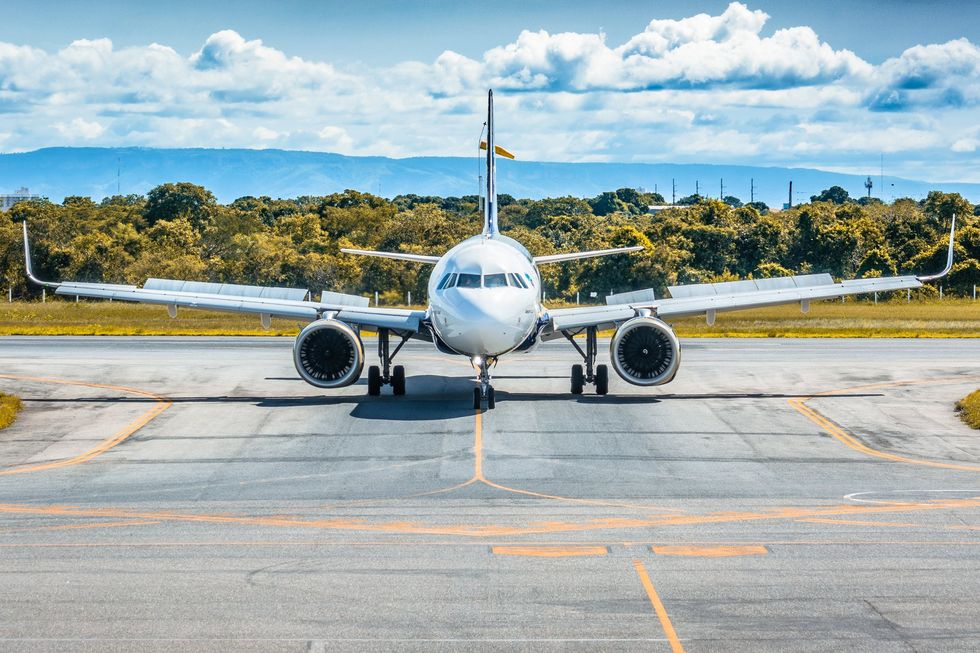
The A320 ranks among the world's most widely used narrow-body aircraft
|GETTY
Specialised software was employed to model how passengers would behave during an emergency.
The analysis showed that both the number and positioning of elderly passengers most significantly influenced evacuation duration.
The quickest configuration featured 152 total passengers with 30 elderly individuals spread uniformly throughout the cabin, yet still took 141 seconds to complete.
But the slowest, involving a higher number of randomly placed elderly passengers, extended the evacuation time to 218.5 seconds.
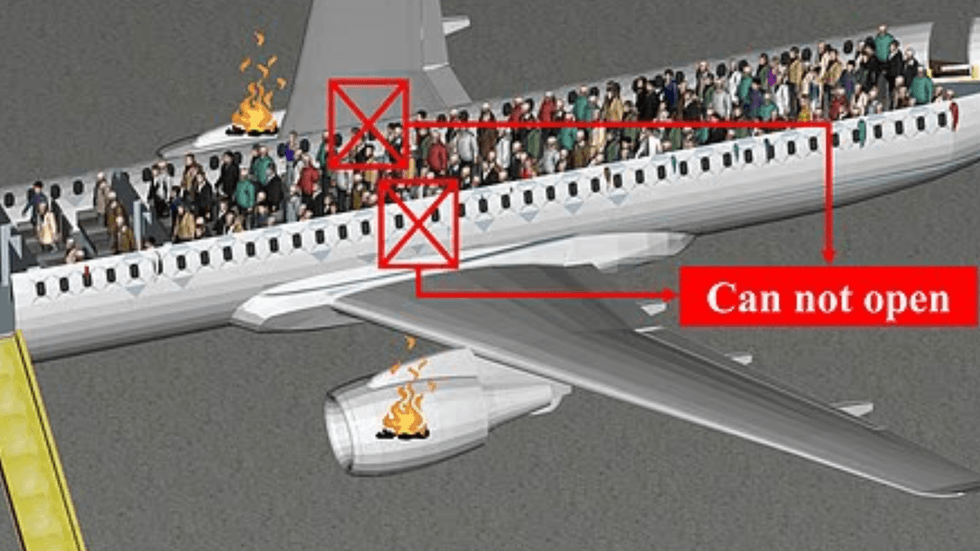
Specialised software was employed to model how passengers would behave during an emergency
|ZHAO ET AL/AIP ADVANCES
Earlier research has established that age-related cognitive decline can impair awareness and slow decision-making processes.
Physical limitations tend to worsen under high-pressure circumstances.
The scientists suggest that targeted safety briefings for older passengers could help reduce evacuation times further.
Future research will examine how children, infants and pregnant women affect emergency procedures, as these groups present distinct physical abilities and behaviours.
"We hope these findings help airlines proactively mitigate risks," Dr Zhang said.
"By understanding how passenger distribution affects evacuation, airlines could potentially implement more strategic seating arrangements to optimise safety without compromising operational efficiency."