










High energy costs and a lack of investment are leaving British workers under-equipped and at a “major disadvantage” on the world stage, a think tank warns, The Institute for Public Policy Research found that UK factory workers have access to 47 per cent less equipment, including machines, tools and technologies, than international peers.
The problem stems from a chronic lack of investment in British industry which, in turn, is linked to high energy costs.
The IPPR recommends that the government change the focus of incoming energy support schemes so that companies with the most potential to invest in the future receive the most help.
This would help “drive new factories, new equipment and new jobs”, it says. Research by IPPR found that private UK firms invest just 11.1 per cent of GDP, compared to 12 per cent in Germany, 12.7 per cent in France and 18.2 per cent in Japan.
Of the G7 countries, only Canada invests less.
This translates to poorer technology for the workforce, with the UK having a 38 per cent ‘capital gap’ compared to peer countries.
In manufacturing, this discrepancy increases to 47 percent. In real terms, this means that British workers have “far fewer machines, buildings, robots and intellectual property” available to them per hour worked.
Manufacturing competitiveness is increasingly driven by adopting the latest technology and “this shift increases electricity consumption”.
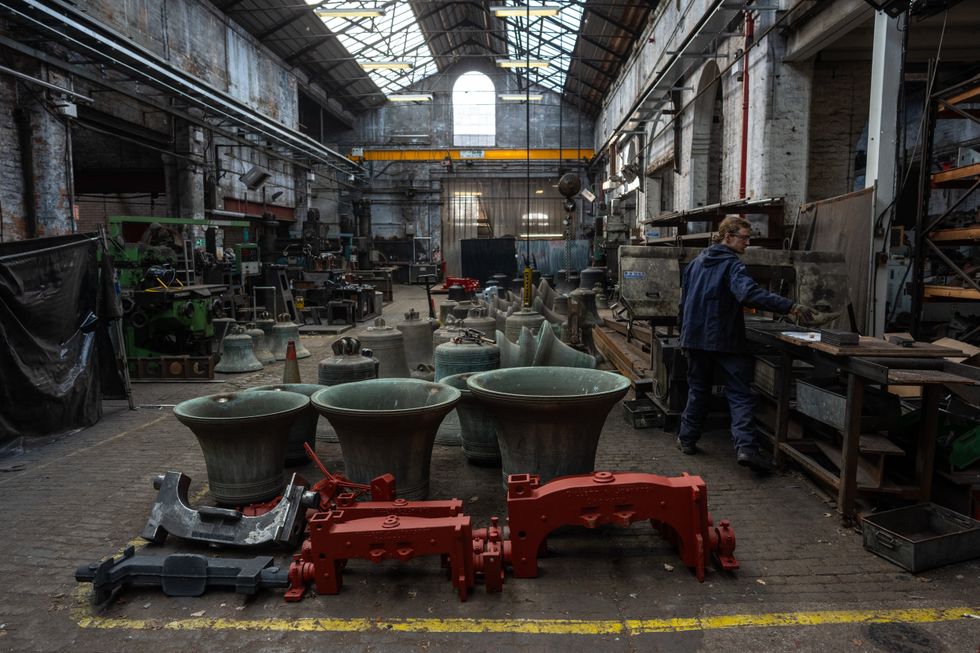
High energy costs mean factory workers suffer, a think tank has warned
It means the UK’s high costs for power are a sticking point, says the IPPR. In an age of smart factories this is a “major disadvantage”.
“Energy prices act as a brake on the very investments the economy needs,” the report’s authors warn.
“If British industry does not keep up, it will require a constant lifeline from UK taxpayers to stay alive.”
It states that “this chronic underinvestment – which is holding back UK productivity and growth – could worsen as energy prices rise again”.
LATEST DEVELOPMENTS
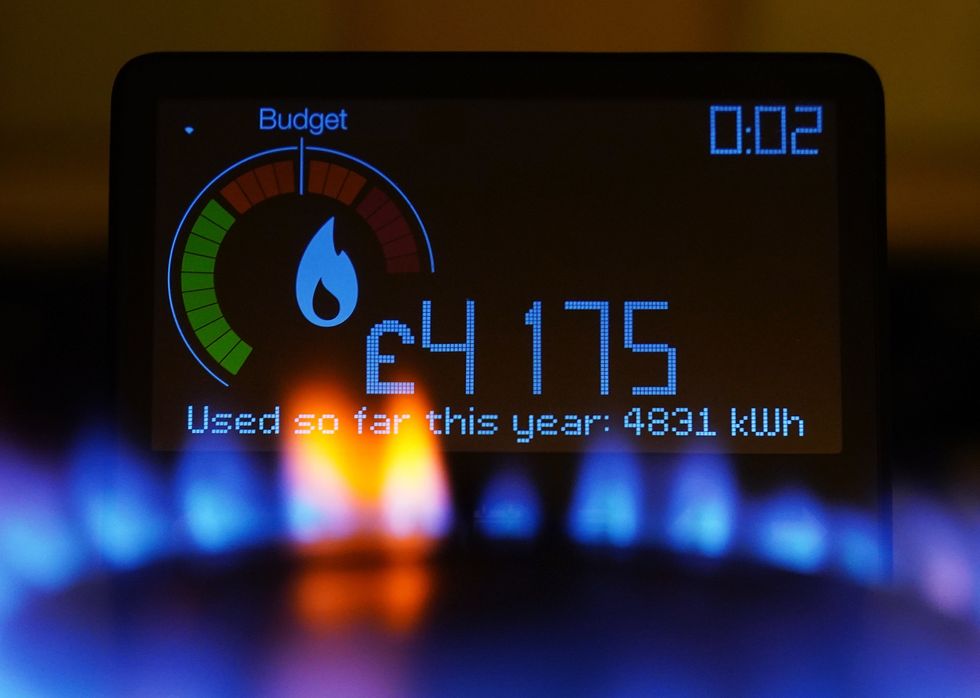
High energy prices are having grave consequences for workers
| PAThe IPPR argues that the British Industrial Competitiveness Scheme (BICS), a government programme to cut industrial electricity costs for manufacturers, should be carefully targeted, with the potential for future investment driving decisions.
The scheme will come into effect in April next year – but only around 7000 businesses will be chosen, from around 32,000 that are eligible.
BICS aims to cut electricity costs by up to 25 per cent. The Department for Business and Trade is currently designing the eligibility criteria, with decisions expected soon. Its current guidelines use an “electricity threshold” mechanism, which measures how central electricity is to a business’s core structure.
But this could see foundational sectors, which are energy intensive and provide goods and services to other industries, squeeze out frontier sectors, such as advanced manufacturing, clean energy technologies and digital.
The IPPR says subsidies should be aimed towards companies that will invest in the future rather than those for whom high energy is a cost of daily business.
Otherwise, it says, the taxpayer will “increasingly be called on to provide a lifeline to an old, creaking facility”.
Pranesh Narayanan, senior research fellow at IPPR, said: “British industry faces a double squeeze: companies are investing too little, and they face some of the highest electricity costs in Europe, and the two are related.
“But the government has a unique opportunity to both reduce the energy bills for businesses and incentivise investment.
“This isn’t about subsidising firms to stand still.
“With limited fiscal room, every pound should go to the sectors where lower energy costs will actually drive new factories, new equipment and new jobs.”
The think tank recommends “adjusting the scheme’s eligibility criteria to prioritise sectors where lower electricity costs are most likely to unlock new investment”.
It argues: “BICS should focus not just on how much electricity costs weigh on today’s balance sheet, but on where lower energy costs could help drive tomorrow’s investment.”
Saying this was a “pivotal moment” for the industrial strategy the report states: “Britain’s industrial base face two problems that feed off each other; chronically low business investment and persistently high energy costs.
“For some businesses, high electricity costs are a threat to short-term survival but not a blocker of investment. “For others, these costs are holding back investment in new technologies and innovation.
“Government will be under most pressure to support the former, but the long-term competitiveness of British industry rests on the latter.”
The crisis in Iran will only make the situation more acute, says the IPPR, with companies already feeling the squeeze from the conflict. Other schemes, such as the British Industrial Supercharger, give relief to the most energy intensive industries, it says.
“BICS, by contrast, should be reserved for its core purpose: supporting long-term industrial strategy and driving new investment.”
A Government spokesman said: "In an uncertain world we have the right economic plan.
"We were the fastest-growing European economy in the G7 last year and now we’re going even further by using regional growth, AI and a closer relationship with the EU to get our economy growing.
"We know the cost of energy is one of the greatest challenges facing industry – and we’re moving full steam ahead to tackle it.
"We’ll shortly confirm eligibility details for plans to reduce electricity bills by up to 25 per cent for over 7,000 businesses."