




Councils across England and Wales stand accused of "misusing their powers" to prohibit mundane activities such as feeding pigeons, gathering blackberries, and collecting stones from beaches.
A new investigation by the Campaign for Freedom in Everyday Life has revealed that Public Spaces Protection Orders (PSPOs) are now being deployed to effectively criminalise a broad spectrum of harmless everyday pursuits.
PSPOs were originally intended to address much more serious antisocial behaviour, such as street drinking, dog fouling and curbside harassment.
The new report identifies what it describes as "Orwellian", almost dystopian restrictions, with thirteen councils having implemented punishable bans on bird feeding, while one in five have banned shouting or swearing in public.
Additional prohibited activities include busking, shouting, congregating in groups, and even staring at others, with the campaign group warning vague wording means virtually any behaviour could potentially constitute an offence.
The scale of PSPO usage has expanded dramatically since their introduction, as when the orders first came into force in 2015, just eight existed across England and Wales.
Freedom of Information requests submitted to councils reveal a whopping 91 per cent of the 297 who responded now operate at least one PSPO.
In total, councils have established 1,268 separate orders, with each individual order capable of containing as many as 30 distinct restrictions.

Thirteen councils have implemented punishable bans on bird feeding
|GETTY
Josie Appleton, director of the Campaign for Freedom in Everyday Life, said: "The statutory guidance is clear - PSPOs should only be used where there is a demonstrable nuisance or harm to the local community.
"What we are seeing instead, is councils drafting catch-all powers that allow officers to punish almost anyone for almost anything.
"This is a clear abuse of power, but without democratic scrutiny or meaningful appeal it will continue unchecked."
Among the more unusual prohibitions uncovered by researchers is Torbay in Devon, which has outlawed the collection of stones, while Richmond Upon Thames and Rugby have extended similar bans to include soil and turf.
LATEST DEVELOPMENTS:

PSPOs have proved controversial among free speech campaigners
| GETTYThe latter councils, alongside Harrow, has also deemed blackberry foraging an offence, while North Lincolnshire has implemented a blanket ban on wild swimming across the entire council area.
Burnley has introduced curfews requiring under-14s to be off the streets by 9pm, and under-16s by 11pm - with consequences for individuals breaching these outlandish regulations proving to be significant.
Penalties issued under PSPO powers reached unprecedented levels last year, with 25,000 fines handed out.
Current fines for breaching a PSPO stand at £100, but this will rise fivefold to £500 once the Crime and Policing Bill receives Royal Assent.
The Bill would introduce a range of measures aimed at addressing anti-social behaviour, sexual offences, knife crime, and beyond - to "crack down" on offences and ensure safer streets.
Private enforcement firms, receiving payment on a per-fine basis, were responsible for three-quarters of last year's penalties, with critics arguing payment structure creates a perverse incentive to maximise the number of fines issued.
Examples of drastic punishment include one woman in Harrow, arrested and issued a £100 fine for feeding pigeons in January, while 17-year-old Britain's Got Talent contestant Charlie Wilson was handcuffed by police in Bury last year for busking with amplified equipment.
Elsewhere, one campaigner protesting against council cuts in Leicester was among eight people penalised under a PSPO, though the council subsequently withdrew her fine.
William Yarwood of the TaxPayers' Alliance described it as "a scandal that town hall busybodies are more interested in dreaming up draconian rules to criminalise everyday life than they are in fixing the basic services taxpayers actually pay for."
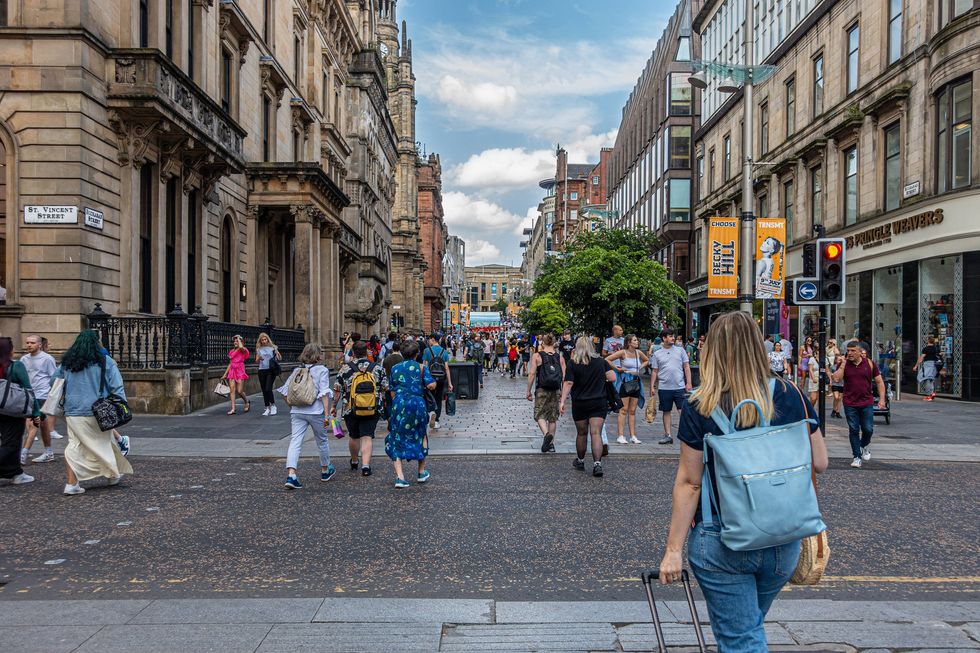
Councils claim the measures combat antisocial behaviour affecting quality of life in town centres, parks, and high streets
| GETTYMaya Thomas of Big Brother Watch also condemned what she called the "Orwellian use of PSPOs".
She said: "While criminalising swearing and rude language might make streets 'feel' safe, it does nothing to ensure that they genuinely are.
"The freedom to express yourself politely, rudely, quietly or loudly is a key part of living in a democracy."
The Local Government Association defended the use of these powers, stating councils require effective tools to combat antisocial behaviour affecting quality of life in town centres, parks, and high streets.
The body said PSPOs are used "proportionately", with oversight from elected councillors.