







A Chinese export ban on chemicals crucial for fertilisers could spark a “global supply shock” and send food prices soaring, analysts have warned.
Farmers are already facing inflated bills as a result of the war in Iran. An estimated third of the world’s fertilisers would usually pass through the blocked Strait of Hormuz, and the costs have shot up by as much as 80 per cent.
The boss of Yara, one of the world’s biggest fertiliser producers, says up to 10 billion meals a week could be lost globally, hitting the poorest countries hardest.
Now analysts have warned of a new threat – a de facto ban on the export of sulphur and sulphuric acid from China.
Both are “crucial raw materials” for producing phosphate fertilisers, some of the most widely used in the world.
China has become a key player in the trade of sulphuric acid.
Last year its exports were worth £212million, accounting for 23 per cent of global exports.
But analysts say restrictions on future exports amount to a ban, apparently to safeguard China’s domestic supply.

China has become a key player in the trade of sulphuric acid
|GETTY
The ban is set to run from May until at least the end of the year, “or until domestic priorities ease”.
China has already banned the export of many fertilisers.
Beijing’s Ministry of Commerce has not officially confirmed the sulphur ban.
But a total suspension would result in three million tonnes of sulphuric acid being lost from seabourne trade.
LATEST DEVELOPMENTS:
Sarah Marlow, global editor for fertilisers at Argus Media, said the move suggested China was keen to safeguard domestic supply against the Middle East chaos.
She said: “China’s main priority has tended to be food security, and hence the domestic fertiliser industry.
“Sulphur and sulphuric acid are crucial raw materials for the production of phosphate fertilisers.”
Another main source of raw sulphur is the Middle East, where it is produced as a by-product of the petrochemical industry.
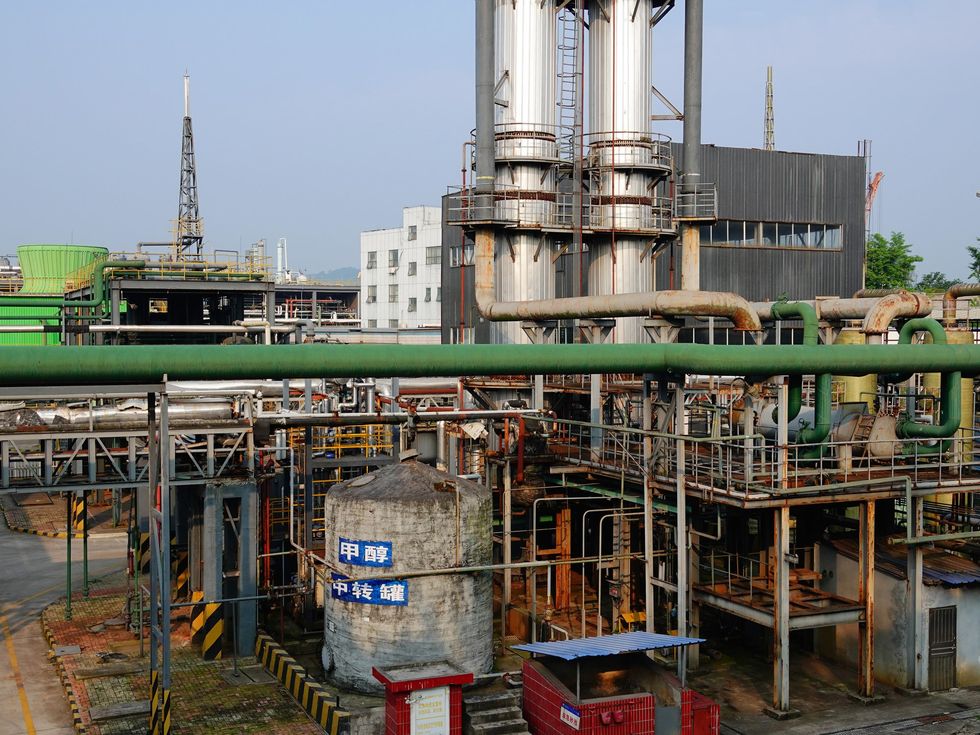
The greatest impact is expected to be felt in Asia, where industrial and agricultural sectors had grown 'dangerously dependent' on Chinese imports
|GETTY
But the sector is currently shuttered and trade routes blocked.
Argus warned earlier this month: “There are no meaningful substitutes to the loss of Chinese supply, given that China is also the world’s largest sulphuric acid exporter.”
The greatest impact is expected to be felt in Asia, where industrial and agricultural sectors had grown “dangerously dependent” on Chinese imports.
In the UK, the Agricultural Industries Confederation, the trade body for farming supply chains, says it is too early to gauge what impact, if any, the Chinese ban could have on the British market.
The UK does not buy any meaningful quantities of sulphuric acid from China, with most of our imports sourced from northern Europe.
But, in a globalised market, impacts on prices can be felt across the supply chain.
Sunsirs Commodity Data Group, based in China’s Hangzhou, told the South China Morning Post: “When the cost of upstream raw materials doubles, fertilisers can only raise prices, and, in the end, these costs will all be reflected in the weight of the vegetables in the market.”
Alicia Garcia-Herrero, of French investment bank Natixis, predicted that the ban would lead to higher prices.
She said: “China’s outright ban on sulphuric acid exports - rather than any mere reduction - is shaping up to be a serious global supply shock that will drive prices higher and squeeze mining and fertiliser chains already battered by Middle East sulphur disruptions.”
Earlier this week, the World Bank warned that up to 45 million people could face “acute food insecurity” if the war continues.
And Svein Tore Holsether, chief executive of Yara, urged European countries to consider the impact of other nations before entering bidding wars for fertiliser.
He said that half a million tonnes of nitrogen fertiliser, which is usually produced from natural gas, was not being made as a result of the conflict.
He told the BBC: "What does that mean for food production? Up to 10 billion meals that will not be produced every week as a result of the lack of fertilisers."