








A London museum will embark on what it described as a "landmark" commitment to transfer more than 2,000 Jain manuscripts back to the indigenous community.
The Wellcome Collection's decision concerns what is thought to be the largest collection of Jain texts held anywhere outside South Asia.
These sacred documents have remained in the institution's possession for over a century, having been acquired during Britain's colonial period.
The restitution follows extensive discussions and partnership with the Institute of Jainology.
A memorandum of understanding was signed this week involving the Wellcome Trust, the Institute of Jainology and the University of Birmingham, with the manuscripts set to be transferred to Birmingham's Dharmanath Network in Jain Studies.
The collection encompasses illustrated manuscripts dating from the 15th century through to unique 19th-century texts, covering subjects including religion, literature, medicine and culture.
These documents are written in multiple languages and scripts, including Prakrit, Sanskrit, Gujarati, Rajasthani and early Hindi.
Among the treasures is a "rare and magnificently illustrated" early 16th-century copy of the Kalpasutra, a significant Jain scripture.
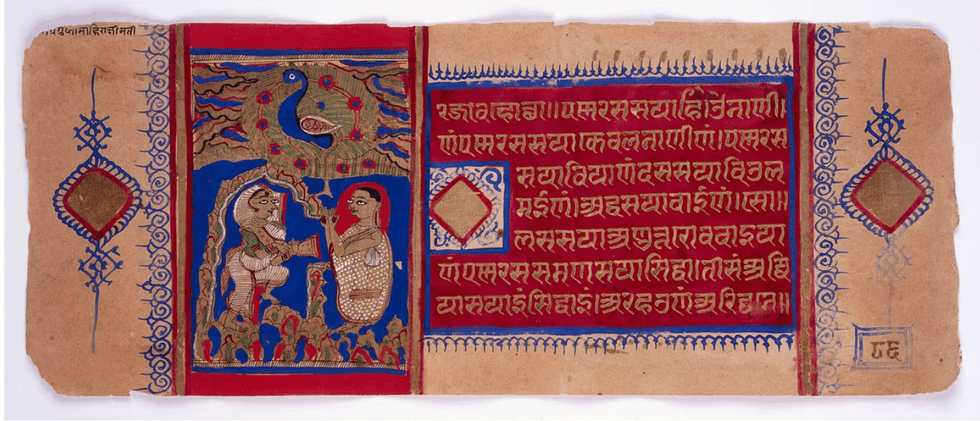
The Wellcome Collection have announced they will be returning 2000 Jain manuscripts
|THE WELLCOME COLLECTION
The collection also contains a fragile paper manuscript from 1688, which may represent the earliest surviving copy of Nainsukh's 'Vaidyamanotsav' ('A Celebration of Physicians'), the first medical treatise composed in early Hindi in 1592.
Particularly notable is a document containing early ethical principles of the Indian independence movement that Mahatma Gandhi later drew upon and popularised, which strongly criticises the foundations of British colonial rule.
"We thank the Jain community for our work together on this landmark restitution, through which we have formed a strong and lasting bond," said Daniel Martin, Associate Director of Collections & Digital at the Wellcome Collection.
Mr Martin added the institution has established a high standard for collaborative and compassionate restitution that acknowledges the harm caused by unethical acquisition and retention of cultural heritage.
LATEST DEVELOPMENTS
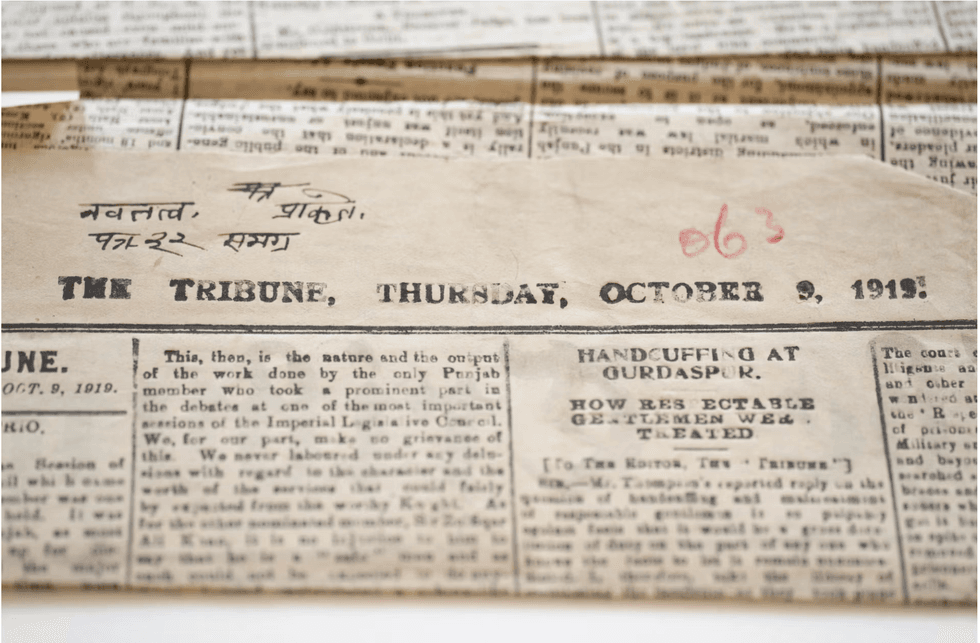
The manuscripts have been in possession of the museum for over a century
|THE WELLCOME COLLECTION
Mehool Sanghrajka, Managing Trustee of the Institute of Jainology, praised the museum's decision as "both pioneering and a model for other faith communities."
He acknowledged some manuscripts might not have survived the upheaval in India following independence, expressing gratitude for the care shown to these texts over the decades.
The Institute emphasised the importance of collaboration rather than judging historical events through a contemporary lens, seeking instead to "transform Jain scholarship and research and give the community access to its cultural heritage."
The museum revealed that more than half of the collection was purchased during the colonial era for British entrepreneur Sir Henry Wellcome from a single Jain temple in Punjab that no longer exists.
The Wellcome Collection acknowledged these items were acquired at a low price and against the best interests of their original owners.
The Dharmanath Network in Jain Studies was selected as the recipient because it is the first UK research institution entirely funded by Jain communities in Britain, the United States and India.
Dr Marie-Helene Gorisse, who leads the network at Birmingham, said the partnership would ensure "maximum impact for students, researchers, members of the community, and for the general public".
Cataloguing work completed in the early 2000s by Dr Kanhaiyalal Virji Sheth and Dr Kalpana Sheth will be published on the Wellcome Collection's website as part of the agreement.
Our Standards: The GB News Editorial Charter