






The iconic photo of Henry VIII's wife Anne Boleyn may actually not be a depiction of her, new research has suggested.
Dr Owen Emmerson, a Tudor historian and co-author of a forthcoming book "Capturing a Queen: The Image of Anne Boleyn", believes the National Portrait Gallery's celebrated image of Anne Boleyn actually features the King's daughter, Elizabeth I's face placed onto her mother's body.
The painting, which has hung in the gallery since 1882, was created roughly fifty years after Henry VIII's second wife lost her head at the Tower of London.
According to Dr Emmerson, this wasn't an accident – the artist deliberately gave Anne Boleyn her daughter's features to strengthen Elizabeth's claim to the throne during a period when Catholic opponents questioned whether she was the rightful monarch.
TRENDING
Stories
Videos
Your Say
Dr Emmerson's theory rests on striking resemblances between several royal portraits from the era.
He suggests the Anne Boleyn painting shares an uncanny likeness with a portrait of Elizabeth I held in the Compton Verney Collection in Warwickshire – both featuring the same angular face, pale complexion and brown hair.
The historian has also spotted similar features in a Mary I portrait owned by Mayfair's Weiss Gallery and a privately held image of Edward IV.
"It's one artist doing a series of portraits of monarchs and putting on the face of the reigning queen, Elizabeth, to show a legitimate and God-ordained line of succession," Dr Emmerson explained.
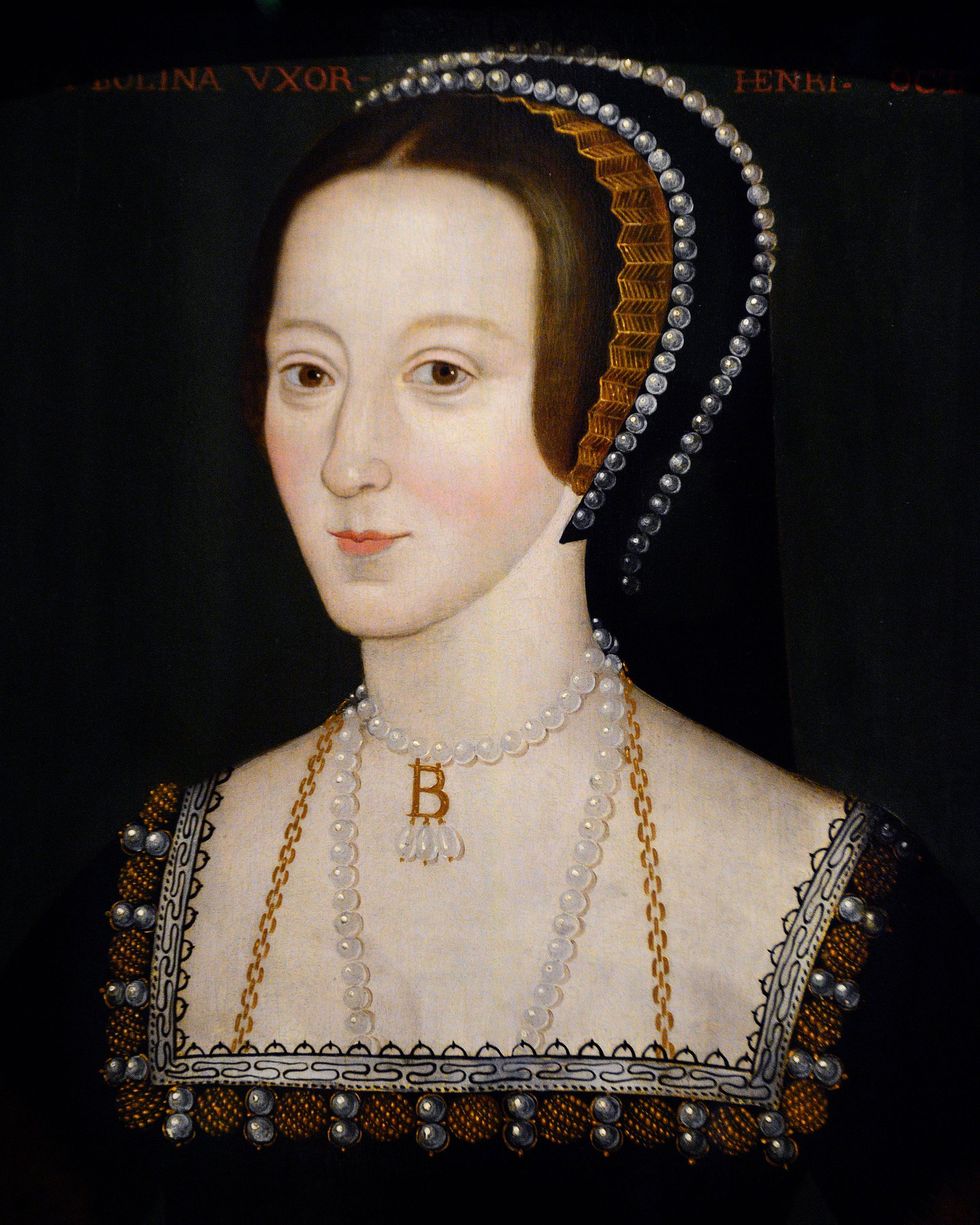
The iconic photo of Henry VIII's wife Anne Boleyn may actually not be a depiction of her, new research has suggested
|GETTY
He believes all these works came from the same late 16th-century workshop.
Other experts have backed up Dr Emmerson's findings.
Lawrence Hendra, research director at the Philip Mould gallery and an Antiques Roadshow adviser, said the portraits were "probably [from] a workshop from the end of the 16th century, going into the early 17th, which appears to have a niche producing posthumous portraits of English kings and queens".
The mystery surrounding Anne's true appearance runs deep. After her execution in 1536, many original portraits of the disgraced queen were destroyed to avoid upsetting or angering Henry VIII.
LATEST DEVELOPMENTS:
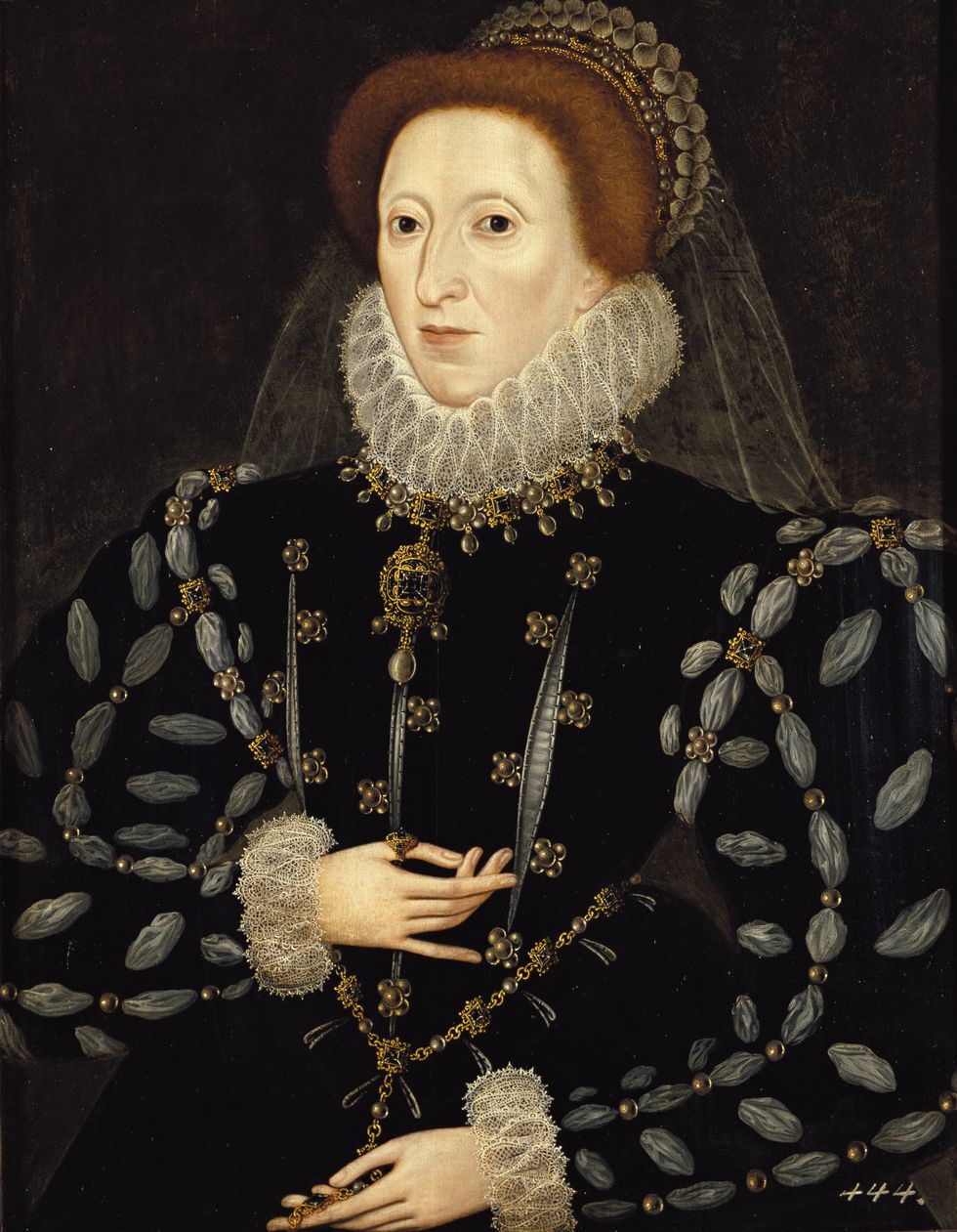
Dr Emmerson believes the head of Elizabeth I (above) has been plastered onto the torso of her mother, Anne Boleyn, posthumously
|GETTY
In 2016, facial recognition technology suggested several supposed Anne Boleyn portraits at the National Portrait Gallery – including this one – might not actually depict her at all.
However, one authentic likeness has since emerged: a Hans Holbein the Younger portrait from 1532 or 1533, recently authenticated by Dr Kate Heard, senior curator of the Royal Collection.
Dr Emmerson also reckons Anne Boleyn was actually a redhead, as he's convinced she carried the MC1R gene, commonly known as the "ginger gene".
"It's the primary determinant for red hair. After all, Henry VIII had red hair, as did their daughter, Elizabeth," he said.
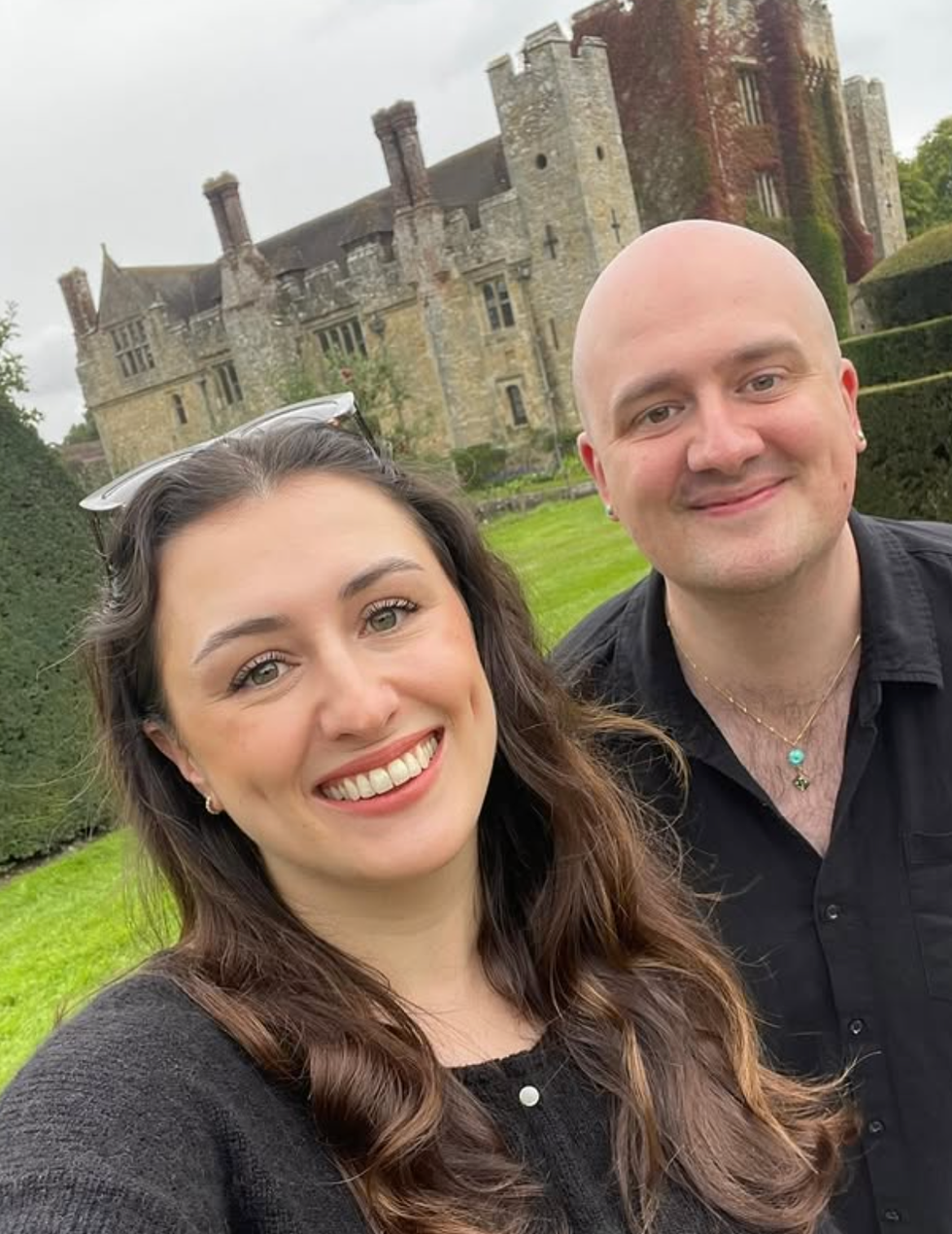
Dr Owen Emmerson and Kate McCaffrey co-authered the book, "Capturing a Queen: The Image of Anne Boleyn," due to be released next month
|Yet for over 350 years, artists have painted Anne with dark brown or black hair, a trend Dr Emmerson attributes to changing beauty standards.
His new book, co-authored by Kate McCaffrey, accompanies an exhibition opening at Anne's childhood home on February 11.
The show features more than 30 likenesses, including the rare Moost Happi medal cast during her lifetime.
The National Portrait Gallery said it looks forward to discussing the research further.
Our Standards: The GB News Editorial Charter
More From GB News