








Britain's economy expanded by 0.5 per cent in February, marking the strongest monthly performance since December 2024, according to fresh data from the Office for National Statistics.
The figures exceeded expectations, with most economists having predicted growth of just 0.1 per cent.
Emeritus Professor Joe Nellis, economic adviser at MHA, said: "Beating expectations, this marked the strongest month-on-month growth since December 2024. That appears to be progress — but the rules of the game have shifted dramatically since."
The ongoing conflict in the Middle East has cast a long shadow over the UK's economic outlook, with soaring energy costs and supply chain disruptions threatening to undo any momentum gained earlier in the year.
As a net energy importer, Britain remains particularly vulnerable to global price shocks.

Official figures show gross domestic product rose by 0.5 per cent during the month
| PAChief Secretary to the Treasury James Murray said: "Growth only happens when the economy is on solid ground. That’s why in a changing world our plan to restore stability, boost investment and deliver reform is the right one to build a more stronger more resilient Britain.
"At the IMF meetings in Washington, the Chancellor has set out how we will go further and faster to boost Britain’s competitiveness and build a stronger, more resilient economy, keeping costs down for families and businesses and taking back control of our energy costs as today we cut bills by up to 25 per cent for 10,000 British businesses."
The International Monetary Fund delivered a stark assessment earlier this week, slashing its UK growth forecast for 2026 to just 0.8 per cent. This represents a sharp reduction from the 1.3 per cent expansion predicted in January, making Britain the worst-affected economy among the G7 nations.
TRENDING
Stories
Videos
Your Say
The downgrade stems from a combination of factors: elevated energy prices, a more cautious approach to interest rate cuts, and the broader impact of geopolitical uncertainty filtering through to consumer confidence and business decisions.
Professor Nellis described the situation as one where existing economic weaknesses are being compounded rather than new problems being created.
He warned that the Government faces difficult choices in the months ahead.
Weaker growth translates directly into lower tax revenues, yet spending pressures remain intense across public services, debt interest payments, and rising demographic demands in healthcare and pensions.
LATEST DEVELOPMENTS:
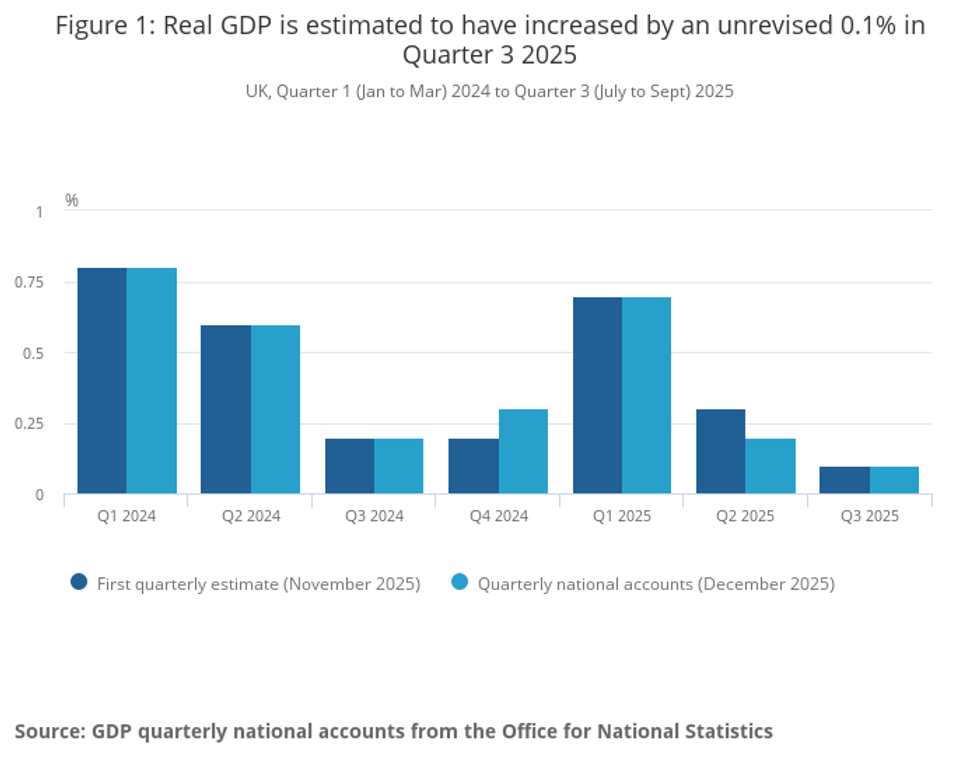 How did the GDP change over the years? | ONS
"The Government is left with an uncomfortable trade-off: increase spending to protect households struggling with increased energy costs or maintain fiscal discipline," he said.
Should ministers attempt both, they would be forced toward less palatable alternatives: raising taxes or cutting expenditure elsewhere.
Defence spending pressures add further strain to already limited fiscal room. While some improvement could materialise next year if energy markets stabilise, Professor Nellis cautioned that such a recovery "is far from guaranteed."
Kevin Brown, savings expert at Scottish Friendly, offered a sobering assessment of the outlook, suggesting February's positive GDP reading "is likely to prove short-lived unless there is a swift resolution to the ongoing conflict in the Middle East."
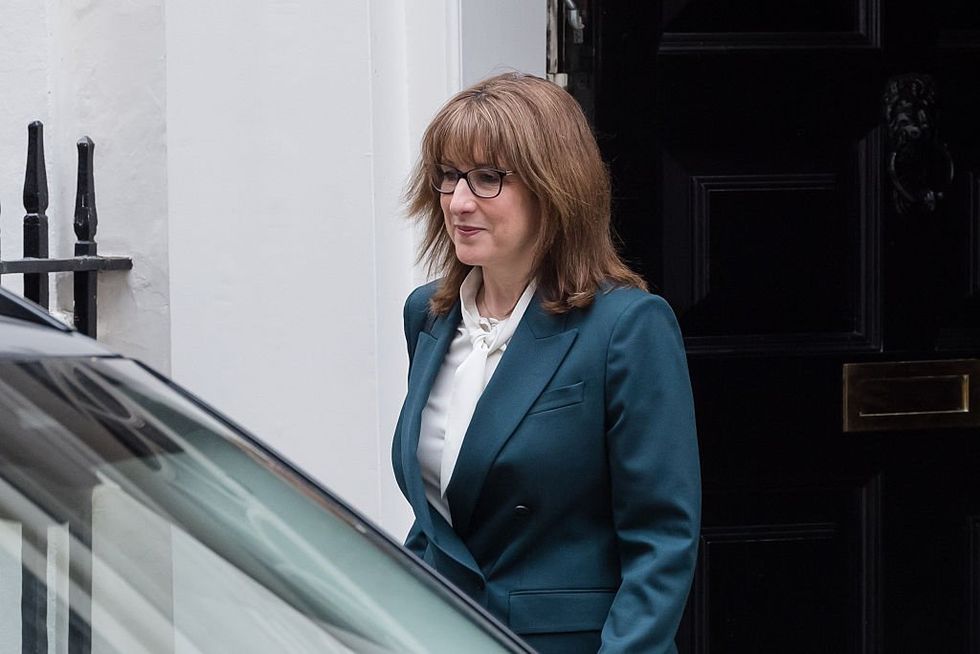
Chancellor Rachel Reeves has acknowledged the economic impact of the conflict
| GETTYHe pointed to falling business confidence and rising mortgage rates as evidence that the fallout has already reached British shores.
"If tensions escalate again, energy prices and borrowing costs will likely soar, increasing the prospect of a recession," Mr Brown warned.
Even should a compromise emerge quickly, he cautioned it remains unclear whether lasting economic damage has occurred.
His advice to households was straightforward: avoid panic, reduce spending where possible, build financial reserves, and ensure savings are generating the best available returns.
Suren Thiru, chief economist at the ICAEW, expressed concern that February's stronger-than-expected performance would do little to calm fears about stagflation.
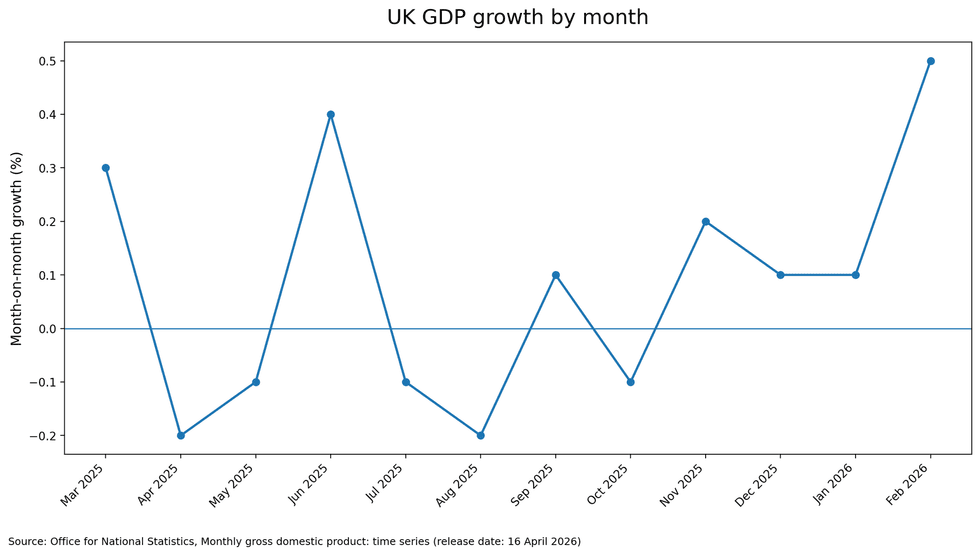
he UK economy has recorded uneven growth over the past year, with multiple months of stagnation or contraction punctuated by modest gains
|ONS/CHAT
"February's growth will have been followed by a more miserable March with skyrocketing fuel prices and supply chain chaos sparked by the Iran war likely to have stalled economic activity, despite an early Easter boost to sectors like retail," he said.
Mr Thiru suggested that a prolonged period of stagflation now appears unavoidable, with surging energy costs set to trigger significant declines in both investment and consumer spending.
On interest rates, he indicated that while the conflict has shifted attention toward potential rises rather than cuts, a sustained pause in policy remains the most probable outcome.