








The conflict in Iran has disrupted Chancellor Rachel Reeves’ economic strategy, with Treasury officials warning of a "very difficult Budget" later this year.
Labour began 2026 promising stability and lower living costs, with plans built on falling inflation, easing interest rates and improving business confidence.
Those expectations have been undermined by escalating geopolitical tensions, with the Bank of England signalling potential interest rate increases.
Economists have warned the crisis has significantly altered the UK’s economic outlook.
TRENDING
Stories
Videos
Your Say
Officials are now facing a more challenging fiscal environment as economic conditions deteriorate.
Luke Bartholomew, deputy chief economist at Aberdeen, said: "The risk of recession has significantly increased at this point."
He added higher borrowing costs and rising energy prices could deliver a "double whammy" to the UK economy.
"It is difficult to feel optimistic about the macro outlook right now."
Households are expected to face increasing financial pressure as wage growth slows and costs rise.
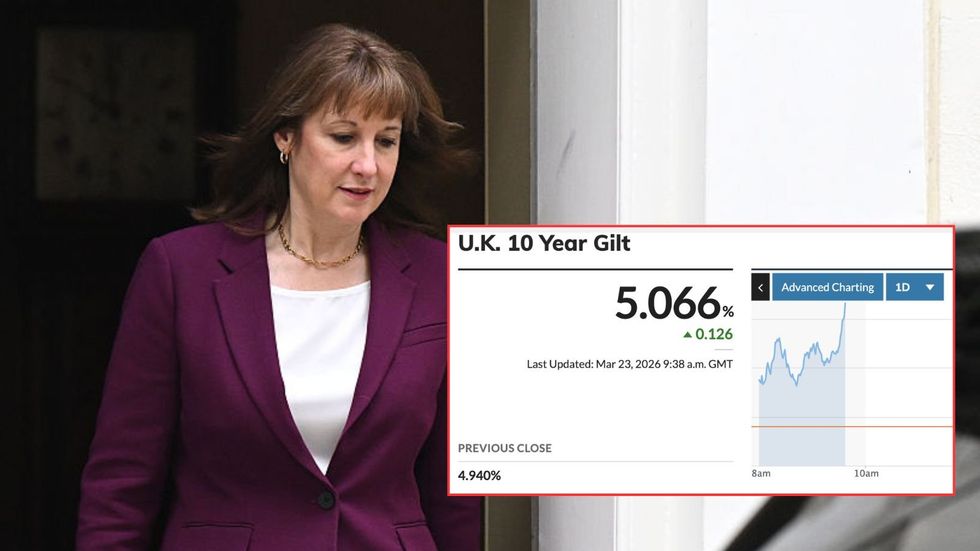
The economy could be on the verge of recession as investors price in four rate rises
|GETTY/Marketwatch
Inflation is forecast to exceed three per cent later this year, which could reduce real incomes as spending on essentials increases.
Government bond prices fell towards the end of last week as markets reacted to expectations of higher interest rates and concerns over the public finances.
A rout in the gilt market deepened on Monday as traders bet the Bank of England would be forced to raise interest rates four times this year to counter surging energy prices.
Traders in the swaps market are now fully pricing in four quarter‑point rate rises by the Bank in 2026 — up from three expected last week.
LATEST DEVELOPMENTS
Andrew Bailey's interest rate hopes have been hit by the Iran crisis
| Bank of EnglandBefore the conflict began, investors had been anticipating two cuts.
Derek Halpenny, head of research in global markets for Europe, the Middle East and Africa at MUFG, said the gilt moves were “starting to look very excessive”, adding that expectations of four rate rises were “way overdone”.
Speculation senior Labour figures had considered loosening fiscal rules added to market volatility.
The Treasury rejected those suggestions, with an ally of the Chancellor stating: "Be in no doubt of this Government’s commitment to the fiscal rules."
Dan Haile, senior economist at the Institute for Government, said Ms Reeves would have to "wave goodbye" to her £22billion fiscal buffer.
He said: "That number disappears into the rear-view window."
Earlier in the year, Ms Reeves said the UK could absorb economic shocks without raising taxes.
When asked this week whether position remained, she said the country was in a "much stronger position" than in July 2024 but did not rule out future tax increases.
The Resolution Foundation has proposed allocating £3.75billion per year to support lower-income households with energy costs.

Britons are set to be hit even harder by the cost of living crisis
| PA / GETTYRuth Curtice, chief executive of the think-tank, said: "This is not the time for the UK public finances to take a huge unlimited bet on the path of energy markets."
Higher-income households may be expected to adjust their spending to manage rising costs.
Make UK said conditions for manufacturers were becoming increasingly difficult and called on the Government to accelerate planned energy support measures.
Nick Butler, a former head of strategy at BP, said: "The Government needs to come forward with a plan to manage continuity of supply."
He warned sectors including food production, healthcare, education and transport could struggle to absorb sustained price increases.
Our Standards: The GB News Editorial Charter
More From GB News