










Flexible working rules may act as a hidden cost on businesses and workers, potentially affecting wages, jobs and productivity, a new report has warned.
The discussion paper, published by the Institute of Economic Affairs (IEA), argues that expanded legal rights to request flexible working under the Employment Rights Act could create wider economic consequences.
The IEA argues Governments may back flexible working measures because they are politically popular, while the financial burden falls on employers and workers.
The report warns that the strengthened right to request flexible working could be difficult for employers to refuse in practice, and that the administrative process of reviewing and responding to requests could create additional costs.
TRENDING
Stories
Videos
Your Say
Lord Frost, director general of the IEA, said: “The Government always likes to legislate popular measures while asking others to pay for them. If flexible working is in all parties’ interests, then nothing stops it happening now.
"If it is not, but is effectively compelled by the Government anyway, then it becomes a new stealth tax.”
He added: “The costs it imposes will show up as lower pay, fewer jobs, higher prices, or reduced investment and eventually in lower productivity and prosperity for everyone.”
The report also warns employers could face increased legal risk when refusing flexible working requests, even where they believe productivity may be affected.

Report claims strengthened right to request flexible working could hit productivity and wages
|GETTY
It cites research suggesting home working may be linked to some physical and mental health challenges following the pandemic.
Research referenced in the paper suggests workers in roles allowing remote work experienced wage growth between two and seven per cent lower after the pandemic compared with workers who could not work from home.
The report identifies potential business costs including reduced output, coordination challenges, weaker staff oversight and fewer opportunities for professional development.
Authors say the scale of these impacts varies significantly by industry, role and organisation.
LATEST DEVELOPMENTS

Many workers enjoy the ability to work from home
|GETTY
The paper argues that no central authority could realistically measure how arrangements such as compressed hours or four‑day weeks affect productivity across all workplaces.
It also claims flexible working policies could create uneven economic impacts, with higher‑paid professionals and public sector workers more likely to benefit.
The authors argue that costs could instead be felt more widely through slower wage growth, reduced job creation and higher prices.
The paper says this could create particular challenges in the public sector, where pay structures and union agreements may limit the ability to adjust pay based on working arrangements, adding to existing productivity pressures.
Professor Shackleton, editorial and research fellow at the IEA, said: “Flexible working is rarely a free good.
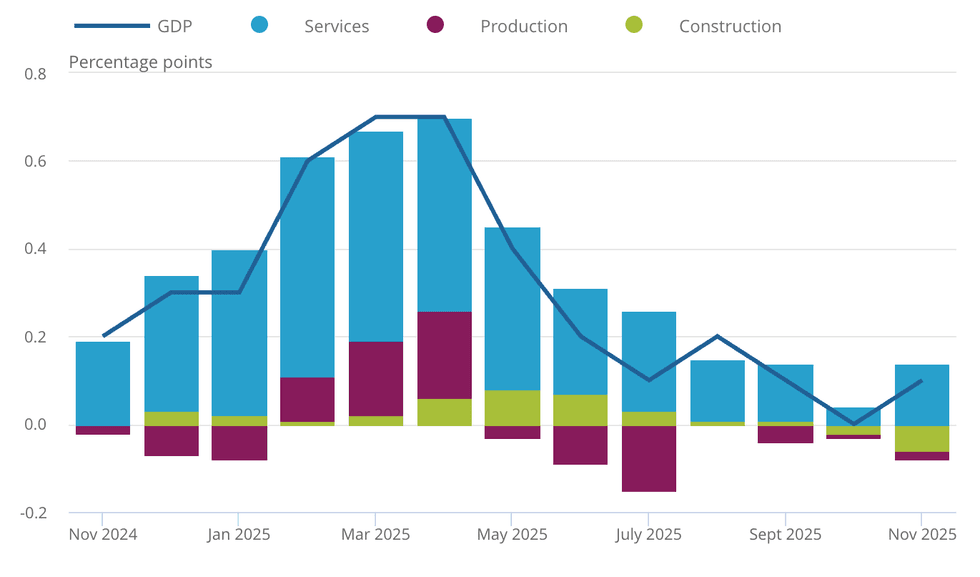
Britain has struggled to sustain economic growth as a number of sectors faltered in 2025
|ONS
"The costs are real, highly specific and often hidden and Government simply cannot measure them. When politicians mandate arrangements which are not freely chosen, the bill is paid elsewhere in the economy, amounting to a stealth tax on working people and taxpayers.”
Ms Denham, co‑author and senior political commentator at The Telegraph, said: “It is a folly to assume that ministers and civil servants can know the best working arrangements for every active employer and employee in the country.
Imposing one‑size‑fits‑all rules and rights on them is misguided, and will likely lead to higher costs, weaker productivity and fewer opportunities for workers.”
The report adds to the wider debate about the long‑term economic effects of flexible working as employers and policymakers continue to assess post‑pandemic working patterns.
More From GB News