






The future of the state pension is in question as increases to the official retirement age are expected to "create challenges" for employers and workers, analysts warn.
Currently, the UK's state pension age is in the process of rising from 66 to 67, with the phased transition having commenced this month.
Workers born on or after April 6, 1960 are affected by this change, which will be fully implemented by April 2028.
Those with birthdays falling between April 6, 1960, and March 5, 1961, will see their pension age set somewhere between 66 years and one month and 66 years and 11 months.
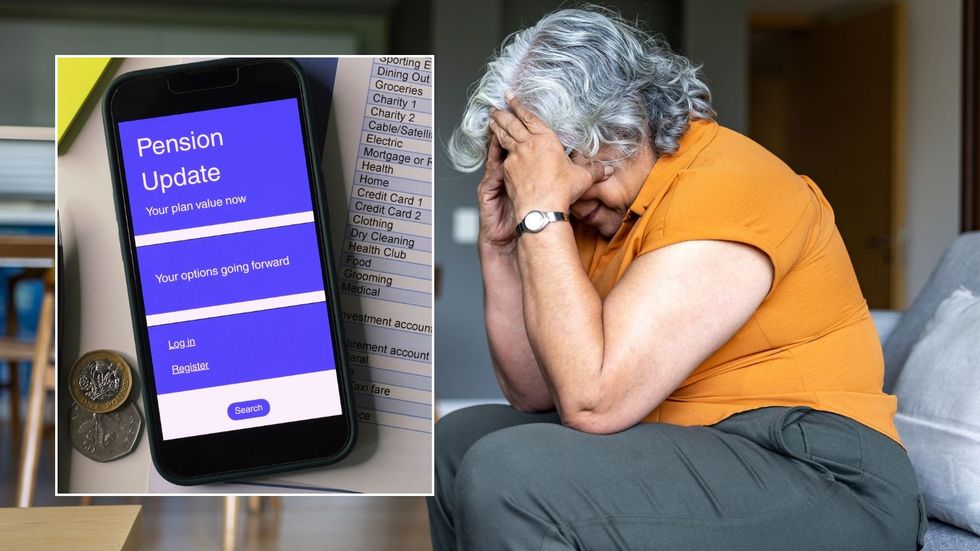
Changes to the state pension age present 'challenges', analysts warn
|GETTY
Anyone born from 6 April 1961 onwards will need to wait until they turn 67 to claim their state pension. Looking further ahead, legislation sets out plans for another increase to 68, scheduled to take place between 2044 and 2046.
This subsequent rise is being driven by increasing life expectancy and the requirement to control the long-term fiscal burden of Britain's ageing population.
Dr Kathy Hartley, an interim subject head of the Human Resource Management Group at the University of Salford, noted that this pension age adjustment had been anticipated.
She said: "Recent headlines highlighting the increase in state pension age to 67 years, phased in over the next couple of years, had been expected. However, with further increases already under review, questions remain about the longer-term impact for workers and employers."
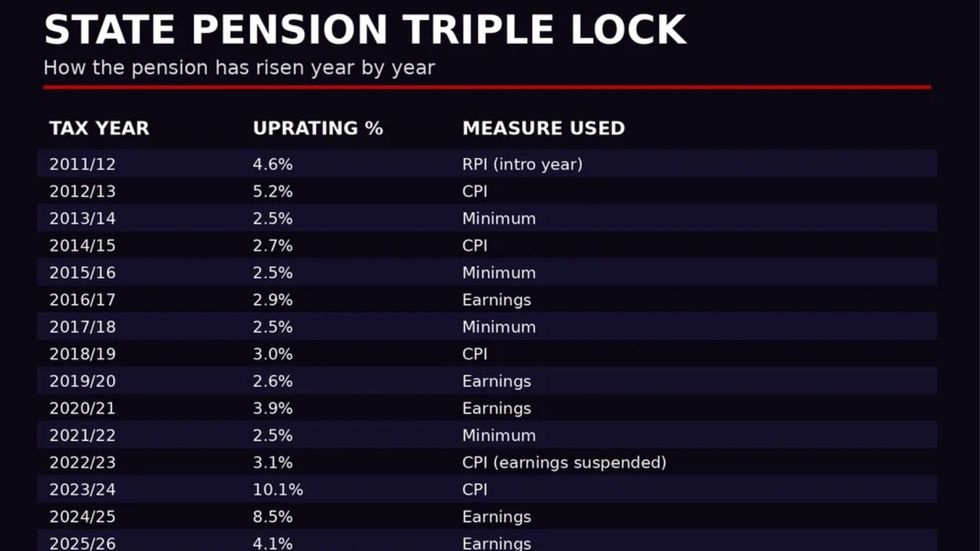 How the state pension triple lock has changed over the years | GB NEWS / FIDELITY INTERNATIONAL
 LATEST DEVELOPMENTS
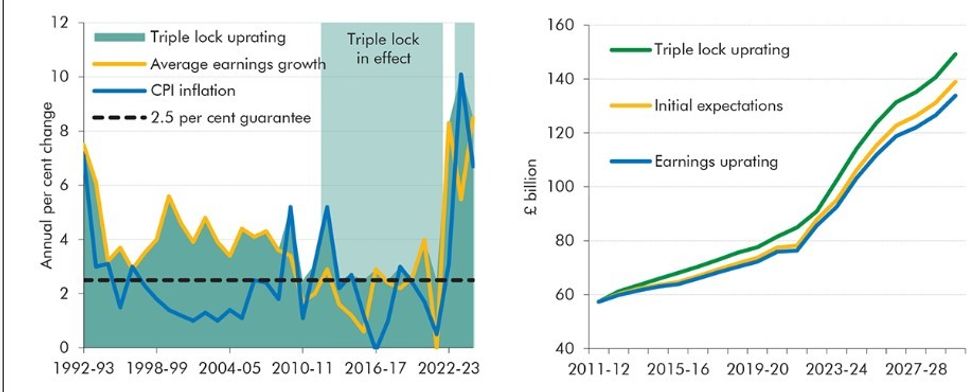 What has the impact of the state pension triple lock been on the public's finances | OBR
 A 2017 review proposed implementing this change between 2037 and 2039, whilst a subsequent 2022 review suggested 2041 to 2043 as the target period.
She added: "Quite what the government will choose to do is currently unclear. In one sense, some workers have been choosing to remain in employment beyond what was once the norm for some time now, particularly since the default retirement age of 65 was removed back in 2011.
"For some, this is clearly beneficial financially, even if it involves reduced hours or, in some cases, less strenuous forms of work, especially in the context of rising living costs.
"Others remain in roles they find intrinsically interesting, feel motivated and healthy, and see no reason to stop what they have been doing. In a small number of cases, this can create challenges for employers, particularly when an employee’s health and/or performance becomes an issue."
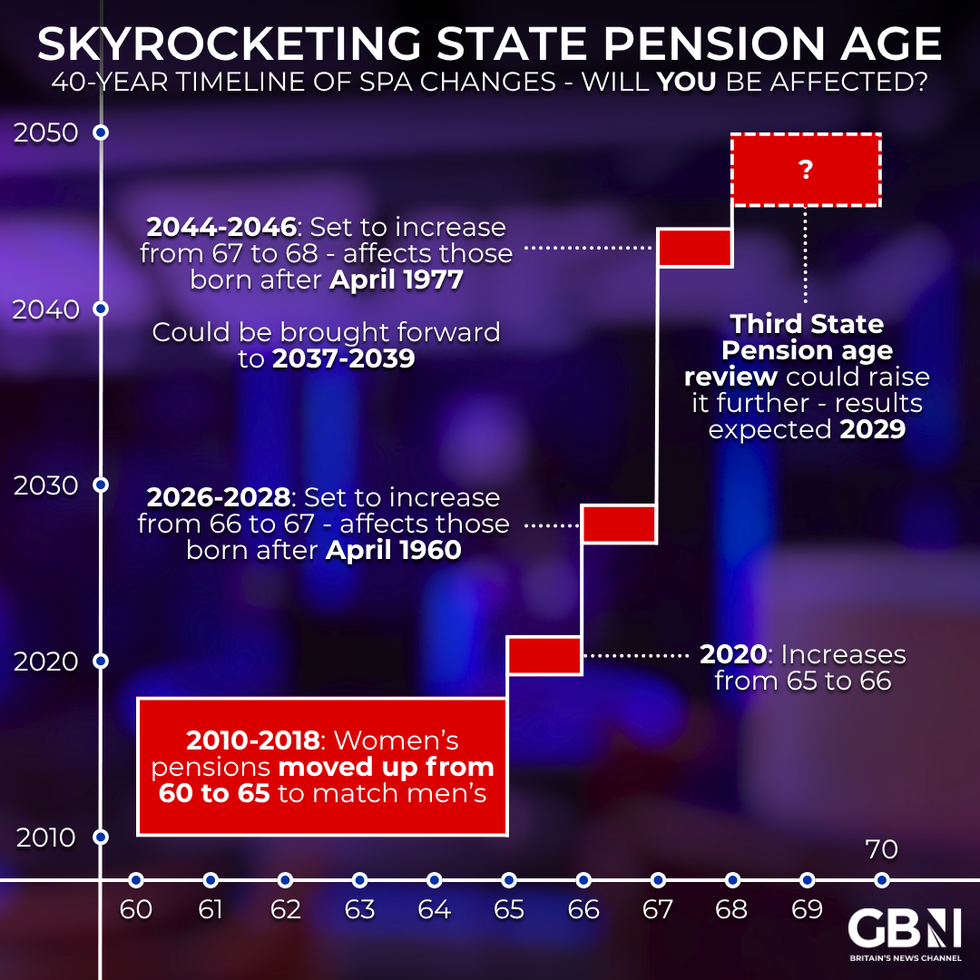 Are you affected by state pension age changes? | GETTY
Career changes during middle age, including fresh starts after 60, have become increasingly commonplace, the expert noted.
Some older employees are embracing new challenges by combining part-time work in their established field with other interests, effectively building what Dr Hartley described as a "portfolio career" in their later years.
Those with healthier occupational pension savings will naturally have greater flexibility in deciding when to leave paid employment, Dr Hartley noted.
Yet she emphasised that improved financial literacy is essential for many workers, urging people to monitor their pension pots more closely and understand what retirement income they can realistically expect.