







A Nottingham-based tree surgeon faces a nearly £890,000 pension shortfall that highlights the retirement challenges confronting Britain's self-employed workforce.
Peter Radford, 36, works as a contractor and therefore falls outside the automatic workplace pension system that benefits employed workers.
His retirement savings currently stand at approximately £7,000, accumulated by combining pension pots from earlier employment.
Each month, he puts £50 into a self-invested personal pension (SIPP) through saving and investing platform Plum, which includes a £10 Government top-up, totalling £600 per year.
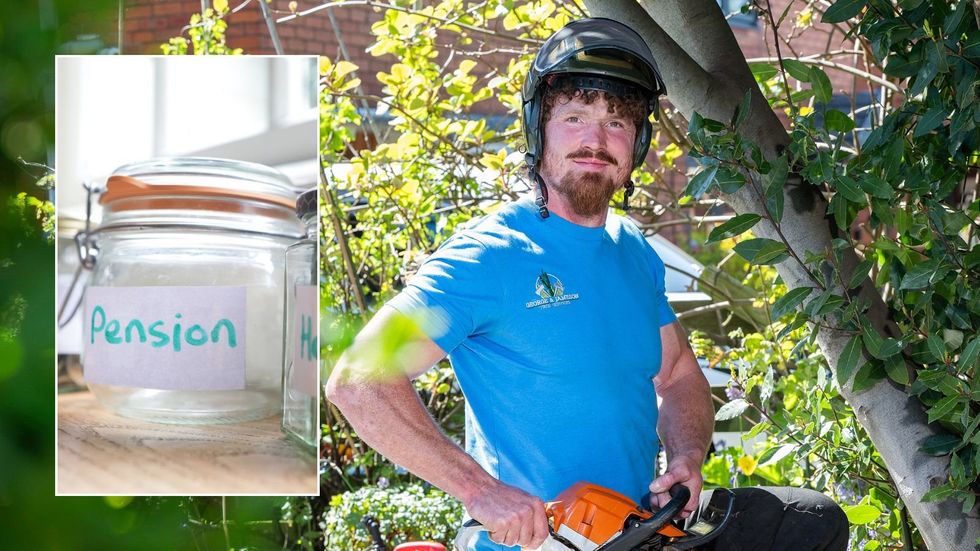
Self-employed workers are being hit with a nearly £890,000 pension saving shortfall
|GETTY / PLUM
Mr Radford said: "My ambitions for retirement are no doubt widely shared: to have a place of my own in which to relax and grow old peacefully, whilst still having the option to travel as I please and support my family.
"Currently, I'm paying £50 per month into my pension, including tax relief, and I'm conscious I'm going to have to save much more into my pension if I want to achieve my retirement goals."
The tree surgeon noted one of the main difficulties of retirement planning is also having to pay for more immediate costs: "Part of the challenge is that I'm also currently saving for a wedding and a honeymoon - so it's very much a case of competing priorities."
Notably, Mr Radford does not currently own property but hopes to purchase a home within the next decade.
LATEST DEVELOPMENTS
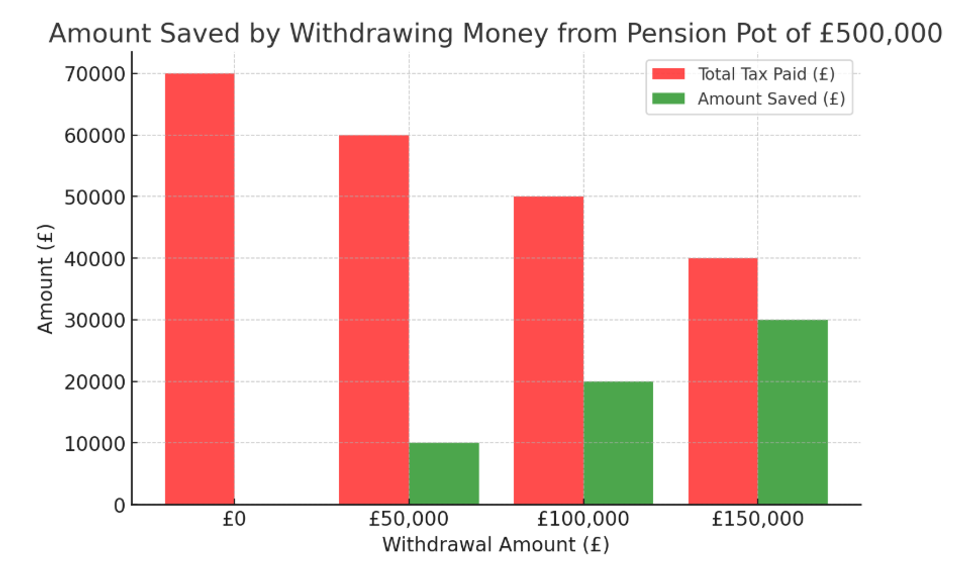 How much you could save by withdrawing money from your pension | GBN
His pension pot, combined with ongoing contributions, could reach around £127,000 by retirement age, assuming seven per cent annual compounded returns, according to Plum's calculations.
Withdrawing at four per cent annually, which is considered a standard retirement approach, would generate roughly £5,080 in gross yearly income.
Will Bryant, Plum's director of Wealth Strategy, described Radford as "a classic example of a self-employed worker who risks a retirement squeeze, primarily because he is excluded from auto-enrolment".
Mr Bryant described inflation as "a silent killer of wealth," warning that the purchasing power of Mr Radford's projected income would be substantially diminished by the time he stops working.
 Plum is a popular money saving app | PLUM
 At an average inflation rate of 2.5 per cent over 32 years, that £5,080 would buy goods worth only about £2,800 in today's terms.
Combined with the state pension, currently £12,547 annually, this would provide the equivalent of approximately £15,350 per year in present-day purchasing power.
Should both Mr Radford and a partner qualify for the full State Pension, their combined annual income would reach approximately £28,000 in today's money.
This would exceed the Pension and Lifetime Savings Association's (PLSA) minimum retirement standard of £21,600 after tax for a two-person household, though Mr Bryant noted this benchmark "only covers basic needs such as food, utilities, a one-week holiday and £30-a-month for treats like eating out" and assumes mortgage-free homeownership.
The PLSA's moderate living standard requires £43,900 after tax for couples, necessitating a pension pot of around £550,000 in current terms.
Accounting for 32 years of inflation at 2.5 per cent, that pot must actually grow to approximately £890,000 by 2058. Achieving this target would require Mr Radford to boost his monthly contributions from £50 to roughly £625, including £125 in tax relief.