









UK house prices edged higher at the start of 2026, with new figures showing a modest monthly increase after a brief decline at the end of last year.
Nationwide Building Society reported a 0.3 per cent rise in property values in January, reversing December’s 0.4 per cent fall.
Annual growth also strengthened, picking up to one per cent from 0.6 per cent the previous month.
The latest increase pushed the average UK home price to £270,873.
Robert Gardner, Nationwide’s chief economist, said: "The start of 2026 saw a slight pick-up in annual house price growth, which rose to one per cent in January, after slowing to 0.6 per cent in December."
He noted that "prices increased by 0.3 per cent month-on-month in January, after taking account of seasonal effects".
According to Nationwide, the data points to early signs of stabilisation following a softer spell towards the end of 2025.
Market activity weakened in the final months of last year, a trend Mr Gardner linked to uncertainty over potential property tax changes ahead of the Budget.
"Housing market activity also dipped at the end of 2025, most likely reflecting uncertainty around potential property tax changes ahead of the Budget," he said.

The latest increase pushed the average UK home price to £270,873
|GETTY
Even with that slowdown, mortgage activity held up well by historical standards.
"Nevertheless, the number of mortgages approved for house purchase remained close to the levels prevailing before the pandemic," Mr Gardner added.
Nationwide expects momentum to build over the coming months if affordability continues to improve.
"Housing market activity is likely to recover in the coming quarters, especially if the improving affordability trend seen last year is maintained," he said.
The lender also observed that some buyers who paused their searches during the autumn appear to be returning.
Affordability pressures have eased over the past year as earnings growth has outpaced house price inflation and borrowing costs have fallen.
Steadily declining mortgage rates have improved access to home ownership, particularly for first-time buyers.
LATEST DEVELOPMENTS

First-time buyer activity edging higher as a share of total purchases
|GETTY
Mr Gardner said: "Affordability constraints have eased over the past year, thanks to earnings growth outpacing house price growth and also a steady decline in mortgage rates."
This shift has helped support demand, with first-time buyer activity edging higher as a share of total purchases.
For a typical first-time buyer earning the average UK salary and putting down a 20 per cent deposit, monthly mortgage payments now account for around 32 per cent of take-home pay, an improvement on 38 per cent in 2023, though still slightly above the long-term average of 30 per cent.
Nationwide also highlighted persistent regional disparities.
Southern England remains the most stretched on affordability measures, while northern England, Yorkshire and the Humber, and Scotland all sit below their long-run averages.
Industry figures broadly welcomed the latest data as evidence of improving sentiment.
Iain McKenzie, chief executive at the Guild of Property Professionals, said: "After a hesitant end to last year, this modest rise reflects renewed buyer confidence and a sense that the market is regaining momentum."
Falling borrowing costs are also supporting confidence, according to Alice Haine, personal finance analyst at Bestinvest by Evelyn Partners.
She said: "The combination of falling interest rates, moderating inflation albeit with a few bumps along the way and stronger real wage growth should help underpin housing market confidence."
Aneisha Beveridge, research director at Hamptons and Connells Group, pointed to the impact of cheaper mortgages.
She said the availability of deals below 3.5 per cent has helped unlock affordability and restore confidence among prospective buyers.
While she sees no sign of a rapid acceleration, early indicators suggest the market is settling into a steadier rhythm.
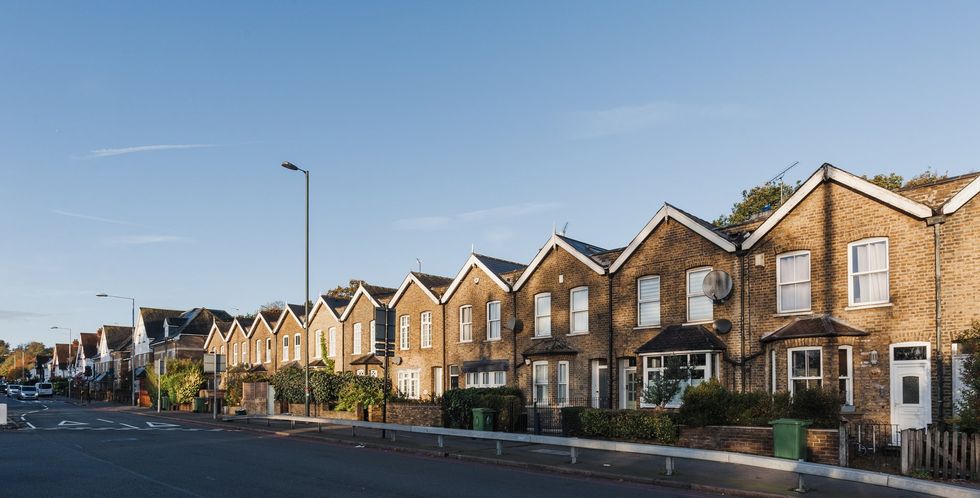
Estate agents have also reported an improvement compared with the same period last year
|GETTY
Amy Reynolds, head of sales at London-based agency Antony Roberts, said: "While this is not a runaway market, it is a far healthier one than a year ago."
Jason Tebb, president of OnTheMarket, noted that lenders’ actions at the start of the year had supported demand.
"A number of lenders reduced their mortgage rates in January and most of the agents we have spoken to have seen a better start to this year than the first quarter of 2025," he said.
Some analysts, however, urged caution over expectations for further monetary easing.
Tom Bill, head of UK residential research at Knight Frank, said the outlook for interest rate cuts had become less certain.
"The chances of two rate cuts this year have faded in recent weeks for reasons that include stronger-than-expected UK economic data, which underlines how prices and transaction levels will remain under pressure," he said.