









A major UK bank has warned Chancellor Rachel Reeves against a tax "cash grab" against the sector, with it potentially being viewed as an easy target.
Lloyds Banking Group reported first‑quarter profits of £2billion on April 29, beating City forecasts by £200million as the lender warned Labour against imposing further taxes on the sector.
The Ftse 100 bank also upgraded its income guidance following a more favourable interest‑rate outlook and now expects net interest income to exceed £14.9billion for the full year.
The improved outlook reflects shifting expectations for UK interest rates.
Lloyds said it anticipates just one rate cut by the end of 2027, with the base rate forecast to remain at 3.75 per cent until the third quarter of next year.
Ongoing tensions in the Middle East have contributed to inflationary pressures, prompting central banks to delay reductions in borrowing costs and supporting stronger earnings expectations across the banking sector.
Analysts have suggested that rising profits could draw increased attention from policymakers seeking to raise revenue.
Gary Greenwood, equity analyst at Shore Capital, said: “The sustainability of the group’s elevated returns on tangible equity could come into question should the Government revisit the prospect of further bank taxation.”
Neil Wilson, investor strategist at Saxo Markets, said: “Banks could also be ripe for a tax grab soon” following Lloyds’ results.
Lloyds profits £2billion beat forecasts as bank warns Labour over higher taxes
|GETTY
The Chancellor reinforced the Government’s energy profits levy on April 28, saying gains made by BP from elevated oil prices linked to tensions involving Iran should be “taxed appropriately”.
Recent analysis indicates the economic impact of the conflict on the UK could reach £35billion, increasing speculation that financial institutions could face similar measures.
Lloyds’ chief financial officer William Chalmers defended the sector’s profitability.
“I would say that the profitability of banks is an incredibly important component of a successful economy,” he said.
LATEST DEVELOPMENTS
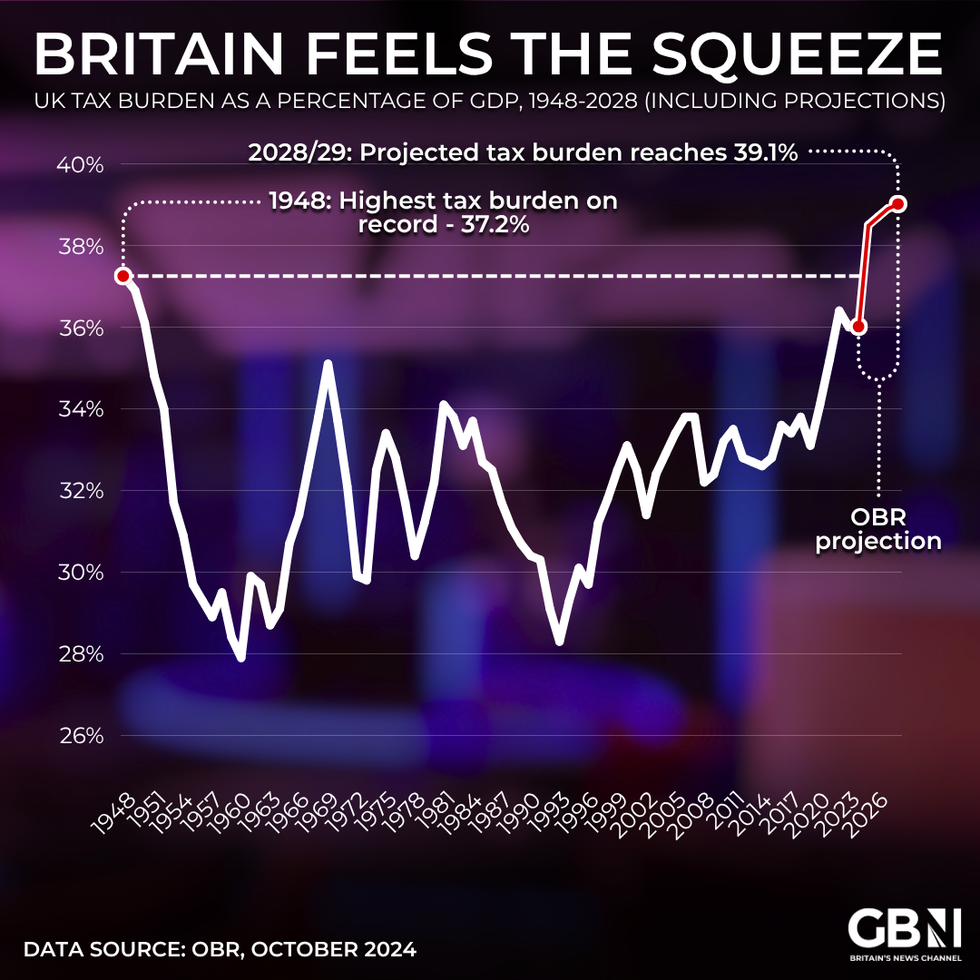 UK tax burden as a percentage of GDP | GB News
Mr Chalmers added that the group had provided more than £6billion in lending during the quarter: “The only reason we’re able to do that lending is because we’re a profitable, successful institution that’s in the economy’s best interests.”
He said higher bank margins were consistent with the current rate environment, noting: “The sector always expected, and one should always expect, a gradual increase in profitability of banks in the context where rates rise.”
Industry figures have warned that UK banks already face comparatively high levels of taxation.
Barclays' boss, C. S. Venkatakrishnan, said: “Banks in the UK are more highly taxed than they are in any other major jurisdiction.”
The sector faces an effective tax rate of 46 per cent, compared with between 29 and 40 per cent across Europe and around 20 per cent in the United States.
"UK lenders are subject to a sector‑specific surcharge in addition to standard corporation tax and also pay VAT, property taxes and national insurance contributions.
"The surcharge is currently set at three per cent, having previously stood at eight per cent under the Conservative Government."
Despite calls from opposition MPs, think tanks and former deputy prime minister Angela Rayner, the Chancellor did not introduce additional bank taxes in her most recent Budget.