








Families who send their children to private schools have suffered a major legal setback after the Court of Appeal dismissed a challenge to Labour’s 20 per cent VAT policy on tuition fees.
Three senior judges rejected claims brought by religious schools, pupils and their parents who argued the Government’s decision to impose VAT on independent education breached their human rights.
In a 44-page ruling, the court concluded that the measure does not infringe the right to education, stating that parents retain the lawful option of educating their children at home if they choose not to use either the independent or state sector.
The claimants had contended that the specific form of faith-based education they sought for their children could not be accessed within the state system and the tax would make continued attendance financially impossible.
TRENDING
Stories
Videos
Your Say
The Government introduced the 20 per cent VAT charge on private school fees in January 2025 as part of a wider package of fiscal measures.
According to the Independent Schools Council, more than 100 independent schools have closed since the policy came into effect.
Friday’s judgment follows an earlier defeat for campaigners after the High Court dismissed a separate challenge against the Treasury in June last year.
The claimants subsequently appealed that decision, arguing the High Court had failed properly to assess the impact of the tax on the viability of faith schools.

Families who send their children to private schools suffer a major legal setback
|GETTY
The Court of Appeal ruled, however, the introduction of VAT amounted to a financial consequence rather than a denial of access to education.
Bruno Quintavalle, acting on behalf of Emmanuel School in Derby and several Christian educational institutions, said in written submissions at a January hearing: "The court was wrong to view the introduction of VAT as simply diminishing the future income of the schools: the evidence before it was that this would render the schools unviable."
Despite those arguments, the appellate judges determined that parents are not legally obliged to continue sending their children to specific independent schools and that alternative lawful arrangements remain available.
The court placed particular emphasis on the fact that home education is permitted under existing law, concluding that this undermined the assertion that the policy constituted a breach of fundamental rights.
LATEST DEVELOPMENTS

The introduction of VAT amounted to a financial consequence rather than a denial of access to education
|GETTY
Even if the appeal had succeeded, the ruling would not have automatically struck down the VAT policy in its entirety.
A favourable outcome for the claimants could instead have required ministers to reconsider aspects of the measure or examine whether limited exemptions might be appropriate for certain institutions.
Both groups of claimants maintained the imposition of VAT would make school fees prohibitively expensive for many families, forcing pupils to withdraw and potentially leading to the collapse of some schools.
The Christian Legal Centre, which supported four of the schools involved in the case, confirmed the claimants intend to seek permission to appeal to the Supreme Court.
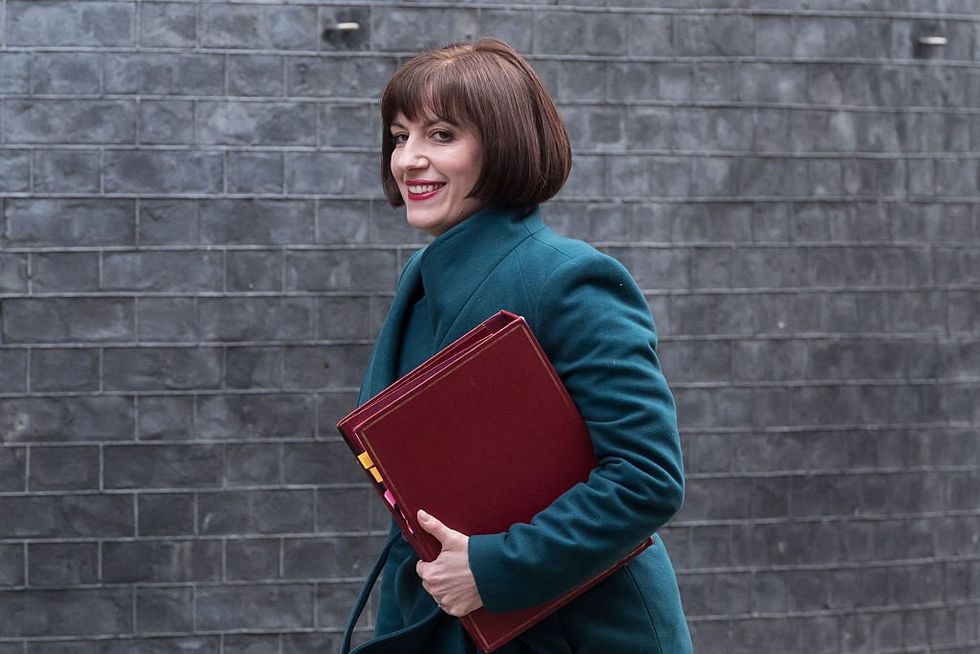
Treasury officials defended the decision not to exempt lower-cost schools from the levy
|GETTY
Caroline Santer, headteacher of The King’s School in Hampshire, said: "Christian schools like ours exist to serve communities, offering education shaped by faith and values. VAT is dismantling decades of careful work and putting schools on the brink of closure.
"We will continue to stand with our families and pursue this all the way to the Supreme Court."
Treasury officials defended the decision not to exempt lower-cost schools from the levy, arguing that any carve-out would create disparities within the sector and incentivise schools to suppress fees artificially in order to qualify.
Ministers estimate the policy will raise £1.8billion annually by the end of the decade, forming part of broader plans to strengthen the public finances.
Our Standards: The GB News Editorial Charter
More From GB News