










For countless arthritis sufferers, the onset of winter brings more than just chilly mornings but seems to trigger a familiar flare-up of aching joints and stiffness.
The belief that cold weather makes arthritis worse has been around for generations — but does science actually back this up?
"Arthritis can be worse in cold and damp weather, and some people experience an increase in pain sensitivity, reduced blood circulation, muscle spasms and increased joint stiffness," said physiotherapist and integrated clinical services manager at Nuffield Health Bournemouth Hospital, Tamsin Joyce.
How do different types of arthritis manifest?
Rheumatoid arthritis tends to target the hand joints around the knuckles, while osteoarthritis commonly affects the knees and hips.
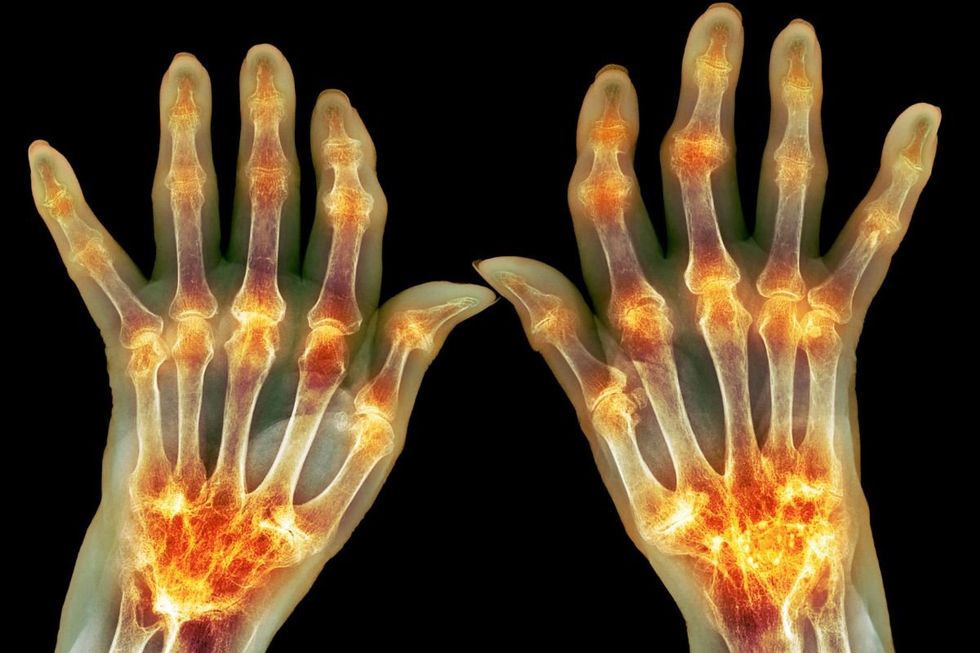
Rheumatoid arthritis tends to target the hand joints around the knuckles
|GETTY
Research into this area has been limited, but a major study from the University of Manchester has shed some light on what's really going on.
The project, called Cloudy with a Chance of Pain and funded by Arthritis UK, ran throughout 2016 and brought together more than 13,000 participants from every single one of the UK's 124 postcode areas.
All of them were living with chronic pain conditions, including arthritis.
"We knew that so many people believed that there was a relationship between weather and the pain, but nobody had previously worked out the nature of that relationship," shared Will Dixon, professor of digital epidemiology at The University of Manchester, who led the research.
Participants logged their daily symptoms through a smartphone app, while GPS data pinpointed their local weather conditions.
The study tracked symptoms over 15 months, analysing daily data from 2,658 patients.
To their surprise, they discovered that days with higher humidity, lower atmospheric pressure, and stronger winds – in that order – were most likely to coincide with increased pain levels.
"We found that more painful days were associated with low pressure and high humidity," said Dixon. "It made sense that we found a relationship with low pressure, as many people believe that they can forecast the weather based on their joint pain.
LATEST DEVELOPMENTS
"The only reason that you could do that would be that something early in the cycle of the weather is influencing the pain, and that's likely to be pressure."
Here's the surprising bit: temperature didn't appear to have any connection to pain at all.
But we cannot control the weather: we can at least prepare for it. If you know a low-pressure system is heading your way, plan your activities around potentially tougher days.
 Not all drivers with arthritis need to inform the DVLA of their condition | GETTY
"Exercise is the single best thing you can do to help arthritic pain," said Joyce, who recommends aiming for 150 minutes of light to moderate activity weekly, focusing on strength and flexibility.
It is also worth getting your vitamin D levels checked with your GP, as deficiency is common and may contribute to joint pain.
Keeping a healthy weight matters too – extra pounds mean extra pressure on joints and tissues.
Staying warm is also crucial, so extra layers and electric blankets could help prevent joints from becoming stiff and painful.
Our Standards: The GB News Editorial Charter