








Bereaved families across Britain have been handed £3.1million in inheritance tax penalties as HM Revenue and Customs (HMRC) steps up enforcement against executors who miss filing deadlines.
New figures showed penalties issued by the tax authority increased by around one-third during the last financial year.
During 2024-25, executors handling 5,200 estates were fined for submitting inheritance tax paperwork late.
The average penalty issued by HMRC was £596, although the system operates on an escalating scale depending on the length of the delay.
Initial fines begin at £100 for missed deadlines but can rise significantly for prolonged delays.
Executors who fail to submit inheritance tax returns within 12 months can face penalties of up to £3,000.
Rachael Griffin from wealth manager Quilter said delays were increasingly common as more families attempted to manage estates without professional advice.
She said: "As more modest estates are caught, there is a greater tendency to try and handle returns without advice."

HMRC hits grieving families with £3.1million in inheritance tax fines
|GETTY
She added the process often created difficulties for people dealing with estate administration for the first time.
Ms Griffin claimed executors were frequently confronted by a system requiring extensive documentation while operating under strict deadlines.
She added: "Delays are an almost inevitable outcome, and penalties follow."
The wealth management expert warned that many families underestimated the administrative burden involved in handling even relatively straightforward estates.
LATEST DEVELOPMENTS
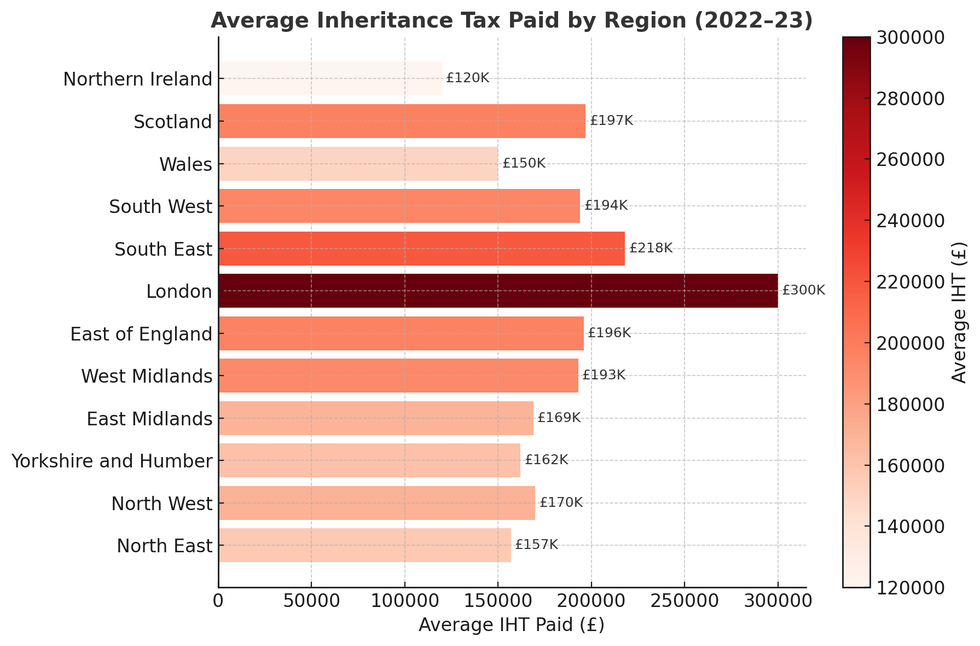 Average Inheritance tax paid by region | ONS
Ms Griffin also said the situation could worsen from April when pension death benefits fall more directly within inheritance tax rules.
She said: "There is a clear risk intensifies from April."
She said the change would increase both the number of estates affected by inheritance tax and the complexity involved in completing returns.
Duncan Mitchell-Innes from TWM Solicitors said executors often faced a substantial administrative challenge when completing inheritance tax forms.
Mr Mitchell-Innes said: "The basic inheritance tax form (IHT400) has 122 questions, often requiring detailed financial and historical information."
He added that many estates also required further documentation alongside the main form.
"In many cases, this must be supplemented by additional schedules of which there are more than 30 depending on the nature of the estate."
HMRC defended its approach and said reporting requirements had already been reduced for many estates.
A spokesman said: "The reality is we reduced reporting requirements during this period for most non-taxpaying estates."
The tax authority said it was continuing efforts to modernise the inheritance tax system.
They added: "We're constantly looking at ways to simplify returns, and the Government is investing £52million to simplify and digitalise our inheritance tax service to make the process quicker and easier."
Labour said the investment was intended to streamline the process for families dealing with bereavement and reduce unnecessary administrative burdens.