









Millions of pensioners are set to brush up against the taxman this year as rising State Pension payments leave little room within HMRC's tax-free allowance.
Retirees are urged to think carefully before accessing additional pension savings, as even modest withdrawals could trigger an unexpected tax bill.
State Pension recipients face a stark tax reality in the 2026/27 financial year, with just £22 of their Personal Allowance remaining after their pension payments.
Britons collecting the full new State Pension of £12,548 annually will find this sum almost entirely consumes the £12,570 tax-free threshold set by HMRC.
This leaves retirees in a difficult position when accessing additional pension savings, as virtually every pound withdrawn from private or workplace schemes will attract income tax.
A financial expert has now outlined four key approaches to help pensioners reduce their tax burden when drawing down retirement funds.
Antonia Medlicott, founder and managing director of financial education specialists Investing Insiders, has highlighted four considerations for anyone preparing to access their retirement savings.
"The standard UK income tax Personal Allowance currently sits at £12,570, so everything you earn up to this amount each year is free of tax," Ms Medlicott explained.
"However, your State Pension is also included in this amount at £12,548 in 2026/27, so you're left with just £22 of tax-free income before making a single withdrawal from any other pension. This is something that many people forget and can seriously affect your pension plans if not accounted for. "
Ms Medlicott warned this is something many people overlook, which can seriously affect pension planning if not properly accounted for.
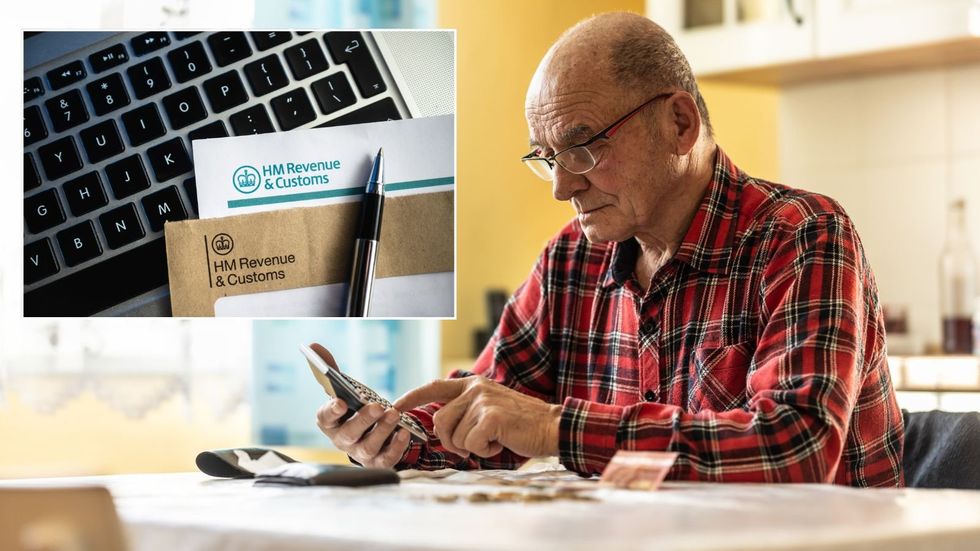 HMRC has issued a pension age update | GETTY
Ms Medlicott noted that nearly all pension withdrawals will be subject to the basic 20 per cent tax rate, climbing to 40 per cent once income exceeds £50,270.
She advised that any drawdown should be carefully planned rather than making ad hoc withdrawals.
For couples, Ms Medlicott highlighted a frequently overlooked opportunity to reduce tax bills. Having a partner means access to two Personal Allowances and two sets of tax bands.
"If you or your partner has a lower income, you can spread out the withdrawals between the two of you," she said.
 Currently, the full new state pension stands at £241.30 weekly | GETTY
"By coordinating in this way, you can keep track of how close you both are to tax thresholds and avoid paying the higher rates, potentially saving you hundreds of pounds."
Ms Medlicott stressed the importance of withdrawing only what is necessary while ensuring funds last throughout retirement.
She provided a practical example: with a £600,000 pension pot growing at four per cent annually after charges, taking £25,000 each year would still leave £488,000 remaining after three decades.
However, increasing withdrawals to £30,000 annually reduces the pot to £196,000 over the same period. At £35,000 per year, the money runs out after 28 years, dropping to approximately 22 years at £40,000.
Ms Medlicott said annual withdrawals between £25,000 and £32,500 represent the ideal range, enabling a comfortable lifestyle whilst remaining below the 40 per cent tax threshold.
 While demand from buyers remained resilient, overall mortgage borrowing slowed | GETTY
Ms Medlicott recommended building a Stocks and Shares ISA alongside pension savings as one of the smartest investment decisions available.
"Withdrawals from these ISAs are tax-free, meaning you can use these funds alongside your pension to have a meaningful combined income whilst keeping the taxable amount to a minimum," she said.
"This is one of the most impactful and straightforward strategies available, yet it's far too underused."
Ms Medlicott also noted that from April 2027, pensions are expected to become part of estates for inheritance tax purposes. She urged retirees to regularly review their drawdown plans rather than leaving initial strategies unchanged.