






Retirees now need to pay £4,262 more in tax than they did five years ago to maintain a comfortable standard of living.
Research from Pensions UK found that a single pensioner requires an after‑tax income of £45,400 a year to enjoy what it defines as a “comfortable” retirement.
To achieve that level of spending power in 2025–26, a retiree must earn £54,720 before tax, leaving them with an annual income tax bill of £9,320.
In 2020–21, someone earning the equivalent amount would have paid £5,058 — meaning the tax burden has risen by more than £4,200.
The increase reflects both higher living costs and the prolonged freeze in income tax thresholds.
Pensions UK’s benchmark for a comfortable retirement includes spending beyond basic essentials, such as a two‑week annual holiday in Europe, weekly grocery costs of around £78 and roughly £66 a week on dining out and takeaways.
According to the Retirement Living Standards report, the after‑tax income needed for this lifestyle has risen by about £250 a week since 2019, driven by higher energy bills and persistent food inflation.
The findings suggest pension savers now require significantly larger retirement pots to match the living standards enjoyed by previous generations.

Retirees hit with £4,262 tax rise in just five years as fiscal drag bites
|GETTY
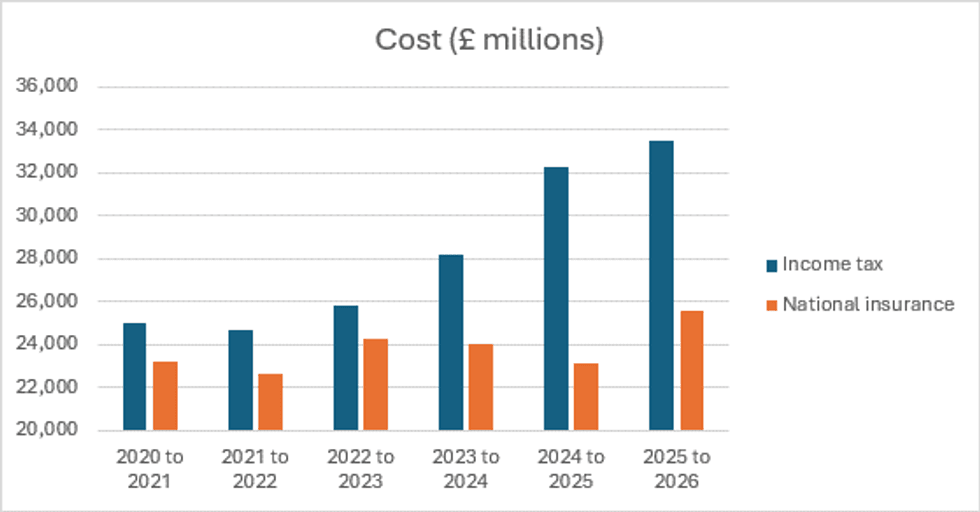
Income tax thresholds have been frozen since 2020–21 and will remain unchanged until April 2031 under plans confirmed by Chancellor Rachel Reeves.
The freeze has pushed increasing numbers of workers and pensioners into higher tax bands through fiscal drag.
Forecasts from the Office for Budget Responsibility (OBR) show an additional 600,000 pensioners will start paying income tax by 2026–27, rising to one million by 2030–31.
Those extra taxpayers are expected to contribute around £100 million more to Treasury revenues by the end of the decade.
LATEST DEVELOPMENTS
 How much pension tax relief you can get depends on your earnings | AJ BELL/HMRC
From next April, the full new state pension is also expected to rise above the tax‑free personal allowance for the first time, further reducing retirees’ tax‑free headroom.
Charlene Young, Senior Pensions and Savings Expert at AJ Bell, said the triple lock continued to support pension incomes but left limited flexibility elsewhere.
“That leaves little wriggle room for income from pension savings, which will be subject to income tax after any tax‑free cash has been taken,” she said.
“A decent retirement has got a lot more expensive, and the taxman is also set for a windfall thanks to fiscal drag.
The big threshold squeeze is now set to last at least a decade, dragging millions into paying more tax than they would if tax allowances had kept pace with the cost of living.”
The Treasury defended the Government’s position, highlighting increases to the state pension.
A spokesman said: “By keeping the triple lock, 12 million pensioners will see their income rise by up to £470 this year, and they continue to benefit from the highest personal allowance in the G7.”