







Lidl and Amazon are understood to be considering plans to sell plug-in solar panels priced from approximately £400 following a Government announcement that regulatory barriers will be removed within months.
The Department for Energy Security and Net Zero confirmed ministers are collaborating with major retailers and manufacturers to bring these affordable energy devices to British consumers.
Energy Secretary Ed Miliband framed the initiative as part of efforts to protect households from unpredictable global markets.
He said: "Whether through solar panels fitted as standard on new homes or making it possible for people to purchase plug-in solar in shops, we are determined to roll out clean power so we can give our country energy sovereignty."
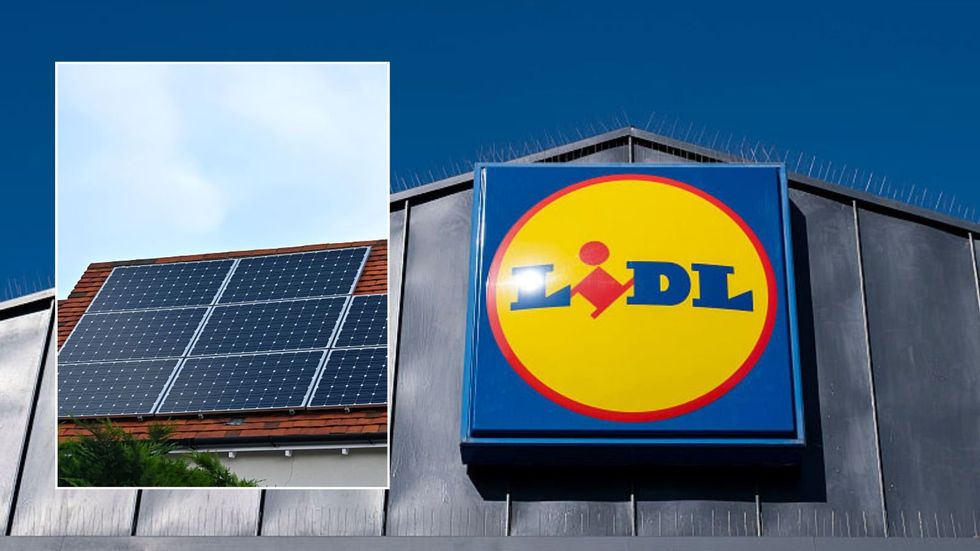
Lidl is now selling solar panels to customers
|GETTY
Lidl's corporate affairs director Georgina Hall described the regulatory update as "a positive step towards empowering British households to manage their energy costs".
Gas prices have climbed more than 60 per cent since late February, prompting what industry observers describe as a dash for renewable alternatives.
Rebecca Dibb-Simkin, the chief product officer at Octopus Energy, said: "We are seeing a fundamental shift in the national psyche when it comes to energy. With the second energy market shock in less than five years, homeowners are looking for security."
Britain is currently witnessing its strongest year on record for solar adoption, according to MCS industry figures.
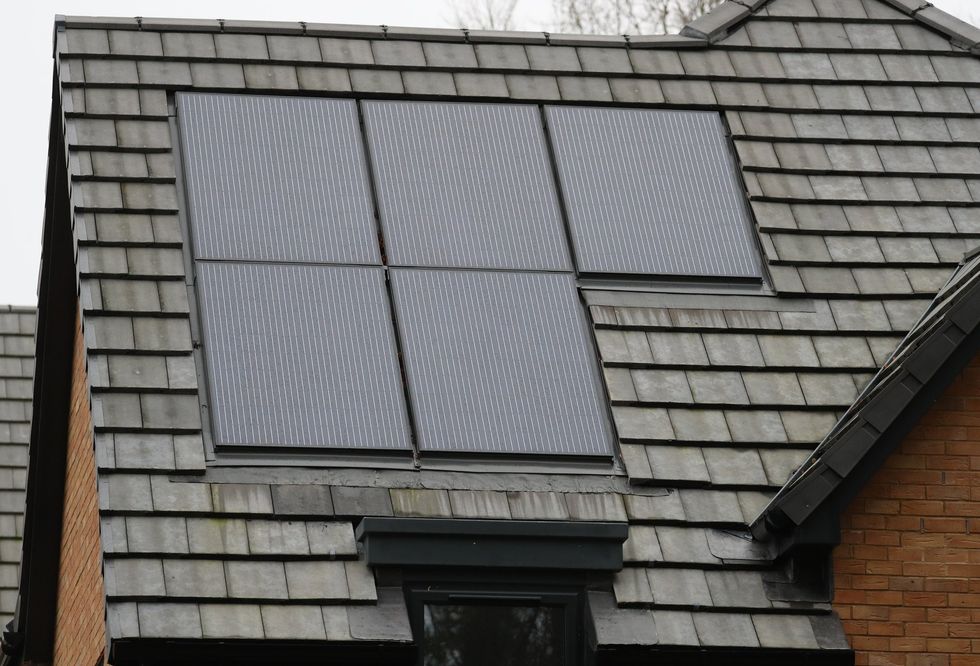 Solar panels on the roof of private dwelling property | PA
LATEST DEVELOPMENTS
 Ed Miliband has made renewable energy rollout a primary target | PA
The plug-in devices work by connecting directly to a standard three-pin wall socket, eliminating the need for professional installation.
Lightweight panels can be mounted on balconies, attached to garden fences or positioned on patios, with a built-in microinverter synchronising the generated power with the home's electrical system.
Appliances automatically draw from the free solar energy before switching to grid electricity. Government estimates suggest typical households could reduce their annual bills by between £70 and £110, meaning the initial outlay would be recovered in roughly four years.
With quality panels lasting around 15 years, owners could benefit from a decade of savings after breaking even.
The technology has already gained significant traction across Europe, with Spain and Germany seeing approximately half a million units installed annually.
Mark Coles, head of technical regulations at the Institution of Engineering and Technology, warned that homeowners should have their electrical systems inspected before connecting such devices, noting that safety could differ considerably depending on the property.
The Government has committed to working with regulators and network operators to revise wiring standards and establish appropriate protections ahead of the retail launch.
Plug-in panel initiative forms part of a broader clean energy strategy that includes the Future Homes Standard, which will require solar panels and heat pumps on most new-build properties from 2028.