






Britain is facing an economic hit of around £35billion over the next two years as a result of the Middle East energy crisis.
The National Institute of Economic and Social Research (NIESR) said the ongoing conflict involving US-Israeli and Iranian forces is weighing on global growth and pushing up energy costs.
It warned that even under a more optimistic scenario, including a rapid easing of hostilities, the UK economy would still be significantly smaller than previously expected.
The NIESR said a prolonged crisis could see Britain fall into recession in the second half of 2026.
The outlook points to weaker economic growth alongside rising inflation.
Consumer prices rose to 3.3 per cent last month and are expected to ease to 2.5 per cent before increasing again as higher energy costs feed through.
The think tank forecasts inflation will peak at 4.1 per cent in January 2027, with a return to the Bank of England’s two per cent target not expected until 2028.
The Bank of England’s Monetary Policy Committee (MPC) is due to decide on interest rates on May 1.
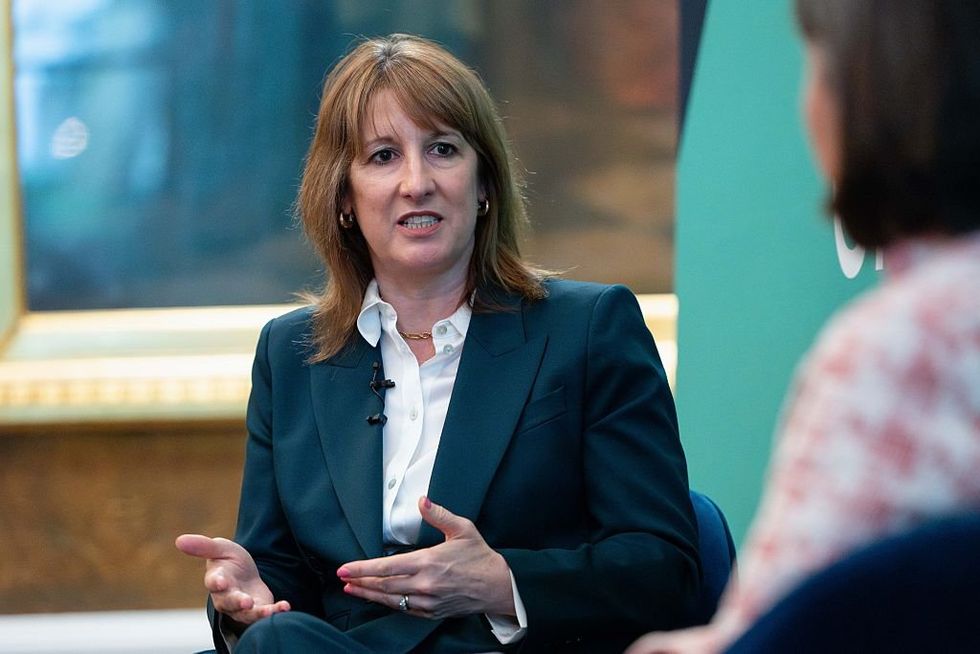
UK faces £35billion hit from Middle East energy crisis, think tank warns
|GETTY
The NIESR expects rates to be held at 3.75 per cent at this meeting.
It forecasts a rise to four per cent in July, with borrowing costs then remaining at that level for the rest of the year.
Under a more severe scenario, interest rates could climb as high as 5.25 per cent, with up to six further increases possible.
The think tank has cut its growth forecasts, predicting expansion of 0.9 per cent in 2026 compared with its previous estimate of 1.4 per cent.
LATEST DEVELOPMENTS
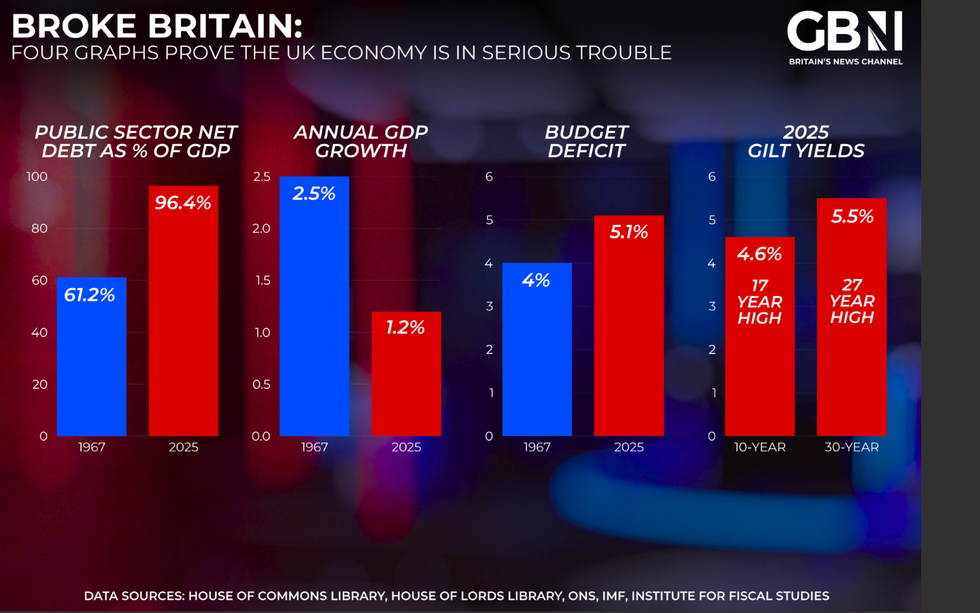 Four graphs prove the UK economy is in serious trouble | GB NEWS
This follows growth of 1.4 per cent in 2025, with only a modest increase to one per cent projected for 2027.
Stephen Millard, deputy director for macroeconomics at the National Institute of Economic and Social Research, said a more adverse scenario would reduce growth by around 0.4 percentage points over the next two years.
Households are expected to come under increased pressure as wage growth slows behind rising prices.
Pay growth is forecast to fall to 3.3 per cent next year.
Real personal disposable income growth is expected to slow to 1 per cent this year and 0.6 per cent in 2027.
Lower-income households are expected to be more affected due to higher proportional spending on energy.
David Aikman, director of the National Institute of Economic and Social Research, said: "This is a serious blow to the Government's mission to get the UK economy growing again."
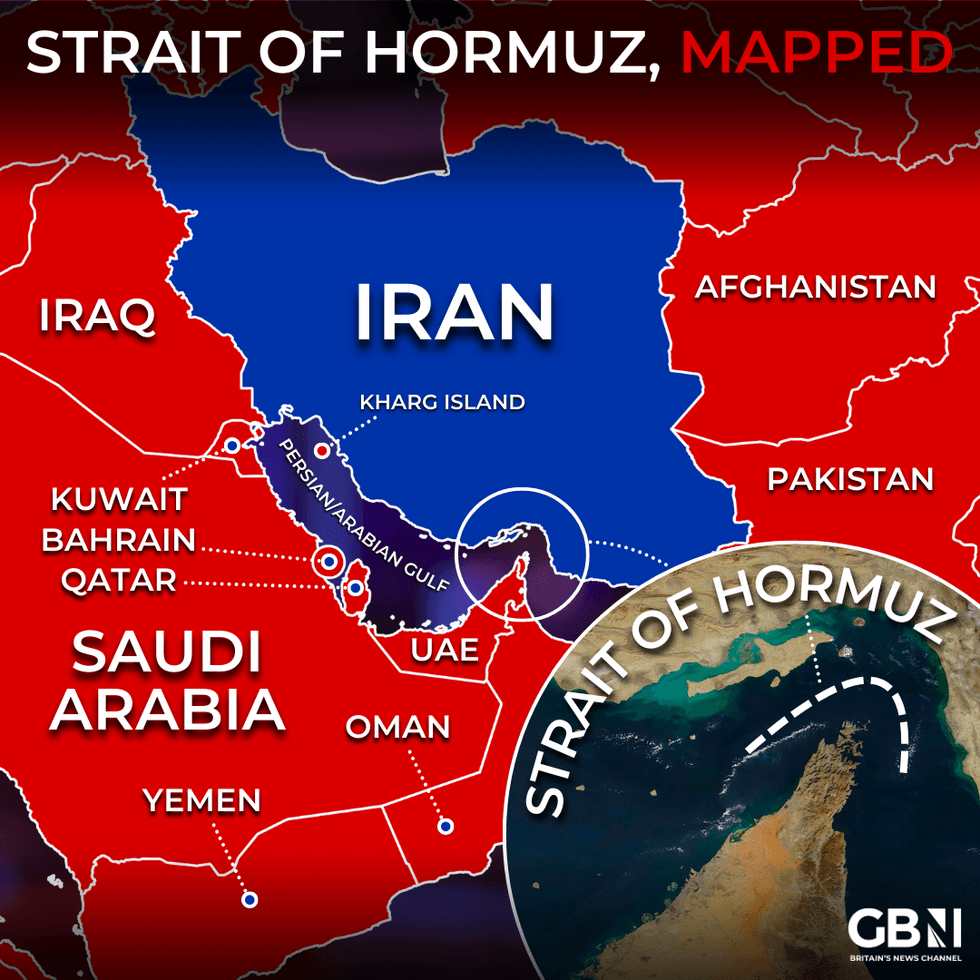 MAPPED: Where is the Strait of Hormuz? | GB NEWS
Mr Aikman said: "The Middle East conflict has laid bare the fact that the UK remains highly exposed to global energy shocks."
He added: "Even if hostilities ease rapidly, higher energy prices will leave households poorer, businesses facing higher costs, and the economy materially smaller than we expected only a few months ago."
The findings highlight the challenges facing efforts to increase economic growth, with exposure to global energy markets continuing to shape the UK’s outlook.