








Even though some elements of the King’s speech to Congress were not music to the ears of the White House, Donald Trump was clearly delighted by the state visit.
His admiration for the Royal Family, the office of sovereign, and the institution of monarchy runs deep enough that such policy differences carried little weight.
Trump possesses an unapologetic belief in Britain that few in British public life can match.
He speaks comfortably of British exceptionalism and the Anglo-Saxon inheritance in ways few British leaders today would admit.
The President expresses, without hesitation, a simple truth: great nations must be girded by robust national identities.
He sees the monarchy as central to Britain’s identity and is openly delighted to celebrate it.
Trump opened the visit by calling the King “a man of class” and declaring it “great to have a King” in the White House. He meant every word.
On Tuesday afternoon, King Charles delivered one of the most significant addresses of his reign to a joint session of Congress.
The speech contained passages on Ukraine, “shared security”, and environmental themes that sat awkwardly with current White House thinking.
Yet so far, Trump has displayed no irritation. His pride in the occasion remained obvious and unforced.
That reaction reveals something important. The President values the King and the monarchy as living symbols of stability, legitimacy, and national continuity.
For him, those qualities outweigh any transient policy disagreement.
The contrast with the Labour Government is instructive. Under Keir Starmer, the Crown is tolerated as a useful diplomatic and tourism asset, yet often regarded with ideological discomfort when it asserts historic or sovereign weight.
Trump takes the institution more seriously than many of its supposed guardians in Britain today.
The President’s warmth exposed a deeper gap. Much like his mantra of American greatness, Trump’s matter-of-fact admiration for Britain throws Britain’s own governing class into uncomfortable relief.
During the state visit, he spoke without hesitation or embarrassment about Britain’s exceptional character and its Anglo-Saxon contribution to the world.
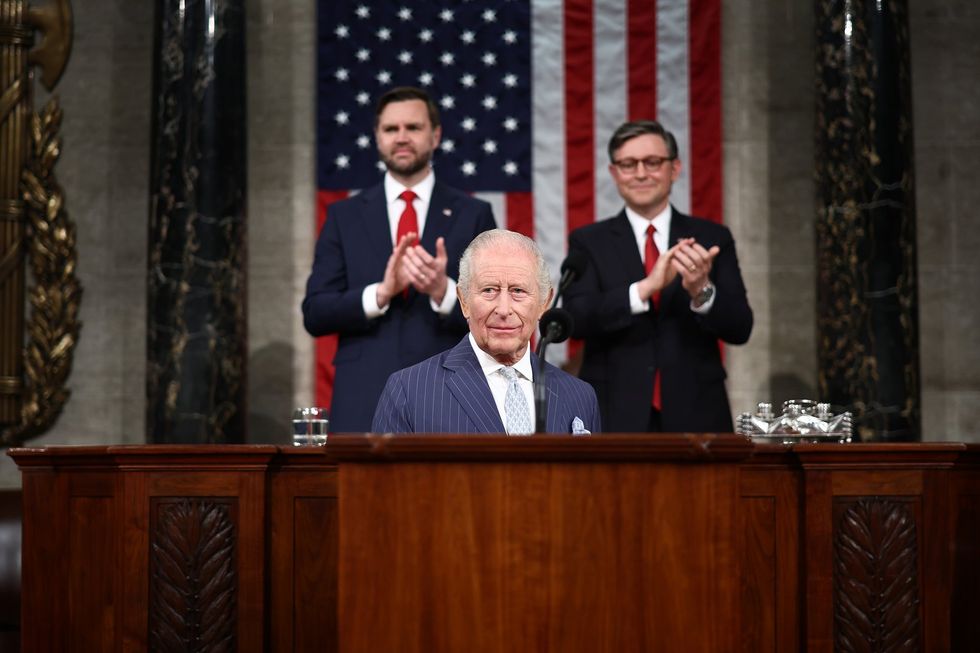
The King's unapologetic belief in Britain exposes Starmer's suicidal plan to destroy it - Lee Cohen
|Getty Images
What is striking is not Trump’s language, but how rare it has become in Britain itself.
Too many senior politicians, commentators, and officials shy away from describing Britain as one of the most exceptional nations the world has ever known. Trump does not hesitate.
His affection is not the scripted politeness of a visiting dignitary. It is the consistent judgment of a leader who still sees in Britain something distinctive, valuable, and worth defending.
The reluctance of Britain’s governing class to speak in similar terms is revealing.
Too many prefer managed decline and globalist devotion over any robust assertion of national distinctiveness.
Trump is right that “the mightiest of trees, like the greatest of nations, must be anchored by the strongest and deepest of roots”.
The monarchy represents the clearest and most continuous expression of those roots.
It links modern Britain directly to its history, its sovereignty, and its distinct national character across centuries.
There is no harm — indeed, considerable advantage — in Britons striving to become the nation many Americans still believe it to be.
That external standard now sits noticeably higher than the one too often set at home.
The progressive establishment, activist NGOs, and large sections of the media prefer to relativise or downplay British distinctiveness.
They favour internationalist projects, egalitarian abstractions, and supranational commitments over the plain assertion of national continuity. Trump instinctively rejects that approach.
He understands that without deep roots, even the most valuable alliances risk becoming shallow and purely transactional.
The monarchy is not an optional extra or tourist curiosity. It remains one of the strongest anchors this country possesses.
The President’s evident pride in hosting the King and Queen is therefore more than nostalgia or diplomatic courtesy.
It reflects the judgment of a leader who values Britain most when Britain values itself.
In an age of rootless managerialism and fashionable transnational drift, that distinction matters.
The Starmer Government and the broader progressive class remain uneasy with strong, unapologetic expressions of British exceptionalism.
They reach instinctively for multilateral solutions and egalitarian rhetoric, even where these sit uneasily with national interest.
The lesson of this visit is not that Britain must agree with Washington on every point.
Britain must recover the confidence to believe in itself with the same clarity that its closest ally already does.