










Britain is approaching a major demographic shift that could reshape the nation’s pension system, fresh projections from the Office for National Statistics (ONS) show.
Analysis of the latest population figures suggests that future growth "now relies entirely on migration," with the number of deaths expected to exceed births for the first time from mid-2026.
Retirement experts are sounding the alarm that Britain's pension system faces a "double hit" due to the country having a falling birth rate and ageing population.
The ONS said the UK population will rise to 71 million within the next decade, with growth driven entirely by inward migration rather than natural increase.
The changing demographic profile is expected to place increasing pressure on the economy and public finances, particularly the pension system.
The number of people of pensionable age is projected to rise by 1.8 million over the next decade to reach 14.2 million by mid‑2034.
This reflects the planned increase in the state pension age to 67, meaning around one in five people will be of retirement age.
At the same time, the number of children is forecast to fall from 12.6 million to 11 million, representing 15.5 per cent of the population.

ONS warns deaths will outnumber births from 2026
|GETTY
Maike Currie, vice president of personal finance at PensionBee, said: "The UK’s demographic dividend is turning into a deepening demographic drag."
She described the age shift as "stark" and warned that the changes would create pressure on the pension system as fewer workers support a growing number of retirees.
"For the pension system, this means fewer future workers supporting more retirees," she said.
Data also indicates that a significant share of those leaving the UK are of working age, with previous figures showing around one third of emigrants are aged between 16 and 34.
LATEST DEVELOPMENTS
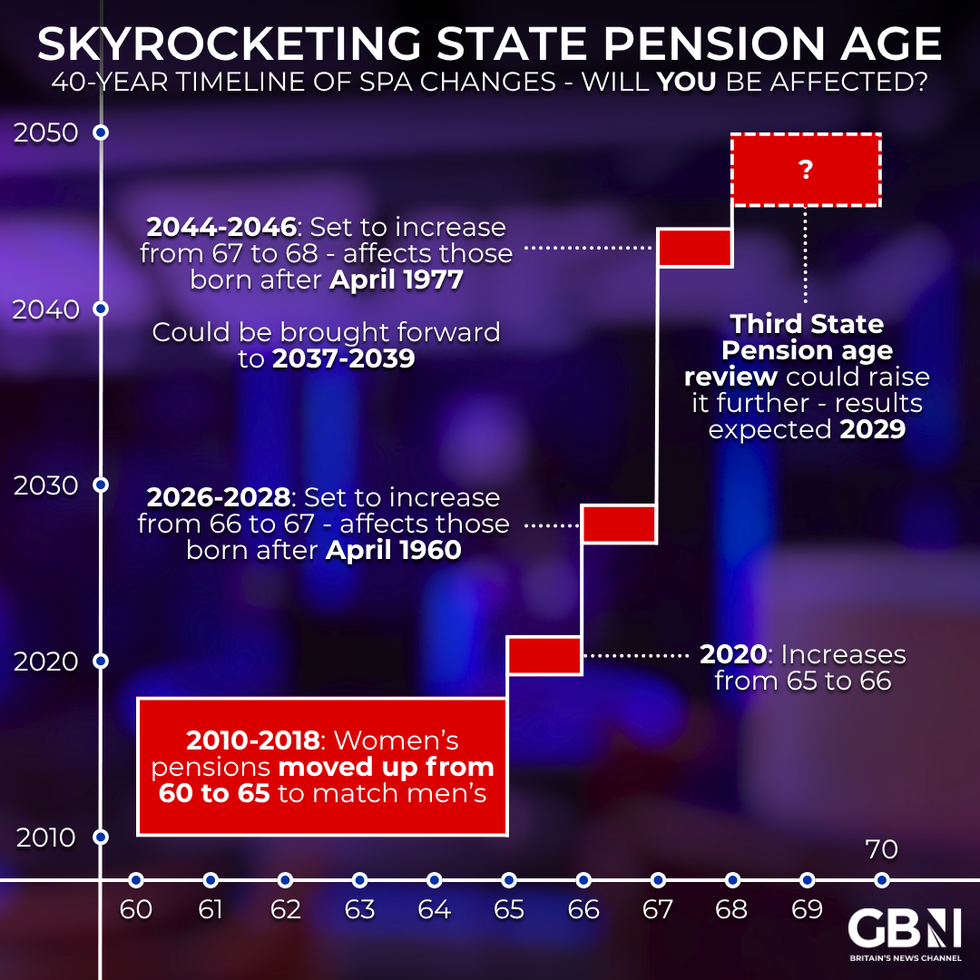 Are you affected by state pension age changes? | GBN
Looking at the ONS' figures, Ms Currie determined that when natural population growth turns negative, overall population "relies entirely on migration".
This trend presents challenges for policymakers assessing the long‑term sustainability of the state pension.
Ms Currie said the system faces "fewer contributors and more retirees, putting real strain on the state pension and long‑term investment flows".
The loss of younger workers is expected to add further strain to pension funding over time.