









The UK economy slowed down in April 2026, with the country's gross domestic product (GDP) contracting 0.1 per cent, according to the latest figures from the Office for National Statistics (ONS).
Economists had priced in a drop in GDP as households start to feel the squeeze after the US-Iran war sent fuel prices surging.
This is the first monthly fall in economic growth since August 2025, which saw GDP drop by 0.2 per cent for the month.
Services output fell by 0.2 per cent, production showed no growth, and construction grew by 0.1 per cent in April 2026.
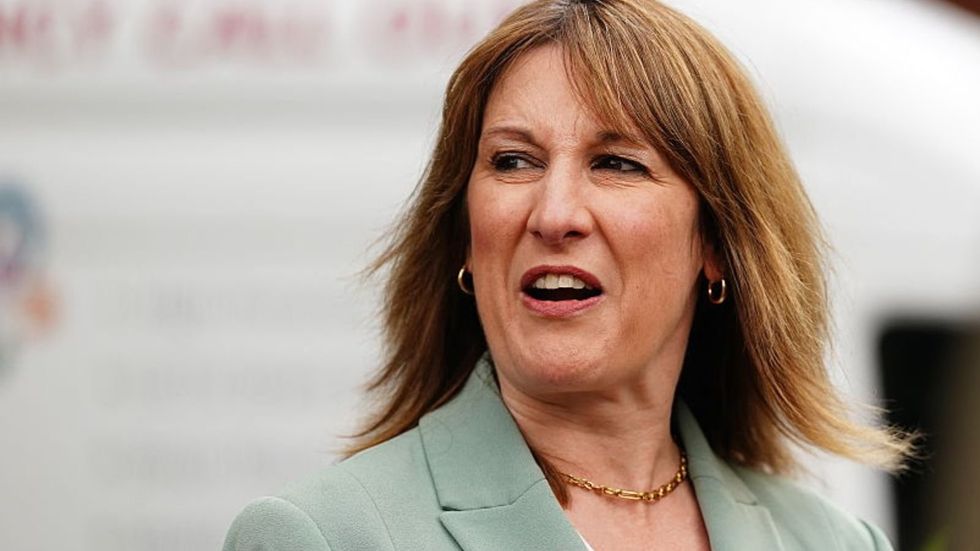
The economy contracted by 0.1 per cent in April
|GETY
Chancellor Rachel Reeves is under further pressure to course-correct the economy amid the ongoing conflict in the Middle East.
The Chancellor said: "Before the conflict in the Middle East, growth was higher than expected and inflation was falling. This is not a war we wanted or joined, but one that will have an impact at home.
"Our economic plan is the right one, with both the IMF and OECD upgrading their forecasts for growth recently.
"The choices I have made as Chancellor mean our economy is in a stronger position to deal with the costs of the war, and we are getting on with the job of building a stronger and more secure economy."
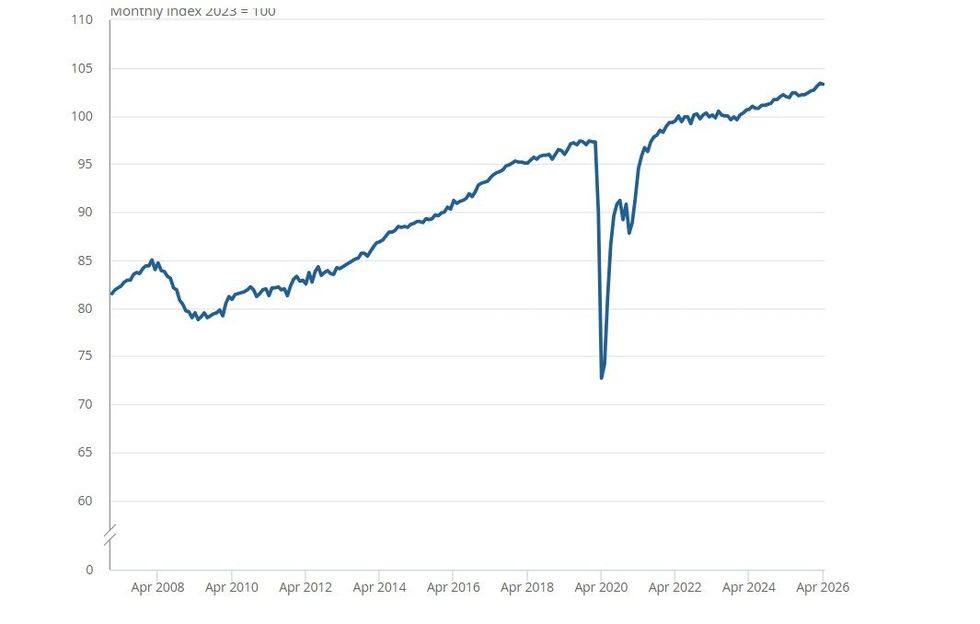
How has the UK's GDP rate changed over the years?
|GETTY
LATEST DEVELOPMENTS
In the three months to April, GDP grew by 0.7 per cent, according to the ONS.
Liz McKeown, ONS director of economic statistics, said: "The economy grew in the latest three months as a whole, reflecting strong growth in February and March. This was despite April showing a small fall."]
Suren Thiru, ICAEW's chief economist, said: "This decline is the first economic blow landed by the Iran conflict as falling fuel sales and slowing services output meant the UK’s early-year growth momentum stalled in April.
"Skyrocketing fuel costs have noticeably altered the UK’s growth trajectory, having flipped from a tailwind to growth in March to a headwind in April as motorists cut consumption in the face of surging pump prices, after frontloading purchases in March."
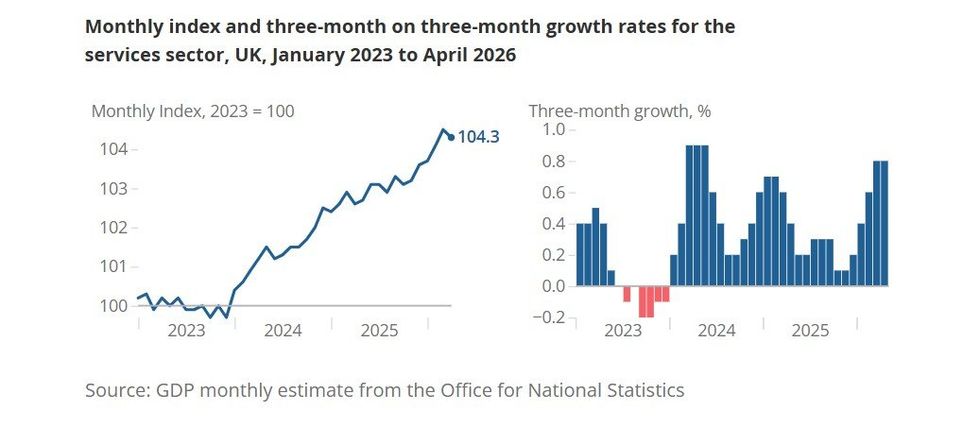
What does today's GDP figures mean?
|ONS
Joe Nellis, an economic adviser at accountancy firm MHA, added: "After a promising first quarter, growth fell sharply in April, with the UK economy shrinking by 0.1 per cent.
"In recent months, the service sector has provided the main stimulus to economic activity, while retail sales have grown and confidence in the manufacturing sector has held up.
"However, persistently weak productivity, driven by years of underinvestment, alongside rising geopolitical tensions are now weighing on growth.
"Ongoing conflict in the Middle East is pushing up energy prices and straining international trade, adding further pressure to the outlook."