







Young people across Britain say they are being “set up to fail” by a system that leaves them navigating adult finances without the basic knowledge needed to stay afloat, a GB News investigation has found.
The People's Channel spoke to those impacted after new research from Santander UK exposed the scale of the problem.
A decade after financial education was added to the secondary school curriculum, only one in four young adults says they received any at school.
The bank estimates that around four million young people have left education without a fundamental understanding of money management.
Despite this, 79 per cent have never created a budget, 76 per cent have never paid a bill, and 77 per cent have not set aside money for unexpected expenses.
Experts warn that this lack of preparation, combined with rising living costs and shrinking entry‑level opportunities, is creating a generation entering adulthood already on the back foot.
Sarah Porretta, chief executive of Young Enterprise, speaking to GB News, said today’s teenagers face a “perfect storm” of pressures. “Costs are high, jobs are scarce, and young people are facing a very uncertain future,” she said.
“They’re being asked to make important decisions without the financial stability or opportunities earlier generations enjoyed.”
Ms Porretta said the issue is not young people’s attitudes, but the absence of a national framework that treats financial capability as a core life skill.
“Many young people leave school without the knowledge or confidence to manage money effectively,” she said.
“Unless they’ve picked those skills up elsewhere, they’re expected to navigate adult decisions without ever having been taught them.”

How Britain’s financial illiteracy crisis is crippling a generation
|GETTY
Santander’s research suggests many are turning elsewhere for guidance. Nearly a third of young adults now rely on social media influencers for financial advice, with TikTok the most popular platform.
Only 17 per cent say they have received financial guidance from their bank. William Vereker, chair of Santander UK, said the findings show that “the current school curriculum does not always equip young people with the knowledge they need to plan and manage their financial futures”, warning that the gap is pushing young adults towards “potentially unreliable online resources”.
Hugh Viney, founder of independent school group Minerva Virtual Academy (MVA), told Britain’s News Channel that the consequences of widespread financial illiteracy are far more serious than many realise.
“The most damaging consequence is the ‘invisible tax’ of financial ignorance,” he said.
“When a young person doesn’t understand compound interest, they don’t just miss out on wealth; they risk falling into a debt trap before they’ve even started their careers.”
Mr Viney said the failure begins long before adulthood. “Without school filling that role, we are essentially institutionalising the wealth gap,” he said.
LATEST DEVELOPMENTS
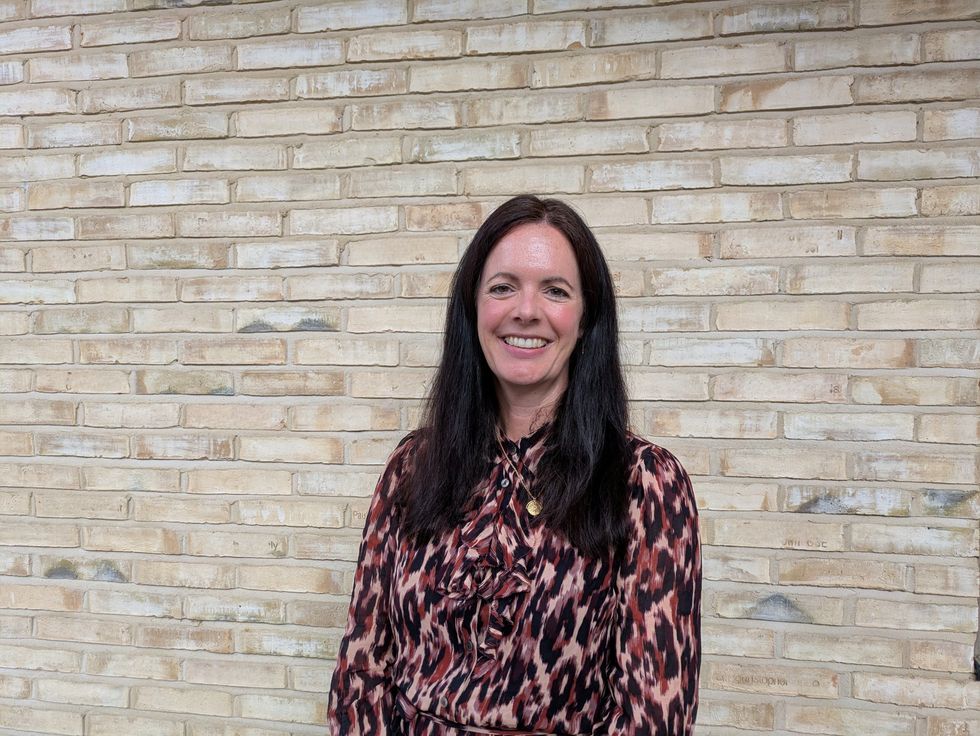
Sarah Porretta helps young people build the skills to thrive through hands-on financial and enterprise education
|YOUNG ENTERPRISE
“We’re sending 18‑year‑olds into the world with a high‑level understanding of trigonometry but zero idea of what a 20 per cent APR credit card is and how it can derail their lives for a decade.”
Financial pressure is also reshaping decisions about education itself. Minerva Virtual Academy said it has seen a sharp rise in parents reassessing what they can afford.
“These are parents who were already making enormous financial sacrifices,” the academy said. “VAT hasn’t just nudged them — it has forced them to take a hard, honest look at whether continuing to stretch their finances is sustainable.”
MVA said 23 per cent of its new intake now comes from pupils who previously attended independent schools.
“The families most affected are not the ultra‑wealthy,” the academy added. “VAT didn’t correct inequality — it punished aspiration.”
For young people themselves, the lack of financial grounding collides directly with rising costs.
Dylan Morris, 20, from Wrexham, told The People’s Channel he founded his clothing brand, MountForce, while studying and working part‑time at JD Sports, but financial constraints often hampered progress.
“There were opportunities I wanted to pursue sooner, but I simply didn’t have the finances,” he said. “You either don’t invest in your business so you can be financially OK, or you invest and have little money personally.”
Mr Morris argued many young people never even get as far as applying for grants or support. “A lot of people shy away because they don’t know where to look,” he said. “There is help out there — but only if you know how to find it.”
For others, the consequences of poor financial education are more immediate.
Aimee‑Jane Parsons, 22, a learner at charity Money Ready, told GB News she spent years trying to survive on Basic Universal Credit before receiving support.
She said she had previously relied on food banks, walked miles because she could not afford bus fares and budgeted “down to the last penny” to get through the week.
Ms Parsons said she only learnt how to budget, save and manage debt after falling into financial difficulty. “They helped me see which unnecessary costs I could cut, how to open a savings account and how to set up direct debits,” she said.
She said the lack of financial education leaves young people vulnerable to debt traps, such as Buy Now, Pay Later schemes. “We don’t understand credit — we just see that we don’t have to pay upfront,” she said.
“Before you know it, you’re £300 in debt.”
She said the wider cost‑of‑living crisis compounds the problem. “Buses are expensive, food is expensive, rent is extortionate. It all adds up to making us want to stay inside and never go out,” she said.
“It’s no wonder young people are struggling.”
Santander’s research found that 35 per cent of young adults worry about money every day, while nearly half say they want to improve their financial skills but do not know where to start.
Despite banks investing in online resources, 45 per cent of young adults have never used them.
Mr Viney said the long‑term consequences of inaction will be severe. “A financially illiterate population is less disruptive to the status quo, but in the long term it becomes a massive welfare burden,” he said.
“True levelling up only happens when citizens have the agency to grow their own capital.”
Minerva Virtual Academy said the pressure on families is now spilling into the state sector. “State schools were already under pressure before VAT,” the academy said.
“They are now absorbing students who often have specific learning needs that the system is not funded or structured to support.”

Dylan Morris felt failed and underprepared by the system
|YOUNG ENTERPRISE
Send pupils, it said, are among the most affected. “Private schools often provide specialist support that simply isn’t available in many state schools,” the academy said.
“Families who relied on that support have been forced into difficult compromises.”
MVA said its own model — built around flexibility, mentorship and flipped learning — is increasingly being used by families seeking stability. “Over half of our students are neurodiverse, not because we set out to specialise, but because our model works for modern learners,” the academy said.
“Flexibility enhances learning rather than diluting it.”
Young people told GB News that even basic independence now feels out of reach. Ms Parsons said many of her peers are on Universal Credit, while those in work see most of their pay swallowed by rent, travel and food.
“Even with the strictest budget, it’s incredibly difficult to live off,” she said. “You’re constantly one bill away from crisis.”
Ms Porretta said this uncertainty is reshaping young people’s long‑term outlook. “Career paths are changing, work is evolving, and long‑term security feels less certain,” she said.
“Young people don’t necessarily have examples around them that give them confidence about the future.”