






President Donald Trump could trigger a global recession and weaken gross domestic product (GDP) growth in the UK, if he follows through with his tariff threats a leading economist has warned.
The Trump administration is floating tariffs of up to 200 per cent on exports from European countries, including Britain, which fail to recognise the US annexing Greenland, which is part of Denmark.
Paul Dales, the chief UK economists at Capital Economics, has cautioned that the UK's gross domestic product could contract by between 0.3 per cent and 0.75 per cent if the US president follows through on his trade measures.
According to forecasts from the International Monetary Fund (IMF), UK economic growth this year is expected to outpace Japan, Italy and France, and to match Germany.
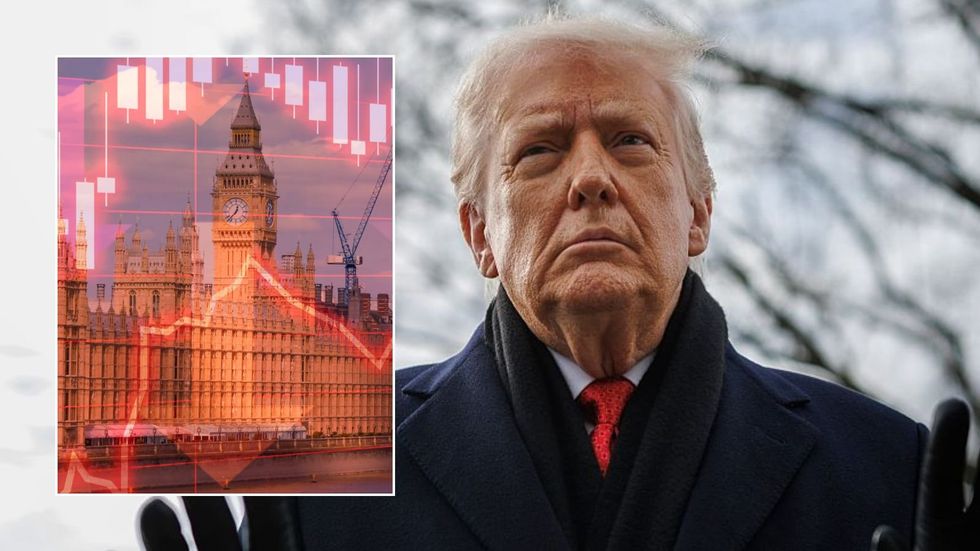
President Trump's could trigger could push UK closer to a recession
|GETTY
The organisaiton left its forecasts for the UK unchanged for 2026 and 2027, projecting growth of 1.3 per cent in 2026 and 1.5 per cent next year. However, it raised its forecast for 2025 by 0.1 percentage point to 1.4 per cent.
While the UK is not at risk of an immediate recession, GDP growth easing could signal a significant slowdown in the UK economy. A recession is defined as happening when a country experiences two consecutive quarters of negative economic growth.
If President Trump's downsize GDP projections for the UK, this could result in the British economy being hit with sluggish growth in multiple quarters this year back-to-back,
"With the UK economy currently growing by 0.2 per cent to 0.3 per cent a quarter, if this hit came all at once it could trigger a recession," Mr Dales stated.
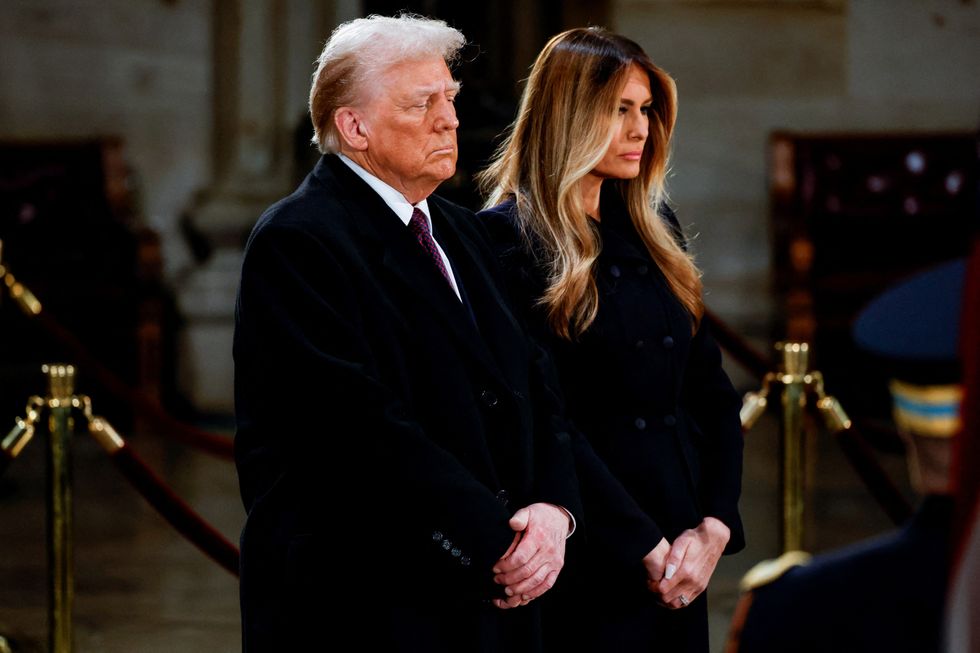
President Trump is threatening the UK with tariffs
| REUTERSLATEST DEVELOPMENTS
The current 10 per cent levy, implemented as part of President Trump's sweeping tariff raid last year, with certain exemptions, has already reduced UK output by approximately 0.3 per cent, he explained.
Mr Dales shared: "If the existing tariff of 10 per cent with some exceptions has reduced UK GDP by around 0.3 per cent, then a rise in tariffs to 20 per cent could subtract another 0.3 per cent and a subsequent rise to 35 per cent could take off another 0.45 per cent."
Under the most severe scenario where President Trump's threatened duties apply across all goods, the cumulative effect could reach 0.75 per cent in terms of GDP, analysis found.
Capital Economics' modelling, based on GDP value-added figures, suggests the worst-case outcome might reduce British economic output by 0.6 per cent over three years.
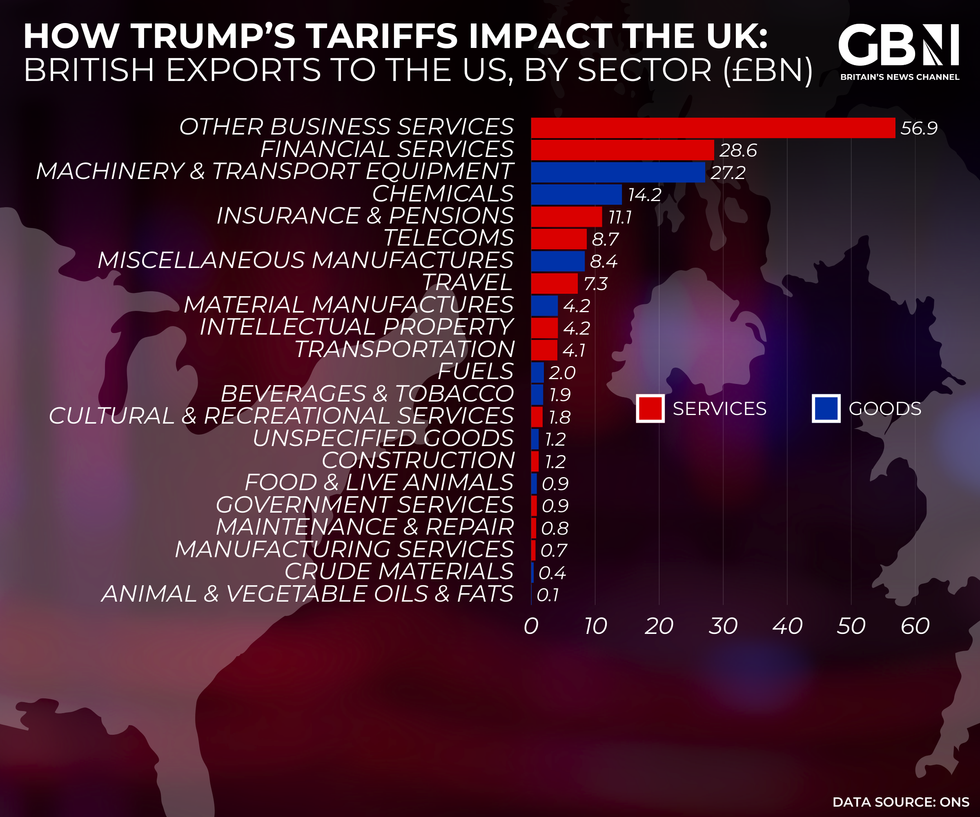 IN DEPTH: How could Trump's tariffs impact Britain? British exports to the US ranked | GB NEWS
Despite these projections, Goldman Sachs has offered a less pessimistic assessment of the potential fallout from the Trump administration's aggressive trade policies.
The investment bank calculates that an additional 10 per cent tariff on imports would reduce real GDP by 0.1 per cent to 0.2 per cent across affected nations, including Britain.
Sven Jari Stehn, an economist at Goldman, noted that Germany would suffer the greatest impact at around 0.2 per cent under a 10 per cent incremental reciprocal tariff, rising to 0.3 per cent if applied as a blanket measure.
"For the euro area as a whole, the implied GDP drag is around 0.1 per cent, similar to the UK," Mr Stehn wrote. He added that negative effects on confidence or financial markets could amplify these losses.