










The UK's wage growth fell while the country's unemployment rate remained steady towards the end of 2025, according to the latest figures from the Office for National Statistics (ONS).
UK average regular earnings growth dropped to 4.5 per cent in the three months to November, however was 0.9 per cent higher after taking Consumer Prices Index (CPI) inflation rate into account.
"The number of employees on payroll has fallen again, with reductions over the last year concentrated in retail and hospitality, and reflecting ongoing weak hiring activity," Liz McKeown, director of economic statistics at the ONS said.
Unemployment has remained an issue for the Labour Government, with Chancellor Rachel Reeves under pressure to get more young people in employment and reignite the British economy.

The ONS has published the latest unemployment figures for the UK
|GETTY
Last month, figures from the ONS revealed that the number of payrolled workers slipped by 22,000 in September while the unemployment rate hit 5.1 per cent for the period between August and October.
At the time, Ms McKeown shared: "The overall picture continues to be of a weakening labour market."
Professor Emeritus Joe Nellis, an economic adviser at MHA, said: "Labour market data for November reported an unemployment rate of 5.1 per cent, signaling that many employers remain cautious.
"Recruitment has softened and some firms continue to reduce headcount, reflecting weaker demand in some sectors, still-tight financial conditions and the lingering effects of higher costs.
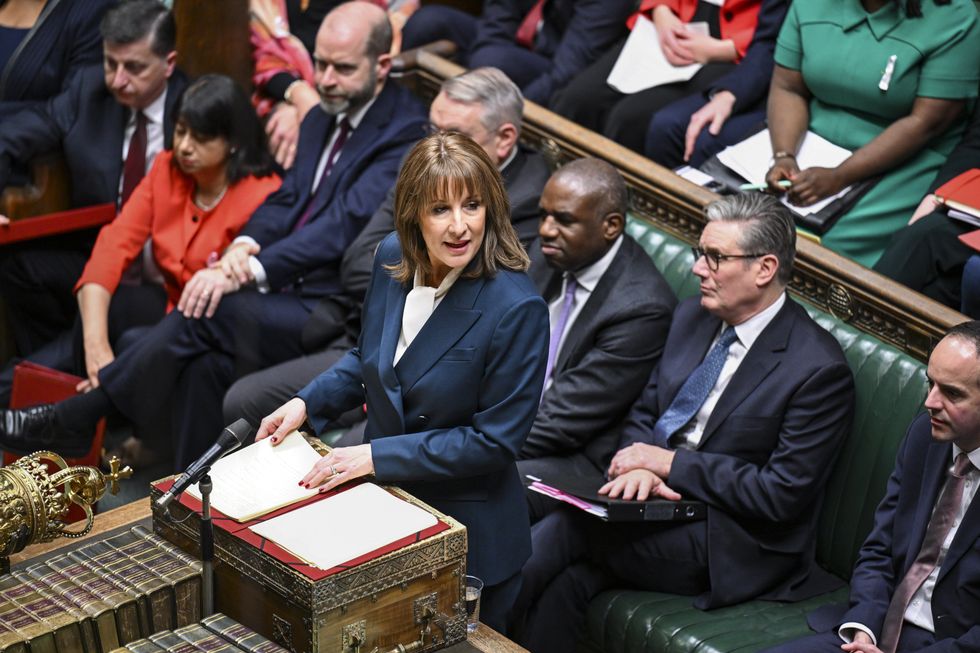 Rachel Reeves delivered the Budget in the Commons last year | PA
LATEST DEVELOPMENTS
"This is not a collapse, but we are seeing a meaningful loosening compared with the exceptionally tight labour market seen in recent years.However, the long-term trajectory for the labour market is more positive.
"Unemployment is likely to peak in the early months of 2026 and then cool as the year progresses. As stable — if not expansive — growth filters through the economy, and businesses are able to act with more certainty following the Autumn Budget and commit to long-term recruitment decisions, we can expect unemployment to fall."
Based on the ONS figures, London has the highest level of unemployment of any UK region at 7.2 per cent. Youth unemployment continues to rise and is up on the quarter and for the year.
As it stands, there are 561,000 unemployed people aged between 18 to 24 years, which is around 13.7 per cent of this particular age demographic in the UK.
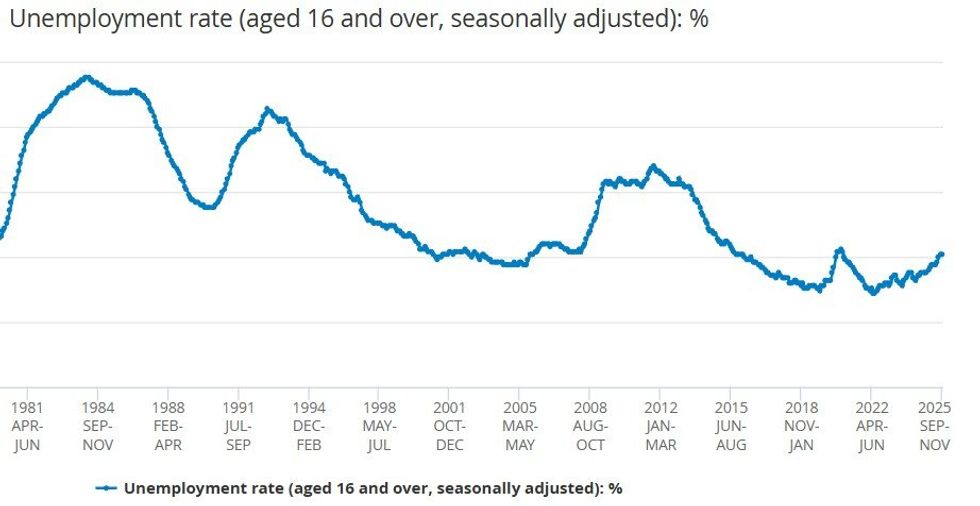
How has the unemployment rate changed?
|ONS
Economic inactivity is steady at 20.8 per cent, which is around nine million people, however nearly a quarter of those people (23 per cent) say they want to work Vacancies are stable at 734,000, but there are 85,000 fewer vacancies than before the pandemic.
Secretary of State for Work and Pensions, Pat McFadden, said: "Today’s figures show there are 513,000 more people in work compared to this time last year, but also highlights why we must go further, especially for our young people.
"That's why are investing £1.5billion to get hundreds of thousands of young people earning or learning, while former Health Secretary Alan Milburn is leading a review to help us get to the root of what is holding the younger generation back.
"Through our Jobs Guarantee launching this month we are helping young people find paid work placements, and we urge employers to come forward and join the likes of EON, JD Sports, Tesco and TUI who are already pledging their support."
More From GB News