

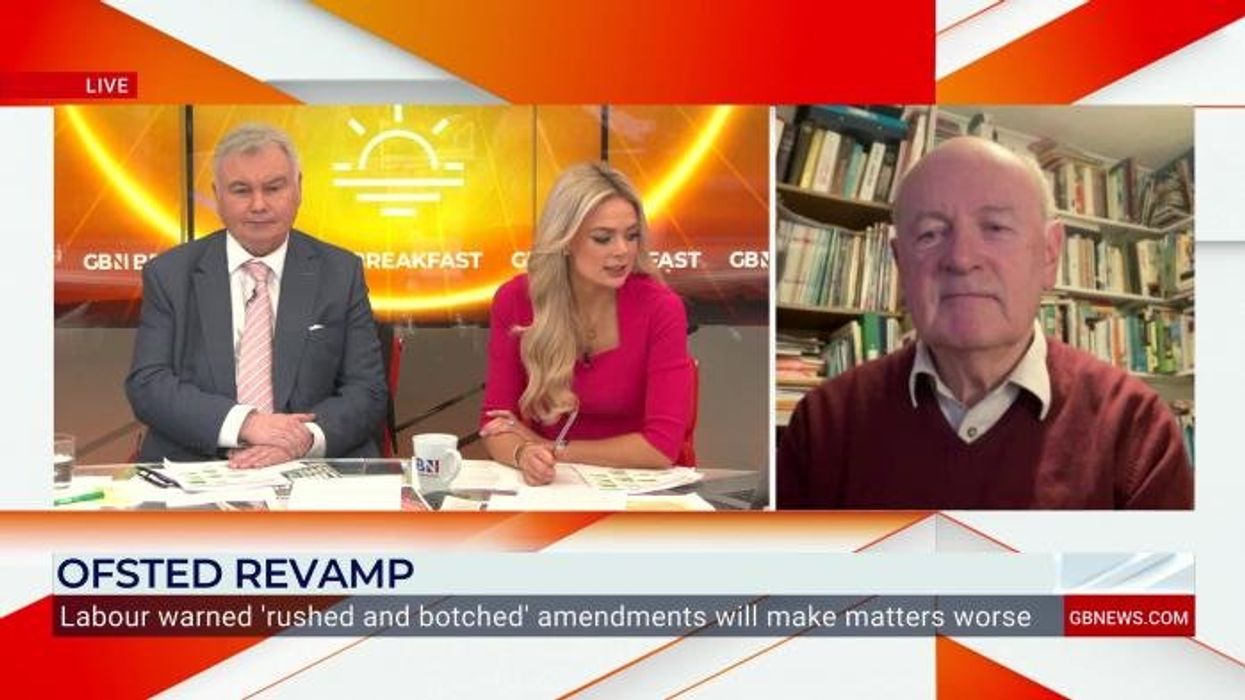









Local authorities in England are placing vulnerable children in unregistered care facilities charging up to £30,000 per week, Ofsted has warned in its latest annual report.
Sir Martyn Oliver, the education regulator’s chief inspector, described the situation as an “ongoing national scandal”.
The report found councils are frequently unable to secure placements in registered settings that can meet children’s specialist needs.
This is occurring despite the number of registered homes reaching record levels.
The Children’s Homes Association, which represents residential childcare providers, said responsibility lies with ministers because there is no coherent national strategy.
TRENDING
Stories
Videos
Your Say
“The Government must work with local authorities to drive out all use of unregistered children’s homes”, Sir Martyn said, warning the system is failing the young people it is designed to protect.
Local authority spending on children’s residential care has more than doubled in eight years, rising from £3.9billion in 2015-16 to £8.1billion in 2023-24.
Sir Martyn called the increases “a crisis”, noting that council budgets cannot keep pace with the “spiralling costs” of placements.
A shadow market of unregistered facilities has developed to fill gaps left by legitimate providers. Ofsted said these unlawful operations often charge “exorbitant fees”.
During the past year, the regulator opened 870 investigations into suspected unregistered homes. Of these, 680 were confirmed to be operating without authorisation.
Running a children’s home without registration is a criminal offence.

Running a children’s home without registration is a criminal offence
|GETTY
However, Ofsted does not currently have the power to issue fines and can only give written warnings.
The Children’s Wellbeing and Schools Bill is expected to provide stronger enforcement powers.
England recorded 4,010 registered children’s care homes in 2024-25, a 15 per cent rise on the previous year and the highest number ever recorded.
However, Ofsted said this growth conceals major problems with location and suitability.
A significant geographical imbalance exists across the country.
The north west holds 26 per cent of all children’s homes, yet only 18 per cent of looked-after children live there.
Sir Martyn said the mismatch is driven by providers choosing areas with cheaper property prices rather than where children actually need support.
LATEST DEVELOPMENTS

Sir Martyn said the mismatch is driven by providers choosing areas with cheaper property prices
| PA“The rapid growth in the number of homes masks very significant problems with location, affordability and suitability”, he said.
The chief inspector warned that a “strong profit motive... bends the system out of shape”, placing commercial decisions above the needs of children who require placements close to their families and support networks.
The Local Government Association said the “astronomical cost” of placements is diverting resources away from early intervention services that could prevent children entering care.
A spokesperson said: “It is extremely concerning that in many cases, a lack of choice means provision is not fully meeting children’s needs”, calling for joint action from central Government, councils, the NHS and care providers.
The Children’s Homes Association said unregistered homes reflect wider structural issues
|CHA
Dr Mark Kerr, chief executive of the Children’s Homes Association, said unregistered homes reflect wider structural issues rather than isolated failings.
“Those ‘exorbitant fees’ are the crash-landing of a system that hasn’t been planned or funded properly”, he said.
Dr Kerr urged ministers to overhaul planning rules, speed up the registration process and develop a clear regional strategy.
“At the moment, geography follows bureaucracy, not children’s needs”, he said.
More From GB News