






Official Government data reveals that households in some of England's most deprived areas continue to shoulder the heaviest council tax burden, despite having lower average incomes.
Metropolitan districts, predominantly located across the North and Midlands, will see Band D property charges reach an average of £2,409 during the 2026/27 financial year.
This stands in stark contrast to London boroughs, where residents face typical bills of £2,068, despite the capital containing a mix of affluent and disadvantaged neighbourhoods.
Figures from the Ministry of Housing, Communities & Local Government confirm the national average Band D charge will climb to £2,392, representing a £111 increase.
Families in the UK's poorest areas are being forced to pay more in council tax
|GETTY
The 4.9 per cent rise marks the fourth consecutive year that council tax across England has increased by approximately five per cent.
Unitary authorities, which encompass areas with varying levels of wealth, will charge Band D households an average of £2,490, making them the most expensive council type.
County-wide councils follow closely behind, with typical bills reaching £2,452 for the same property band. These totals incorporate all additional levies, including contributions towards adult social care, parish precepts, and charges from police, fire, and regional authorities where applicable.
The number of billing authorities where average Band D charges exceed £2,500 has surged dramatically, rising from just 24 last year to 96 of the 296 councils responsible for collecting the tax.
LATEST DEVELOPMENTS
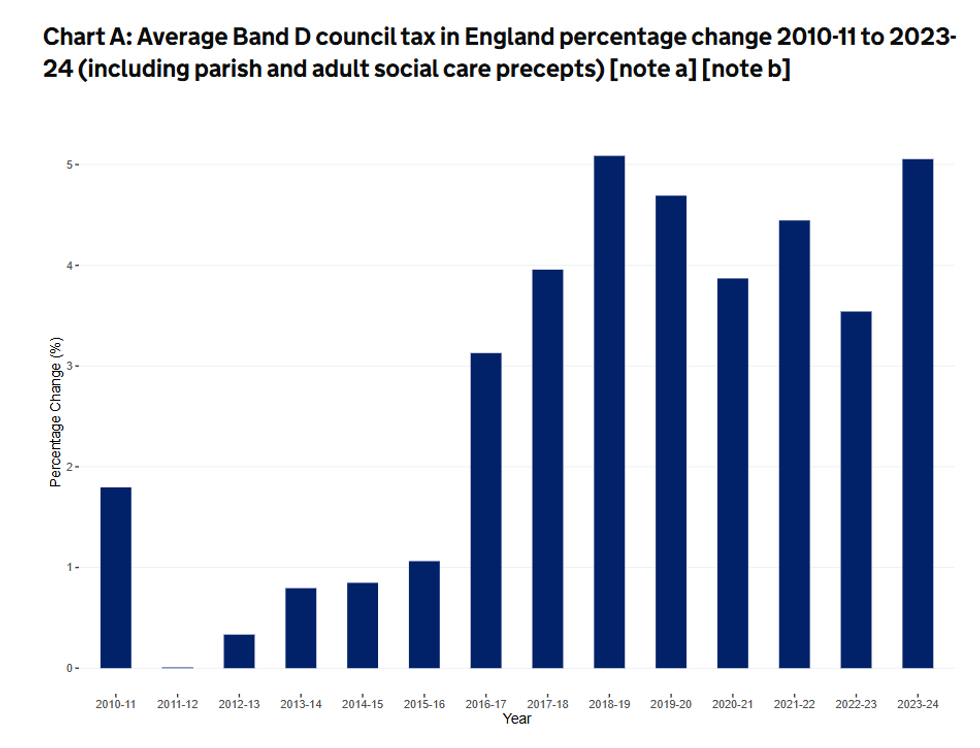 Council tax rises over the years | GOV.UK
The 19 councils under Liberal Democrat leadership, whether through majority or minority control, implemented the steepest average increases at 5.17 per cent.
This figure was driven upward by Government-approved hikes of 8.99 per cent in Shropshire and 7.48 per cent in Windsor & Maidenhead, though the median increase for Lib Dem councils stood at 4.99 per cent.
Conservative-run authorities raised bills by an average of 4.92 per cent across their 26 councils, while Labour's 78 councils increased charges by 4.79 per cent on average.
Reform-controlled councils imposed the lowest average rises at 4.15 per cent across 13 authorities, with increases ranging from 1.99 per cent in Durham to 8.98 per cent in Worcestershire.
 Council tax will go up across the country | GETTY
Zoe Franklin, the Liberal Democrats' local government spokesperson, defended her party's record: "The Liberal Democrats now control more councils than the Conservatives because communities are fed up with being taken for granted."
She argued that many Lib Dem councils had inherited dire finances and were "cleaning up after years of Conservative financial mismanagement", while accusing Labour of failing to address the social care crisis and moving too slowly on SEND funding.
Shadow communities secretary Sir James Cleverly attacked the increases as "cooked up in Whitehall", adding: "Keir Starmer promised to ease the cost of living and freeze council tax, yet families now face back-to-back hikes."
Steve Houghton, chairman of the Special Interest Group of Municipal Authorities, acknowledged that metropolitan councils serving the most deprived communities "continue to face some of the most difficult financial circumstances in the country".